I read The Big Fat Surprise by Nina Teicholz last weekend.
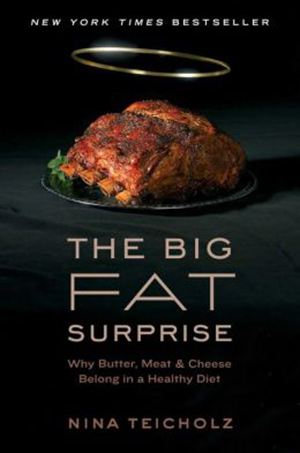
A friend recommended it to me. When I checked into it myself, the book looked good. The reading proved just as good as it looked, so I’m going to share some of what I discovered.
Nina Teicholz investigates the fats we eat with an open mind. Like most of us, she believed that foods such as butter and cream and red meat were bad for her. But she’d had the experience of losing weight and feeling healthier while eating them with abandon when working as a restaurant review columnist.
What was up with that?
As she dug more deeply into her research for The Big Fat Surprise – reading the actual data from decades of studies, rather than the superficial (and misleading) headline conclusions – she came to realize how thoroughly the wool had been pulled over our eyes about what is safe and healthy to eat.
We’ve been fooled by government officials who jumped the gun and made incorrect recommendations before all the data was in.
We’ve been fooled by ambitious scientists who took a position long before the data warranted it, and then defended their stance for all it was worth.
We’ve been fooled by industrial food companies with a lot of money on the line.
I’d hoped The Big Fat Surprise might be a worthy sequel to Gary Taubes’ Good Calories, Bad Calories. It is! The book covers some of the same ground, but Nina Teicholz found different sources to talk with. She takes a slightly different approach from a slightly different angle. I learned things from her compelling narrative that I hadn’t from Taubes’ equally excellent examination of the subject.
Especially important, Teicholz delves into the more recent developments in fats used in processed foods: potato chips, crackers, cookies, etc. The information is absolutely critical for making wise choices about what to eat. And what not to eat. There’s some crazy dangerous stuff out there!
The Big Fat Surprise is too full of valuable nuggets for any summary to do it justice. So I’m going to use a technique I’ve followed when recommending other favorite non-fiction reads.
I’ll share three points that jumped out at me.
Here we go!
Eating Seed Oils May Cause Cancer
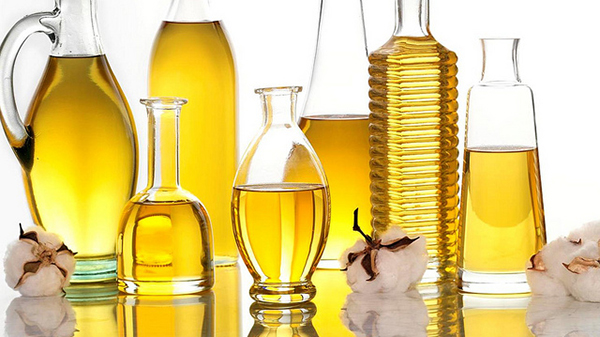
First of all, what are seed oils? This was a new term for me. Turns out it’s a more accurate word for what we call vegetable oils. Corn oil, canola oil, safflower oil, etc. When you think about the change, it makes sense. These oils aren’t made from carrots or broccoli or bell peppers. They’re pressed (or chemically extracted) from seeds.
One thing to remember about liquid seed oils is that they’re new. They were first extracted and sold in large quantities in 1910. Before 1910, everyone used lard and suet and tallow (animal fats) and butter to cook with. Seed oils are really a novel, ersatz “food.” At this point in human evolution, perhaps 6 generations have been eating the stuff. 300 generations ate only the very small amounts present in the corn in tortillas or the wheat in bread. 66,000 generations ate the still smaller amounts present in gathered (not cultivated) grains.
The new untested nature of seed oils entering our food supply caused a few scientists to be concerned about their safety. Some research was done, and the results generated further cause for concern.
One of the most famous studies was conducted in the 1960’s by Seymour Dayton, a UCLA professor of medicine, on 850 elderly men living in a Veterans Administration home.
For 6 years, half the men ate a diet in which seed oils replaced the saturated fats in butter, milk, ice cream, and cheese.
The other half of the men ate a normal diet – which in those days meant few seed oils, because corn oil and cottonseed oil had not yet been adopted so wholeheartedly in American kitchens.
The superficial results of the study looked good. Of the men on the experimental seed oil diet, only 48 died of heart disease, compared to 70 on the regular foods.
Probing a little deeper, the results looked less good. The death rates of the two groups were similar: 31 of the men consuming seed oils died of cancer, against only 17 of the men on regular food. That’s 79 to 87. Not so significant.
Dr. Dayton expressed considerable concern about the cancer finding. It was the unknown consequences of a diet high in seed oils – a new industrial product that had never been eaten in quantity by humans before – that had prompted the study.
Prominent American researchers focused on the heart disease finding (and ignored the cancer finding), because it bolstered their position that saturated fat causes heart disease.
British researchers were more critical, pointing out that the men on the normal diet happened to have twice the rate of cigarette smoking as the men on the seed oil diet. Perhaps that was the cause of their higher rate of heart disease?
LDL-Cholesterol Is NOT the Bogeyman
First let’s do a quick review of cholesterol. It’s a lipid molecule made by our bodies and essential for both the structure of our cell membranes and as a foundation for certain hormones, bile acids, and vitamin D. We need the stuff!
It also circulates in our blood and has become renowned as an indicator for our vulnerability to heart disease.
Cholesterol comes in two different kinds. HDL-cholesterol (high density lipoprotein) and LDL-cholesterol (low density lipoprotein).
HDL-cholesterol is solidly established as a good guy that helps prevent heart disease. In fact, it’s such a critical partner in fighting heart disease that your doctor will likely warn you if it’s too low. Low levels of HDL-cholesterol is a known risk factor for heart disease.
LDL-cholesterol, however, for long bore the role of bad guy. If you had high levels of LDL-cholesterol circulating in your blood, you were considered to be at risk.
Thus whenever researchers found in a study that eating saturated fat (butter, cream, coconut oil, red meat) raised LDL-cholesterol – which it does – they would trumpet that finding to the sky. “Eating saturated fat causes heart disease!” they would say. We’ve heard that message for decades.
However, LDL-cholesterol has proven more complex than was initially thought.
Turns out that just as whole cholesterol exists as two types, so LDL-cholesterol also exists as two types. There’s LDL-cholesterol (low density lipoproteins) and there’s VLDL-cholesterol (very low density lipoproteins).
 VLDL is a genuine villain. Patients with high VLDL-cholesterol also have high triglycerides (another proven risk factor) and are indeed at a greater risk for heart disease.
But normal LDL-cholesterol turns out to be another good guy, actively protective against heart disease.
And guess what?
When eating saturated fat raises LDL-cholesterol, it’s raising the good LDL stuff, not the bad VLDL stuff.
Bottom line? Eating saturated fat raises HDL-cholesterol, which protects against heart disease, and it raises the good LDL-cholesterol, which also protects against heart disease. There is no down side here! Bring on the butter and cream!
The converse is also true, unfortunately. Eating polyunsaturated oils – seed oils such as corn oil, safflower oil, canola oil, soybean oil, etc. – not only lowers the good HDL-cholesterol, but it lowers the good LDL-cholesterol while raising the bad VLDL-cholesterol. The anti-saturated fat folk tend not to trumpet that fact. “Eating seed oils causes heart disease,” is not a message that passes their lips. Ever. But it should.
The National Institutes of Health (NIH) and the American Heart Association (AHA) have been steadfastly ignoring the last 20 years of research that teases apart the LDL and VLDL conundrum. They continue to recommend the consumption of seed oils. Reversing their stance of the last 60 years (pro-seed oil) would be very damaging to the professional reputation of their leaders.
As Upton Sinclair said, “It is difficult to get a man to understand something, when his salary depends on his not understanding it.”
But I can only conclude, along with Nina Teicholz, that seed oils cause heart disease, not the other way around. Certainly, while the death rate from heart disease has gone down due to improved medical treatment, the incidence of heart disease has continued to rise, right in step with the increase of seed oils in the diet.
Seed Oils Are Taking Over the World
In 2003, the FDA (Food and Drug Administration) issued a new rule that by 2006 trans fats must have their own separate line in the Nutrition Facts Panel on all packaged foods.
What are trans fats?
They’re another ersatz fat created as a byproduct by hydrogenating polyunsaturated fats such as corn oil and safflower oil. Hydrogenating these liquid oils (adding hydrogen atoms to the fat molecules) makes them firmer (like butter) and prevents them from going rancid while the packaged food sits in warehouses and on grocery store shelves.
Trans fat is convincingly a cause of heart disease. At least, its the one that’s been focused on by research. The thing is that trans fat is only one of about 50 ersatz fats created in the hydrogenation process. The others may be even more damaging.
In any case, getting the trans fats out of our food supply would seem to be a good thing. For that was the result of the FDA’s rulings. With trans fat vilified by the public (justly so) and manufacturers no longer able to hide its presence in their products, the manufacturers started reformulating their recipes.
That was a lot of reformulating!
As of 2003 when the new rule was issued, 42,720 packaged foods included trans fats: all crackers and most cookies, baking mixes, chips, pie shells, and frostings.
The food industry really liked hydrogenated oils. They could be made relatively soft for things like margarine. They could be made medium soft for cookies. They could be made very hard for the coatings of chocolate truffles.
But when the trans fats had to go, the hydrgenated oils also had to go. And be replaced with something else: polyunsaturated oils – seed oils.
That alone is not good news. After reading The Big Fat Surprise, I know that seed oils probably cause cancer and do cause heart disease. But there’s worse news.
The seed oils don’t behave well in the food products that industry produces. The oils separate out from sauces, leaving oily puddles under frozen dinners. They go rancid while cupcakes sit on grocery shelves. They cause Oreo® cookies to break during shipping.
Luckily for the manufacturers (and unluckily for us), their labs devised a new fat that performs well. It’s created by a new process called interesterification.
What is interesterification? Basically the process takes the three triglyceride molecules that make up fats and rearranges them.
How do interesterified fats affect the human body? We don’t really know. There have been a few studies done, but not nearly enough to yield a true idea.
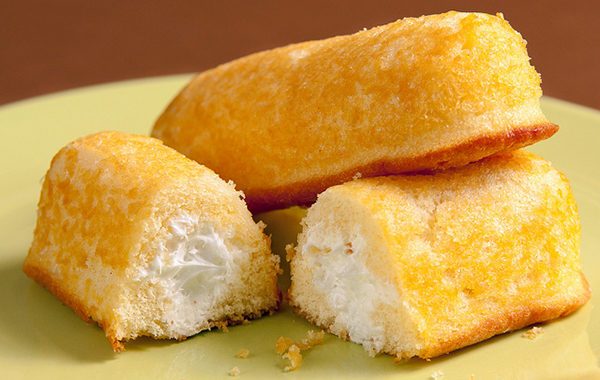
So when we eat packaged foods, we’re eating interesterified fats and participating in the continuing experiment done on us without our informed consent. Heaven only knows what this latest ersatz substance will do to us. It could be worse than trans fat.
If we’re not eating interesterified fat, we’re eating fully hydrogenated oils (which do not have trans fats the way partially hydrogenated oils do) blended with liquid seed oils. This is another trick used by processed food manufacturers.
Or we’re eating palm oil, which manufacturers are returning to without announcing the fact. Palm oil is a natural saturated fat, like coconut oil, and is actually good for us. So, yay! One ray of light in an otherwise dark picture.
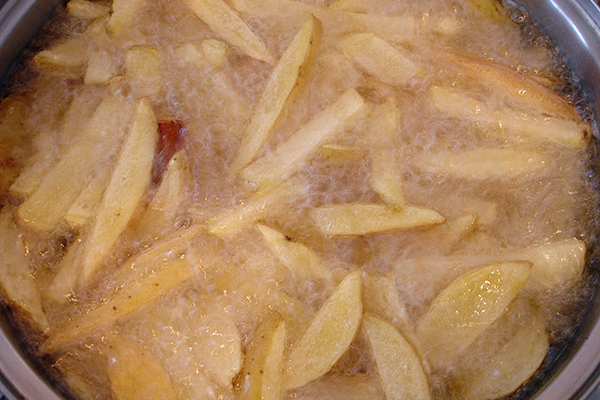
When we eat fried foods in a restaurant, we’re eating 100% seed oils along with the breakdown products that are created when these oils are heated.
There’s a reason McDonald’s once used beef tallow to fry its french fries. The stuff is extremely stable and doesn’t break down when heated. (Plus beef tallow was good for us.)
The partially hydrogenated oils used when beef tallow went away were also stable at high temperatures, although they did have those pesky trans fats.
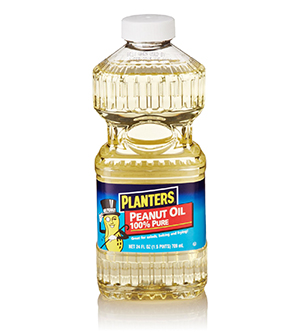 The peanut oils and soybean oils now being used are not stable. They break down at high temperatures.
Aldehyde is one common breakdown product. It interferes with the function of our DNA.
Formaldehyde is another common breakdown product. It’s a poison.
Yet other breakdown products form a gunky residue on the bottoms of fryers, as well as on walls and tablecloths. It resembles shellac. The gunk is released into the air of the restaurant by the hot oil mist forming over the fryer and condenses out on cooler surfaces. The vapor may well damage the lungs of restaurant workers and patrons.
What Does It All Mean?
My own feeling is that it’s time to stop experimenting with all these new ersatz “food” products. Time to stop pushing them on unsuspecting populations to see if they have deleterious effects.
Cancer, anyone?
Heart disease?
How about diabetes?
Sign right up! You’ll die for science without ever knowing you’re in the experimental group.
Sadly, a more responsible and caring way forward seems unlikely at this time.
So what can you do?
Learn about food.
Don’t take the FDA’s word for anything; they’re too slow and married to industry interests.
Don’t take the common wisdom for your guide either; it’s been distorted by the poor research done in the 1960’s and boosted by ill-informed government officials.
Don’t mistake the research headlines about the dangers of saturated fat as fact supported by the research they trumpet; the data often do not support the headlines.
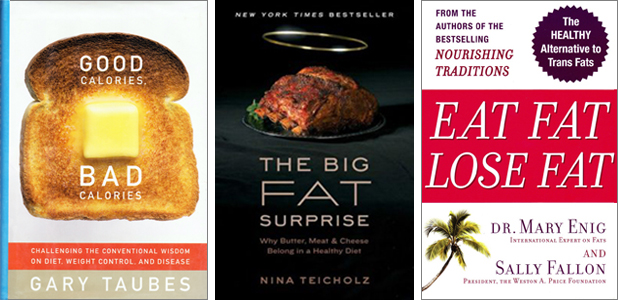
Do read The Big Fat Surprise by Nina Teicholz.
Read Good Calories, Bad Calories by Gary Taubes.
Read Eat Fat, Lose Fat by Sally Fallon and Mary Enig.
Get informed about the real facts and then make up your own mind about what is safe to eat and what isn’t. The life and health you save could be your own. 😀
For more posts on this topic:
Test first, then conclude!
Butter and Cream and Coconut, Oh My!
Thinner and Healthier

Thanks! Cross–posted to my mommy blog
Thank you! Getting the word out about this important information means a lot to me.