
Monthly Archives: July 2021

Password for Glory
Everyone subscribed to my newsletter will receive the password at month’s end to unlock the mini poster created from the cover of my novella Winter Glory. The poster features gorgeous art by Danish artist Kay Nielsen, so don’t miss out!
If you are seeing this post after July 30, 2021, you can still get the password.
Just sign up for my newsletter here, and then email me. I’ll reply with the password. (You’ll also receive a free short story: Crossing the Naiad.
Happy reading, as always!
The Tally Master, Chapter 21 (scene 99)
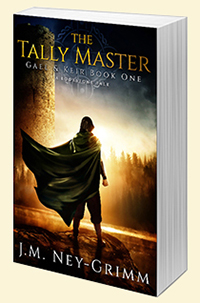 Gael hurried down the several short flights of stairs that connected the tower’s entrance to the bailey, noting that two mounds of wood were rising in the lower flat near the main gatehouse. Pyres for the morrow’s funerals: Dreas’ and Arnoll’s.
He grimaced. His task was to prevent the necessity of a third such heap of wood. Or was it?
He had to talk with Keir.
He’d realized the necessity of such a conversation too late last night to seek it then. This morning, his duty to Carbraes and the gong had been paramount. Then Arnoll’s death—Gael swallowed hard—had torn all his coherence asunder. And then Carbraes had required his presence.
If any other obligation or summons sidetracked him now—
His jaw clenched. He was going to Keir and nowhere else. He had to be sure that she was well, that Dreben’s brutal guards had not broken her arm. Or broken something else.
Except . . . if Keir were a traitor—and all his logic pointed to it—her fate would be far worse than a noisome cell, a broken arm, or even a violation of her person. And he should not be vowing that he would protect her.
He quickened his pace, striding across the top of the bailey, where the grass was worn a bit bare, then along the massive wall dividing the bailey from the yard, and then nipping in under the first portcullis of the upper gatehouse. The shadows beneath the stone vault were chilly, and the sunlight of the exit arch beckoned, but Gael turned aside at the heavy bronze-bound door in the tunnel wall that led into the guardroom of the prison.
The prison opteon sat behind a broad counter and barely had time to rise and bow before Gael swept past him, through the inner guard chamber—with its complement of guards—and into the stair hall. The spiral stair winding upward in the center of the space possessed steep risers and narrow treads, the better to hinder an escaping prisoner. Not that the brig was ever especially full.
Dreas had always encouraged the cleaning of latrines for punishment, the digging of trash middens, or even flogging, over imprisonment.
Gael barely noticed that his weak ankle failed to click, despite the demands of the stairway.
Keir’s cell was immediately obvious when Gael’s line of sight brought the upper level into view. Multiple arrowslits shed plenty of light into the square stair hall. From it led a dark and narrow corridor lined by locked doors. The nearer doors were solid bronze-bound wood. The farther ones each possessed a small square grating in the upper portion. Beyond them, another large square hall with arrowslits allowed light in. Only one door was flanked by two guards. The nearest one on Gael’s left.
Gael halted before the pair and gestured to the door. “Unlock it,” he ordered curtly. “I am come to inspect the prisoner’s well-being.”
The skinnier of the two gulped, his larynx bobbing. “We haven’t the keys, my lord Secretarius.”
Gael observed that fully three locks—all imbedded in the dark wood—secured the door.
“Then get them,” he said impatiently. This was what came of hurry: inefficiency and annoyance. In all likelihood, he should just return to the opteon in the front guardroom himself to requisition the necessary keys, rather than waiting for the guard to return—keyless—and then waiting for the guard to fetch the opteon.
But Skinny had already departed.
Gael shifted his weight from one foot to the other and glowered.
The remaining guard cleared his throat. “My lord Dreben cautioned us that the prisoner was not to have visitors,” he said.
“I am not a visitor,” said Gael flatly.
The guard frowned.
“I am an auditor, come to inspect your work.”
And then Skinny was back. With a keyring holding three keys. Apparently the opteon was wise, recognizing that there was nowhere Belzetarn’s secretarius could not go, if he so desired.
The locks were balky, their stiffness worsened by Skinny’s shaking fingers, but they surrendered soon enough. Gael pulled the door open, stepped through it, and gestured for the guards to close it behind him.
Keir was seated on the deep sill of the barred window, looking out. She turned. Even with the light behind her, Gael could see her face change, from cool intentness to something lighter. Relief? Gladness? Her tunic and hose were rumpled and grubby; her chin-length blonde hair slightly tousled; her face smudged. But that was not what Gael was seeing.
He noted her straight and undamaged limbs, the way her body moved easily and without hurt, how her confidence remained undimmed, evident in her composed gray eyes, the firm set of her finely curved lips, and the lift of her gracefully strong chin.
And then he realized that he hadn’t the faintest idea of what to say to her.
Are you well? Manifestly, she was.
Are you a traitor? Gaelan’s tears! How could he accuse her of such?
Can I trust you? Tiamar’s throne! What was the matter with him? Gods, but she was beautiful!
Keir apparently knew no such awkwardness. She stepped toward him, her hands held out, her expression changing still, from a mere lightening to positive happiness. Radiance?
“Gael! You saved it! You preserved it! Thank you!” she exclaimed.
Abruptly his tongue-tied speechlessness vanished under a flood of scalding rage. Keir was unharmed. No one had hurt her in any way. Thank Tiamar. But Gael now wanted a nice fresh switch of birch with which to apply ten swift strikes to the palm of one of her outstretched hands. The ridiculousness of the notion—Keir was no school child—merely increased his anger.
“I trusted you!” he grated.
All her glowing happiness eclipsed. Her hands dropped. Faint hurt dilated her eyes for an instant, and then she withdrew into chilly composure.
Gael ignored all these symptoms of distress. His own face felt like stone, adamant and condemning.
“The secret you feared I’d discerned was not the secret of your gender, was it, Keir?” His voice came out very flat. “You feared I’d learned of your treason, did you not?”
Keir paled, but said nothing at all. Her whitening skin, so like the other two times she’d blanched, goaded him anew.
“Did you not?” he ground out, repeating himself.
Keir lost some of her poise, her voice catching. “Gael, it’s not—I didn’t mean—Gael, I am loyal to you!”
“How is it not?” he demanded savagely. “How did you not mean it? How are you in the least loyal to me?” His throat burned with his fury. “You stole tin ingots from my tin vault, disguised them to mimic copper, stowed them in my copper vault, and treasonously sent them down to my bladesmith, there to become weapons that would slay your fellows. You stole copper ingots from my copper vaults, disguised them as tin, secreted them in my tin vault, and funneled them into my privy smithy, thus to hide your perfidy. How is that not betrayal?”
He’d not thought she could pale further. She swayed, and he wondered if she would swoon.
Leaving her no opening in which to respond, he snapped, “Did you think my word to Lord Carbraes meant so little to me? Did you not realize that as my notarius your deeds became my deeds? Did you think my loyalty to my regenen of so little account that it could be ignored?”
His breath, labored and quickened, seemed not to bring enough air to his lungs.
“How dare you! How dare you!” he thundered.
Was that heartbreak in her eyes?
Stifling a gasp, she wrenched away from his accusing gaze to stare out through the bars of her window. Her shoulders hunched, but did not heave. Then her neck bent, and one hand went to her eyes. She stood, silenced and very still.
Gael reached one hand out to her—unseen—horrified. Through all her trials, she had passed undaunted, maintaining her composure upon capture, while concealing her sex, even while bilking the tally room at her utmost risk. Only now, confronted by Gael’s rage, had she broken. He had broken her.
His wrath slackened, permitting a glimmer of regret, and a realization that she’d not actually claimed either innocence or guilt. The guilt in her eyes had told him all he needed to know, but he needed to hear it from her lips. Or . . . not that exactly. He needed to know how she had brought herself to do . . . what she did do.
Keir still stood unmoving before her cell window.
Gael made himself draw in a long, slow breath, and let it out more slowly yet. He could not sort this matter through while in a molten rage.
“Keir . . . why?” he said, his voice cracking slightly.
She straightened, her back still to him, but did not turn.
He waited.
When she did turn, she did not speak, but studied him with a level gaze. Her clear gray eyes were not reddened, as he’d expected, nor did any trace of tears appear on her cheeks. So, even in desolation—he knew he’d not been mistaken in reading desolation in her stance—she disdained to cry. A reluctant admiration kindled within him, and he studied her in return.
The light touched the edge of her hair, causing it to gleam, and limned the curving line of her jaw. In his heart of hearts, he could not believe that she might be his enemy. He would always have her back, and she would have his.
But his mind and heart did not agree.
In the silence between them, he grew aware that the roil of feeling that had seethed within his breast since last night—doubt of her, trust in her, fear for her, and wrath toward her—had slackened, to simmer more quietly. Fear had marked his journey from the melee gallery to the brig. His anger had boiled over upon his arrival. But now he had a temporary interval of dispassion.
He and she must speak, if his inner conflict were to arrive at resolution.
His heart recoiled from reconciling the discrepancy. But it must be reconciled. He could not continue in his foolishness, no matter how devastating Keir’s truth—her whole truth—might be.
He drew in a short breath—for courage? for hope? to delay one moment longer?—and then put his question more collectedly than he’d managed heretofore. “Why did you disguise tin as copper and send it to the blade smithy, where Olix would make it into swords that shattered on the battlefield?”
She nodded slightly, and answered his question with her own. “Do you wish all the unafflicted slain? Or defeated and submitting to a troll overlord?”
He frowned. “Of course not,” he replied, his voice impatient.
“And yet you pledged your loyalty to Carbraes, who labors toward just that end,” she said. “He may not succeed. No troll has, since the centuries after the southern troll-kings. But what if he does? Would you be satisfied with your place in history?”
“Keir, we are trolls, and as such we have little choice where we stand in history,” he reminded her.
“I chose to make a choice anyway,” she said, lifting her chin. “I chose to fight for the people of Fiors.”
“And that worked so well for you!” His sarcasm discomfited him.
Her eyes flashed, but her tone remained even. “No, it has not worked well for me,” she agreed. “Not in the end. And I do not mean this—” she gestured toward the cell walls surrounding her.
“What do you mean then?” he asked, his moment of pique and mockery past.
“I have arrived at precisely the dilemma that confronts you, I believe,” she said.
Gael knit his brows, not following her reasoning. “How so?”
Her face softened. “You wish the unafflicted to live free and unthreatened by the troll-horde, but you cannot wish ill upon your friend Barris, the innocent boys in the kitchens and smithies, or even upon Carbraes himself. Can you?”
He looked at her silently. That was, of course, precisely the conundrum he lived with.
“Your loyalty is split. Which is what my own has come to,” she said. “I thought I could infiltrate the citadel of my enemies and work to weaken them for as long as it took them to reveal me and kill me. I did not understand that my enemies would come to be my friends.”
His heart went out to her, in wholly unexpected sympathy. He could not wish his personal difficulty on anyone, let alone her. And—against his will—he understood her choice.
He had chosen to ally himself with the troll-horde, even though they were his enemies. She had chosen to continue to fight the troll-horde, even though she herself was one of them. He could not but honor her for that. And yet . . . neither his choice nor hers could be sustained indefinitely.
They were both of them hard upon a dilemma. Or she was, at the least. He had managed to ignore his for seven years. He might manage to ignore it for yet seven more. But she could not do the same.
“What would you do now?” he asked. “Theron has told Carbraes of your treason, and the regenen will call for your death once that treason is confirmed, as it must be. I shall strive to gain his pardon for you, but—”
She finished for him, “—but he is unlikely to grant it. I know.”
“If I could gain his pardon for you, would you stay, as I have, in support of him?”
The muscles in her slim jaw shifted. “No.”
“Then I must try to secure your freedom—our freedom—and escort you to some other place of safety.” Except . . . where would such a place be found? He didn’t know, but he could not let her risk the Hamish wilds alone. Her summer journey had done her no harm, but autumn and then winter would come. And then what? Wolves, weather, and her seizure by another—more malignant—knot of trolls? A more disconcerting possibility barged across his worries. “Would you seek out a troll-queen to covertly undermine as you undermined Carbraes?”
“I shall neither support Carbraes in his warfare nor sabotage some other troll-sovereign. And you must not either.”
His brow creased slightly. “You have discerned a third path? One where we need not tally our betrayals, apportioning some to one side, more to the other, and all of them—” he knew it now, knew it in the marrow of his bones, in the inmost chamber of his heart: the corrosion of choosing between two utter wrongs “—all of them to ourselves.”
She nodded, her face lighting. “The gong, Gael. And the lodestone within it. The gong opens a door that has been shut ever since that artifact was lost.” Her words tumbled forth in her eagerness. “I was never so glad of anything when I knew you’d managed—chosen!—to preserve it! Without it”—she shook her head—“things would be dire. But with it! With it, we can change . . . so very much!”
Gael’s heart sank.
Keir’s enthusiasm faltered as she took in the expression he knew must be dragging at his features.
“But . . . I heard it sound!” she said. “It gave me hope!”
Gael swallowed. “Keir—”
Hells! How could he tell her?
Next scene:
The Tally Master, Chapter 22 (scene 100)
Previous scene:
The Tally Master, Chapter 21 (scene 98)
Need the beginning?
The Tally Master, Chapter 1 (scene 1)
Buy the book:
The Tally Master
The Tally Master, Chapter 21 (scene 98)
When the trolls who captured Keir in Olluvarde had first burst around the corner in that marble underground passage, she’d been terrified. They’d seemed savage, monstrous, and intent upon brutality.
When they’d plucked her from the base of the column where she’d sought temporary refuge, they’d seemed more clumsy and inept than vicious.
During the journey from Olluvarde to Belzetarn, their demeanor had changed yet again. They bantered, teased, and told jokes, including Keir in their camaraderie as though she were one of them, and boasting to her about all the amenities available to them in their troll home. The shift had surprised her, but she’d taken full advantage of it to insinuate herself in their good graces. She bantered back, participated in the rude insults they enjoyed, and even joined a pair of them in devising a prank that involved the blankets of the lead scout.
After more than a deichtain of traveling through forested hills, they emerged from the trees into the meadow before the gatehouse in Belzetarn’s curtain wall.
“Whadya think?” asked Irren, the troll who—upon first acquaintance—had accidentally knocked her senseless when attempting to slap her back in greeting.
The ruins of Olluvarde had prepared her a little for what she would see, merely because they intimated what was possible when building with stone. Her home on Fiors was a round hut constructed of woven withies, as were all the dwellings of her people. The grandmother who governed the tribe inhabited a more impressive structure, five conical huts connected together! Olluvarde had prepared Keir a little, but not enough.
Constructed of massive blocks of dark gray stone, the gatehouse loomed malevolently, huge and dark and brooding, buttressed by guardtowers and fanged with crenellation. Beyond it, a vast grassy bailey within the curtain walls sloped gradually upward to an inner wall, with yet another gatehouse on the right, and a terrifyingly tall tower of the same dark stone on the left.
A strange rounded bulk with conical roofs and hulking chimneys clung to the roots of the tower on one side—the kitchens, as she would learn later—but she barely heeded it, following the great height with her eyes, up and up and up to the four claw-like prongs on the top battlements and a central spire that breathed wisps of smoke or steam.
Fiors was flat. The Hamish wilds, she’d seen as she passed through them, were hilly, with mountains on the horizon to the northeast. But this tower . . . was it as tall as those mountains would be were she to stand at their foundations? It seemed so indeed. She hardly knew how to answer Irren.
When she entered the passage through the gatehouse with her escort, she learned yet more of the properties of stone edifices.
The passage itself was generously wide with a high, arching ceiling, but the trolls stopped right at its inmost point, with the entrance too far behind her, and the exit too far ahead. The dark stone seemed to weigh upon her, pressing her down, squeezing the air from her lungs.
Woven withies, though water-tight when fashioned correctly, possessed an airiness to them. And white marble illuminated by magelight was positively elegant. But dark granite—was this granite?—was suffocating.
The lead scout was asking a gate guard something. She couldn’t hear their words, but the scout’s reaction was clear enough. He tensed and acquired a jittery manner that communicated itself to his fellows. The two nearest Keir gripped her arms when they started forward, manhandling her into the bailey in a way they had not since they seized her from the base of that column in Olluvarde.
The bailey possessed numerous lodges and workshops and stables along its edges, but Keir was focused on the change in her escort. Had they received unwelcome news? Did it bode ill for her reception by this Carbraes they’d talked of? She was worried.
At the base of the impossibly tall tower, they dragged her up a wide flight of steps to a generous landing, then up another flight to the terrace before the entrance and under its barbed portcullis into a passage considerably longer and gloomier than the one below the curtain wall gatehouse.
Stained holes the size of her thumbs dotted the vaulted ceiling. What had dripped from them onto enemy heads? Arrowslits pierced the highest reaches of the walls. Did archers stand in them, ready to shoot her down?
Keir felt as if she might faint. The entire tower rested above her now.
Her faintness fled abruptly a few steps later when her escort halted before an aristocratic troll with a strangely thin straight nose—the scouts all had blunt noses with an exaggerated upcurve. The aristocrat’s lips were equally thin, his pale skin lined, and his shoulder-length hair silver. He wore gorgeous robes of turquoise suede embroidered with silver thread.
Keir was forced bruisingly down onto her knees, while the scouts bowed deeply.
Was this Carbraes? He was clearly very important.
The aristocratic troll sniffed, looking disdainfully down his thin nose. “What is this?” he asked contemptuously.
“A prisoner, m’ Lord Theron,” answered the lead scout. “He says he’s a troll, but we can’t tell by his looks, you know. He looks human. So, since th’ regenen is away with th’ legions, we brought him to you.”
Theron scrutinized Keir, his eyes very cold. He sniffed again.
“Of course he’s human. There can be no doubt.”
“Please, m’lord. Lord Carbraes wouldn’t want a death when there needn’t be one. Could you—would you check with th’ inner seeing?” said the scout.
Keir’s stomach chilled. This troll could order her death? Just like that?
Lord Theron lifted his chin slightly. “Really,” he drawled. “Do I hear defiance?”
The scout bent his head and shuffled his feet. “No, m’ Lord Theron. But I believe the boy. I think he is a troll.”
“I say he is not,” snapped Theron. “Kill him!”
The scout’s mouth opened, then closed.
“Do you understand me, sir?” barked Theron. “Sever his head from his shoulders!”
Keir began to shiver, her limbs trembling.
As the scout swallowed uncomfortably, another robed troll stepped from behind Lord Theron.
He possessed a similar demeanor of command, but in every other way he differed from the troll who had ordered Keir’s death. His suede robes were of a muted hue—sage green—and lacked any adornment, save for the bronze fibula at his waist which secured a hefty ring of bronze keys. His hazel eyes were kind above the fleshy blade of his nose—curving down like a beak, rather than up. His skin was a clear, pale olive, lined around the eyes and firm-lipped mouth. He was of a medium height, but sturdily built, with muscular shoulders. His shoulder-length hair was very dark, with a few strands of gray. Most importantly, his assurance seemed more thoroughly rooted, not depending on any display of power.
“I beg your pardon, my Lord Castellanum,” said this new entrant, calmly authoritative, “the lad is afflicted. Although his nodes occupy exactly their proper spots, they float unanchored. It will be several years before his affliction is visible in his lineaments.”
Lord Theron’s nostrils flared slightly. “Do you say so, my Lord Secretarius?” he asked, his tone unfriendly, but not actively adversarial.
“I do,” said the secretarius. “And I could use a notarius. The lad looks intelligent.”
Lord Theron’s lip twitched. “Very well, my dear Gael. You may have him.” He turned from Gael back to Keir. “You will take your oath of fealty to the regenen when he returns to Belzetarn. In the meantime, the Lord Secretarius will be answerable for your conduct.”
With that, the castellanum swept away.
And so had Keir come under Gael’s wing, the perfect place—as it chanced—to interfere with the weapons borne by the troll-legions.
She never did take the oath of fealty that Theron had mentioned, whether it was because Carbraes was a good four deichtains returning from the field and the formality was forgotten, or some other reason. Technically, Keir owed him no loyalty. But that was mere quibbling. She’d accepted his protection for two years. She’d accepted her quarters from him. She’d eaten the food provided at his table. In all honor, she did owe him . . . something.
And her sabotage of the swords wielded by his warriors was treason.
But if she could heal those warriors of their truldemagar, perhaps even heal Lord Carbraes himself . . . mightn’t that atone for her treachery?
She pulled herself out of her memories of the past, aware of movement in the bailey on the other side of the bars in her window, aware of the pressing stones of her cell behind her.
Was the gong yet intact? Had Gael preserved it? Could she persuade Lord Carbraes to let her master its usage, to let her try again to restore a troll’s nodes to their proper anchorages? She’d succeeded once, with Gael.
As she sat there wondering, a low throbbing swelled on the air, deep and groaning, reverberating across all of Belzetarn and into every nook and cranny.
Strength flooded Keir’s sinews, her very bones, and she felt triumph cresting on a wave of well-being. The gong flourished, and all she dreamed of might yet come to pass!
Next scene:
The Tally Master, Chapter 21 (scene 99)
Previous scene:
The Tally Master, Chapter 21 (scene 97)
Need the beginning?
The Tally Master, Chapter 1 (scene 1)
The Tally Master, Chapter 21 (scene 97)
Keir sat on the deep sill of her cell window, looking out through its bronze bars across the sloping ground of the bailey below. The citadel’s prison was located within the thick wall dividing the artisans’ yard from the bailey, so the whole of that grassy enclosure spread before her view.
But although she was looking, she wasn’t really seeing.
The orchard of fruit trees rustling in the morning breeze along the eastern curtain wall—at Keir’s left—provided the most inviting prospect, with wildflowers dotting the shady patches and beehives situated in the sunny ones. The huntsmen’s lodge, the smokehouse, the hornery, and other workshops clustered near the main gate, as well as the stables and kennels along the western curtain wall, offered the more active scene, with tanners and grooms and warriors coming and going.
But Keir’s gaze clung to the free expanse of the sky above the bailey, pale blue streaked with gauzy wisps of cloud, attempting to block her claustrophobic awareness of the pinching narrowness of her cell.
It wasn’t that the cell was so small. She thanked heaven she’d not been put in one of the windowless ones. But the bare dark stones of the walls and ceiling seemed to press heavily inward, as though they would crush her. If only they’d been whitewashed, it would have helped. Or covered with hangings, which was a ludicrous idea. Why should a prisoner be so pampered?
But panic overcame her, if she looked too long on the lidded chamber pot in one inner corner, the pile of fleeces in one outer corner—her bed—or the wall niche with a leather cup and a leather bottle of water. And she could not afford to panic. She had to think.
So she gazed out over the bailey, pretending she sat atop the massive wall rather than within it, and considered her situation. She didn’t know why she was here.
Yesterday evening, Dreben and three warriors had intercepted her in the artisans’ yard, en route to the rampart over the lake. She’d craved its sunny openness and solitude.
“Take her,” the brigenen had ordered in clipped tones, and two of the warriors closed in to seize her by the arms, while the third stepped behind her to block off any potential escape.
“What?” she’d exclaimed, bewildered by the turn of events.
“Your larceny is discovered,” sneered Dreben. “Come along.”
“But—but—” she’d protested, stumbling between her captors.
“I’m putting you behind bars, Keir,” said Dreben. “The castellanum commands it.”
“The castellanum!” That didn’t square in the least with how Theron had been courting her approval for the past two deichtains. She came to a dead halt. “This is ridiculous. Unhand me, you!” she’d commanded the warriors.
They’d done nothing of the sort, of course, walking her to the gatehouse between the yard and the bailey, into the broad passage under the wall, and then through the portal of the prison located there. They’d conducted her up some stairs directly to this cell, thrust her within it, and locked the door on her.
The prison guard who’d brought her some boiled meat for supper refused to speak to her.
And Medicus Piar, who visited considerably later to check her head injury again, had known nothing.
“Tell Gael,” she’d begged him. “Or Barris or Arnoll, if you cannot gain access to the secretarius.”
“I will,” he’d promised. “But are you well, Keir? There has been some concern that the warriors who apprehended you were rough, or that they may have abused you in some fashion.”
She’d been impatient, focused on the why and wherefore of her captivity, not yet thinking of its potential risks. “Who is concerned?” she’d demanded.
“The regenen, as I understand,” he’d replied, flustered.
“The regenen!” she’d repeated, confounded. “But—!”
“I don’t know, Keir. I’ll try to find out,” he’d said as he departed.
But no one had come to her.
She’d managed to sleep a little, grateful for the night breezes passing through the bars of her cell window each time she awoke in the darkness. And she’d eaten the sausage patties garnished with pickled cabbage that they’d brought her in the morning.
Was it her slaying of Dreas that had prompted her incarceration?
If she’d purposefully done it, that would be murder—and treason—not larceny. But it had been mishap, not intention that caused his death. It had not even been incompetence on her part, as sometimes happened in the course of a healer’s career. There were some queer illnesses and injuries that cropped up, things that no healer had a chance to acquire practice in treating. Which made the likelihood of error stronger.
She could not say she bore no responsibility in Dreas’ death. She absolutely did. But it was the gong’s sounding that had been her—and Dreas’—undoing. Carbraes had been right there, and he’d not denounced her as a traitor.
Had he thought better of his restraint later? Or changed his assessment of what had happened?
Or was her imprisonment the result of further machinations of the castellanum?
She desperately needed information and contact with someone friendly to her.
A charge of larceny could not be for the slaying of Dreas. What if someone had figured out that all this past year, each morning, she had been swapping one ingot of the tin intended for the privy smithy with one ingot of the copper intended for the blade smithy, and using energea to disguise the swapped ingots?
If that was the root of her imprisonment, no information—and no friend—could help her then.
Was this the end for her?
She’d had a good run, but she’d known it could not last indefinitely. Someone would figure out why the warriors’ swords broke more often than heretofore—why they shattered with their greater load of tin—and when they figured it out . . . her luck would be over. She’d achieved what she wanted: a strike back at the troll-horde. Trolls had invaded Fiors in her grandmother’s day. A generation later, trolls had maimed her pater.
She’d known when she first set eyes on them in Olluvarde—shrieking and jeering, their deformed faces malevolent—that she had chosen rightly.
Pater had gotten her away from Fiors, no doubt believing that he’d preserved her, given her a chance to live, a chance even to live well. In pledging his faith, he’d said, “In all the years to come.” He’d imagined her as having years, decades of years.
But she’d had time to think as she sailed west under a hurrying sky, the wind at her back, the sea buoying her, the unknown before her. She could have fled further north. She could have fled to one of the troll-queens in the icy wastes. She could have carved out a life for herself in one of their enchanted palaces.
But she did not want to. Better to strike swift and hard at the enemy than to join them.
And so she’d evolved her plan to be taken in by the troll-lord of the Hamish lands and find a way to do him harm. And it had worked. She’d gotten what she wanted. But . . . now that she’d gotten it . . . she had to wonder whether she was glad of it. Did she rejoice? Had it been worth it? Had her choice been a right one? Mightn’t she have evolved some better goal?
The knowledge that she had healed a troll with the node in the cursed gong had her questioning everything. And, if she were honest with herself, it was not only that. She’d come to care about the people around her, if she dared call them so. Could trolls be people? At home on Fiors she’d never considered they might be. In Olluvarde, she’d known they were not. Now, after living among them for two years in Belzetarn . . .
Was fatherly Arnoll not a person? Energetic Barris with his bright brown eyes? Her new assistant, freckled Adarn, so diligent and eager? In her heart, she had to admit that she regarded them as fully human. Even though they were not.
Or were they?
Every troll in the north had been born human. The truldemagar took away their humanity, bit by bit, until there was none left. But where was the line between the two? Was there a line, a sharp demarcation? Or only a long, agonizing slide from human to monstrous?
Was young Adarn a monster? Was Gael? Was she?
She did not think so. We are only ourselves, she thought.
And if trolls were human . . . then who was the enemy?
We should not use the same word to describe our malady and ourselves, she realized. Truldemagar. The truldemagar takes us, but we are not truldemagar. We are human. And we suffer.
Sweet Ionan! If that were so, then she’d been fighting the wrong enemy for all the past two years. And never known it until the gong showed her a way to fight the real enemy: the nodes that moved out of true, farther with each use of energea, farther with each passing year, farthest of all with the use of the dangerous gold energea.
We are sick, she realized. Not evil. Although we become evil in time.
How had she not understood this? She was a healer. And the unafflicted commonly spoke of the truldemagar as a disease. But still she’d not regarded it as a disease.
So. Here she was, at the long end of her choices, with a net full of fishes she wished only to cast back into the sea.
She’d thought she could be a champion for the unafflicted, go where they could not go, do what they possessed no opportunity to do, strike at the trolls from the heart of a troll citadel. As though she herself were not a troll.
I am a troll, she told herself.
She’d never really accepted it.
I am a troll. The truldemagar claimed me. I am not a human in disguise.
That was how she’d acted, as though she were a human disguised as a troll. But she was not. No more than every troll was a human disguised as such.
She had to give up her vendetta.
No. She had given it up already, and felt empty in the wake of its departure. What would she do now? She might not need the answer to that question. She might not live. Carbraes might have ordered her execution even as she abandoned her covert attack on his legions. But if he had not, if she were declared innocent and released, what then?
I have to preserve that gong, and the lodestone within it. I have to. And I must learn to use it safely and reliably, so that I can heal every troll in this citadel, in every other troll stronghold, every troll in the north.
Was such an undertaking even possible?
It didn’t matter. If she restored only one troll, it was worth it. Two trolls, even more so. Each troll she healed was a strike against the true enemy.
She shook her head.
Just so had she regarded each disguised ingot slipped into the blade smithy: one strike, one more strike, and yet one more again. Which gave her pause. What if she should prove equally mistaken in this?
Perhaps it was time to recalibrate her approach. Instead of laboring to destroy an enemy, perhaps she should work to create allies. Pater had always said that a healer did not so much fight against injury and disease as reinforce the body in regaining and deploying its own strength.
Each troll healed would be . . . one person preserved from death and madness.
But for that to happen, the lodestone within the gong must be preserved.
What had Gael decided?
He’d not promised to preserve the gong. He’d only promised to think carefully about it. Would that be enough? Surely it would be enough. How could he think carefully and draw any conclusion save that the gong should not be destroyed? Or warped so thoroughly that it was essentially destroyed.
But Gael was not a healer. Nor had he used the gong himself to achieve something marvelous. And his most recent experience of the artifact was Dreas’ death.
What would he be weighing?
Against the gong lay the weakness it provoked in all who heard it. No, not all. Just trolls.
So. It weakened trolls. It had killed Dreas. Were there other disadvantages? Keir had to admit that there were. Lesser ones, but real. Carbraes could order every troll in Belzetarn to undergo healing, but how would she gain access to all the rest? And given that trolls and humans would continue to fight one another, wouldn’t it be wrong to strengthen the trolls?
I am not a warrior! I am a healer!
And healers healed. The day she started deciding who deserved healing and who did not . . . No. To do that was to encroach upon the territory of the gods. A healer treated all who came to her.
But how would Gael see it? He was not a healer, but neither was he a warrior.
Surely he would see that the chance to work steadily against the truldemagar that slowly turned humans into monsters was worth . . . almost anything. No matter the logistical difficulties, no matter the history of strife.
No. That was how she saw it.
If this were any other matter, she would have no doubt. Gael was probably working toward her release even now. Or if he could not gain her release, he was doing what he could to ensure her safety and a fair judgment from the regenen. She could trust Gael with her life.
She had trusted Gael with her life.
She would be dead and burned, her ashes scattered on the wind, had Gael not preserved her upon her entrance into Belzetarn.
Next scene:
The Tally Master, Chapter 21 (scene 98)
Previous scene:
The Tally Master, Chapter 20 (scene 96)
Need the beginning?
The Tally Master, Chapter 1 (scene 1)
The Tally Master, Chapter 20 (scene 96)
Gael’s heart clenched within him when the messenger led the way through the tower’s entrance gate—all three of its portculli retracted into the ceiling vault—to the adjacent melee gallery. The scene awaiting him was all too familiar.
A Ghriana prisoner knelt before Carbraes, the two of them—regenen and captive—illuminated by shafts of sunlight from the upper southern embrasures. A cluster of warriors lurked in the shadows cloaking the edges of the space.
A few details differed from the last time. This Ghriana warrior was older, his physique burly with the muscles that only full maturity brought, his wooly hair grizzled gray. Nor did he droop, but glared Carbraes full in the face. This prisoner carried no false hope. He knew his death approached, and he defied it even as he accepted it.
Just behind Carbraes stood Uwen and another legionary of the Peregrine opteogint, each supporting one end of a pike from which the gong of Olluvarde hung on makeshift leather straps. The gleaming disk shone more silver than before.
Carbraes was quick to spot movement on his periphery, as always. The instant Gael stepped from the entrance passage into the greater space, the regenen turned to survey him.
Gael quickened his stride. The regenen did not look to be in a patient mood. The relaxed alertness of his stance possessed an edge of tension, and his face—Gael saw as he drew nearer—bore an uncharacteristic sternness.
Gael bowed. “My lord Regenen.”
Carbraes nodded, his gaze sharp. He gestured to the Ghriana, who knelt and glared. “Assess him,” he ordered curtly.
So. The first test of Gael’s oath to Arnoll’s memory was upon him already. So soon. So immediately. Would it ever be thus in a troll citadel?
Arnoll would have deemed the Ghriana man outside his protection, but Gael could not. He did not see an enemy, but a hero, a man brave enough to court the gravest risk in defense of his people, his home, his family. Gael could not participate in his destruction. He would not.
Carbraes might order the man’s execution. Likely he would. But it could not flow from Gael’s word.
“I cannot assess him, my lord Regenen,” Gael said.
Twin lines appeared between Carbraes’ eyebrows. “How is this? Have your endeavors at the forge so weakened your magery?”
There was a tempting excuse, but Gael would not take it.
“My apologies for my imprecision, my lord. I will not assess him,” Gael corrected himself.
“You will not?” said Carbraes, his voice grim. “Have you forgotten who you serve?”
“Not at all,” answered Gael. “You are my regenen, and I owe you my loyalty and my obedience. Which you have. But not in this.” He gave a tiny jerk of his head toward the Ghriana man.
“I gave you a test of your loyalty,” said Carbraes, sterner still.
“You did,” agreed Gael.
“Is this your answer?” demanded Carbraes.
“This was not the test,” said Gael. How reasonable might Carbraes be in this conflict? In the past, Gael could have predicted that Carbraes would indulge his secretarius. In this moment? Gael didn’t know. Too much had changed. But he would not fail in his duty to Arnoll now.
Carbraes scrutinized him. Nodded. “Very well. You make conscientious objection. Which I have allowed you before, although not in like circumstances.” He scowled at the Ghriana man, then beckoned two of his warriors forth. “Guard him,” he told them.
The pair thumped their chests with closed fists and took station to each side of the prisoner.
Carbraes turned back to Gael. “So. You deny me in my first request. Will you also deny me in a second?”
Gael refused to back down. “Speak it, my lord Regenen,” he said evenly.
“I wish to know the results of your labor over the gong. Is it harmless? Is it safe?” asked Carbraes.
Gael nodded. “I wish answers to those questions too,” he said.
Carbraes glowered at him. Gael was definitely courting the edge of the regenen’s tolerance.
“You know that the opteon-smith—Arnoll—died when he joined his magery to mine and Nathiar’s?” said Gael.
Did Carbraes’ expression soften? “It would take five trolls to accomplish all that Arnoll achieved, and I have not five of such quality,” said Carbraes, his voice low.
Gael swallowed hard. It seemed the regenen valued Arnoll almost as he ought.
Gael continued his caveat. “I believe that Nathiar, I, and Arnoll succeeded in our attempt, but I will not know certainly until I sound the gong. It could yet be dangerous. Or even more perilous than before. Would you wish me to risk all present?”
Carbraes’ lips straightened. “You are overcautious, Lord Gael.” The regenen’s nostrils flared slightly. “Test it,” he ordered. “And thoroughly.”
“Very well.” Gael stepped around Carbraes to where Uwen and his cohort stood, the gong between them. Carbraes swung around to face them as well.
Gael studied the artifact. He’d paid it very little heed to it in the wake of Arnoll’s death in the smithy. Not only was the silver sheen atop the bronze more prominent than before, but the etched traceries adorning the metal had changed. The phoenix was still present, but in place of the scrolling sun-like rays were fabulous beasts, prowling the curving bronze as though it were a meadow in Cayim’s hells. Gryphons served as escort to the phoenix, a sinuous dragon crawled the gong’s lip. And three noble fauves—hound-like and fierce—coursed the middle reaches.
Gael saw that Uwen held a leather-padded mallet in his free hand. The warrior proffered it to Gael.
“Be ready,” said Gael, accepting it.
Uwen nodded, his eyes tense.
Gael scanned the entire melee gallery. The stone floor and the stone walls were bare. A few of the clustered warriors leaned against the buttress below the inner portcullis.
“You there! Stand straight, or sit. And not below the portcullis,” ordered Gael. He didn’t think the gong’s resonance would affect the tower, but he didn’t want to take chances.
He turned back to the gong, measured his distance from it, and swung the mallet. The padded striking surface hit one of the fauves square on, and a deep resonance bloomed on the air. Deep and shimmering, near and far, near and far.
Along with the sound came . . . not weakness, no . . . but rather strength. Gael’s very bones felt unbreakable, his limbs as though he could lift Belzetarn itself, his courage so audacious that he could dare anything.
Behind him, he heard a heavy, meaty thud, horribly reminiscent of Arnoll’s fall. Belatedly he opened his inner sight.
The gong’s golden node fairly blazed, the open scrolls of its lattice almost blinding in their incandescence. Flows of amber sparks followed the courses of the gryphons and then the coiling dragon outward, feeding Gael’s nodes, feeding the nodes of every troll present.
Black-tinged sparks of red swirled inward through the jaws of the hunting fauves and into the gong’s radiant heart.
Gael traced the source of that black-edged tributary of red. The Ghriana’s anchored nodes overflowed, a glistening filigree of silver where the energea emerged, transitioning through pearlescent white to gold, and then to that deadly red-black.
The Ghriana was human—but Gael had known it was so—and the prisoner lay collapsed on the stone flagstones. Dead? Dear Tiamar, no! If he were dead, then Gael had refused to condemn him only to slay the man by his own hand.
As the gong’s resonance faded, the flow of energea ceased with it.
Gael saw that the Ghriana still breathed, though he seemed lost in a long faint.
Uwen and the other troll warriors wore a look of ebbing exaltation on their faces. Carbraes merely looked pleased.
“Well done, Gael,” said the regenen. “It would seem you’ve completely reversed the gong’s effect. Instead of draining trolls to strengthen . . . humans, I presume . . . it now drains humans”—he looked pointedly at the fainting Ghriana—“to strengthen trolls.”
Gael agreed with that assessment, but his lips curved down in a grimace. Rather than merely protecting the afflicted from danger, he’d given them another weapon against the unafflicted.
“I’ll dismiss you now,” said Carbraes. “No doubt you’d prefer to avoid my sentencing of the prisoner.”
Hells. Gael’s stand of principle had done absolutely no good there. Not that he’d expected to be able to save the man, but . . .
“The gong should still be secured behind locks,” asserted Gael. No longer a hazard, it was precious now. “Do you not wish me to usher it to safety, my lord?”
“One of the march’s quartermasters will see to it,” said Carbraes indifferently.
Hells. Hells. Hells! The idea of Dreben employing the artifact on the battlefield was far worse than the late Dreas doing so.
“When next I summon you, Gael, you will swear fealty to me anew,” said Carbraes. “Now go.”
Gael went.
Next scene:
The Tally Master, Chapter 21 (scene 97)
Previous scene:
The Tally Master, Chapter 20 (scene 95)
Need the beginning?
The Tally Master, Chapter 1 (scene 1)
Buy the book:
The Tally Master