Covers, and More Covers

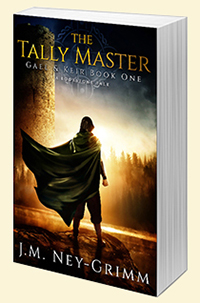
These days I commission cover designs for my novels from Deranged Doctor Design. Their designers are true artists, able to take half a dozen stock images and combine them to create beautiful, unique art that hits the genre conventions of today. I love what they do, and I love the covers they created for The Tally Master and A Talisman Arcane. This month they’ll start work on a cover for my upcoming release, Sovereign Night.

You might expect that my own cover designing days were over, but they’re not, and I’m glad of it. Photoshop still feels like a playground to me, and I’d be sad to give up playing there.

Luckily, I have short stories, novellas, and bundles to design covers for.

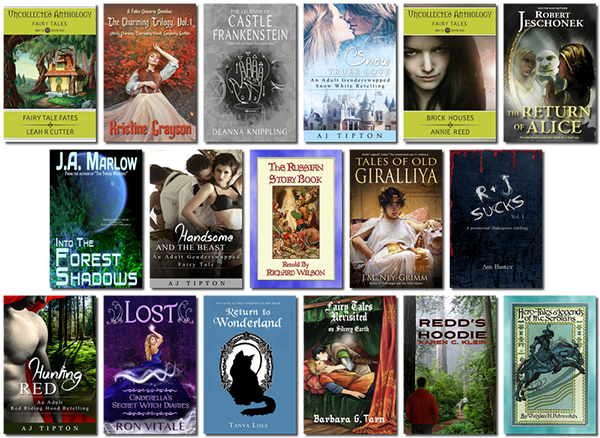
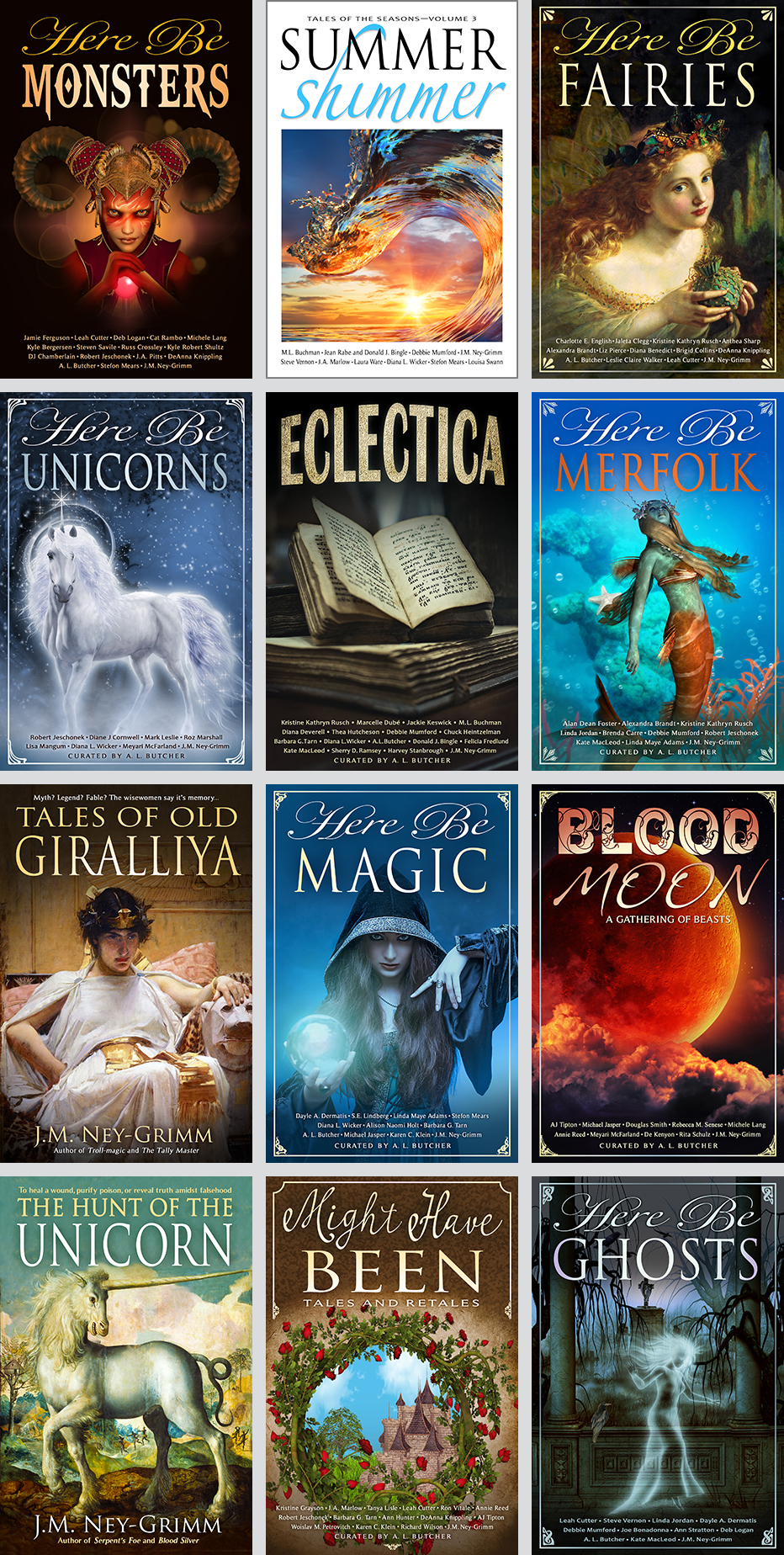
It’s been more than a year since I last collected my most recent covers together in one spot to look at them. I tend to lose track of all I’ve created, so I enjoy making a sort of virtual bulletin board where I can see everything at a glance. Since I’ve made it, I figured I might as well share it. 😀

I hope you’ll enjoy perusing it, too.

Here Be Fairies I Here Be Unicorns I Eclectica I Here Be Merfolk
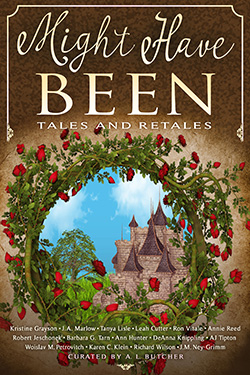
Here Be Magic I Blood Moon I Might Have Been I Here Be Ghosts

For more bulletin boards of covers, see:
A Boatload of Covers
Covers from the Ney-Grimm Catalog


Share

The Tally Master, Chapter 3 (scene 12)

In the copper smeltery, the sergeants were dusting the now-emptied ingot molds with chalk powder, while the scullions scattered the charcoal in the forge with their rakes, preparing it for the overnight cooldown.

The smith, a practical fellow with none of his neighbor Martell’s flamboyance, was examining the stack of copper ingots one by one, no doubt checking that they contained no inclusions where the metal had failed to penetrate the mold completely or where air bubbles had tainted the pour. Copper gave far more trouble than did bronze, although both required care and precision in their handling.

Gael rapped his knuckles on the waist-high counter between the privy smith and the copper smeltery.

The smeltery smith glanced up from his ingot stack, saw Gael, and beckoned him over.

“Keir told me of your schemes for greater efficiency yet,” he said. “Do you have similar plans for the mines?” The smith—Randl—looked skeptical.

“I know it is lack of raw materials that limits your output,” Gael assured him. “And, yes, I do have ideas for the mines.” That was actually true. The magus—his old friend and enemy, Nathiar—had visited the copper mines at Gael’s request, relayed through the regenen, and returned with news of a richer vein of ore, nearer to the surface. Gael had detailed one of the military engineers with determining how to safely access it, and the miners had switched to the new rock face last deichtain.

Randl nodded. “Welcome news, Secretarius.” He tilted his head. “Keeping quiet the clamor that echoed in all four stairwells earlier today would help, too. One of my sergeants landed in the hospital with severe burns because of it.”

Indeed. The copper smelter was already the most efficient of all the smiths, and a demon for work besides. There was a reason he moved over to the tin smeltery on the days that tin arrived in Belzetarn.

“I have another matter on which to consult you,” said Gael.

Randl gestured for him to continue.

“I need to melt down a disk of iron, roughly eight pounds in weight and”—Gael moved his hands—“two palms in diameter, half a finger in thickness, but with concavity of one palm’s depth.”

Randl knit his brows.

Gael continued. “The iron is inset within a disk of bronze of perhaps one hundred pounds and an ell in diameter.”

Randl shook his head. “I cannot melt the iron boss using my forges, Secretarius” he said.

Gael’s innards sank. “You cannot?”

“Tin melts easily,” said Randl. “Heat scarcely hotter than a bread oven takes it liquid.” Yes, Gael knew that. He wasn’t a smith, but one learned a great deal when managing smithies. Randl continued, “Bronze requires heat fourfold that of tin. And copper yet more again.”

Gael nodded. He knew this too.

“But iron . . .” Randl’s lips pressed straight. “I might be able to get the copper furnace hot enough to bend iron, but melting it to liquid . . .” Randl shook his head again “. . . would require more than sixfold the heat for tin. I could not do it.”

Randl intended his explanation to be discouraging, preventing his superior from wasting valuable time and effort on a wild gos chase, no doubt. But Gael’s heart rose at the smith’s words. Perhaps warping the gong would be sufficient to prevent its weakening effect. That was an avenue worth exploring.

“Bending the iron might be sufficient for my purposes,” said Gael. “Will you—”

A cacophony of shouts echoed from the stairwell at the back of the adjacent blade smithy—the Regenen Stair.

Gael and Randl frowned at one another.

The shouts grew louder.

Gael waved Randl back to his copper ingots, himself stepping away.

“I will speak with you more on this matter of iron,” said Gael.

Randl nodded, and Gael strode toward the shouts as their excited tenor gained hostility.

* * *

Next scene:
The Tally Master, Chapter 3 (scene 13)

Previous scene:
The Tally Master, Chapter 3 (scene 11)

Need the beginning?
The Tally Master, Chapter 1 (scene 1)


Share

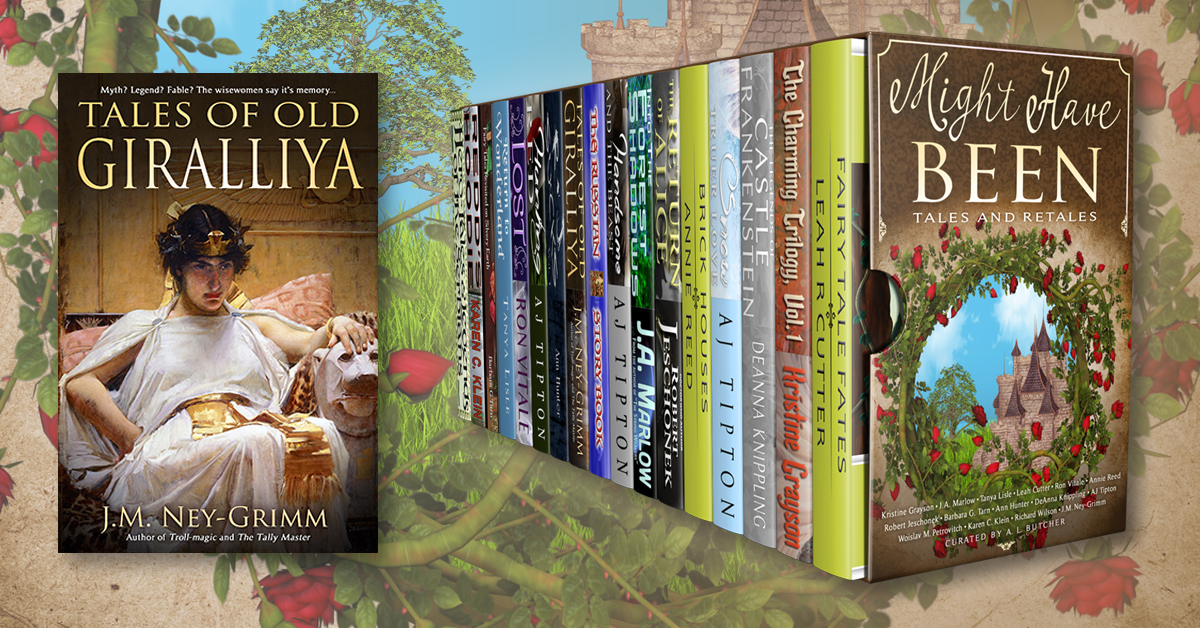
New Bundle! Might Have Been

I love fairy tales! I’ve always loved them, and I hope I always will.

The Red Fairy Book, Tales of the Brothers Grimm, and East of the Sun and West of the Moon were well-read favorites in my childhood, and I didn’t stop re-reading them when I reached adulthood.

My only complaint was that there weren’t enough new-to-me fairy tales. Sure, I could (and will) re-read the old classics indefinitely. I’m a big re-reader. But wouldn’t it be great to find fresh stories, or even the same stories told with a fresh twist.

I can almost believe that A. L. Butcher curated the Might Have Been bundle for me especially.

The Russian fairy tales are entirely new to me, and the twists on old favorites are twists like I’ve never seen before. This is a bundle I’ll devour.

Among the 17 titles in Might Have Been, several provoked particular interest in me. I draw them to your attention…

*     *     *

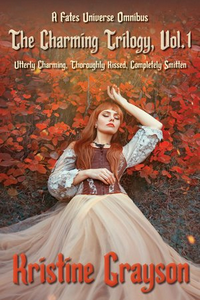
Beauty has a Fate.

A Destiny.

To keep dating losers and ‘beasts’ until she manages to find that prince hidden underneath that bad boy exterior.

But what if she doesn’t want to? What if she wants to take control of her own destiny?


*

“Kristine Grayson gives ‘happily ever after’ her own unique twist!”—Kasey Michaels

In this romantic trilogy, fairy tales and myths inhabit a slightly askew world of charming princes, sleeping beauties, and wicked witches.

Welcome to the fractious fairy tale world of Kristine Grayson, where the bumpy road to happily ever after surprises and delights.

The Charming Trilogy omnibus contains three complete novels.

Utterly Charming

When Prince Charming enters Nora Barr’s office to hire her to protect Sleeping Beauty, only the size of his check keeps her from throwing him out. Nora doubts happily-ever-after exists, but until last week she never saw magic before either. Let alone a real Prince Charming.

Thoroughly Kissed

Emma, the real Sleeping Beauty, awakens after a thousand years and swears to never kiss anyone again. Ever. She keeps that vow until she meets temptingly gorgeous Michael who—somehow—becomes the only person who can get her across country with her weird cat Darnell. Before her magic takes over their lives, and maybe destroys the entire world.

Completely Smitten

For centuries, Darius shadowed Prince Charmings because he knew they needed happily ever afters. And he does too. After he fought Cupid, the Fates forced Darius to unite 100 soulmates. Two away from the end of his sentence, he falls for triathlete Ariel, seemingly destined for another soul mate only he can find. If he wants freedom, he must find her soul mate. No matter how badly it breaks his heart.

*

A modern twist on the classic fairy tale of the three little pigs and the big bad wolf.

Lettie and her brothers inherited a great deal of money from their grandpa. While her brothers took the money and set off to enjoy life, Lettie took her share and bought a bar.

Unfortunately for Lettie and her brothers, Grandpa had a lot of other grandkids, and he pissed off all of them by leaving them out of his will.

And some of those other grandkids are werewolves.

*

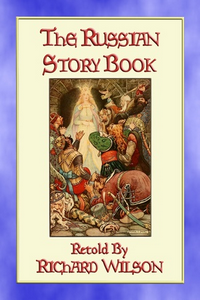
Illustrated children’s stories that come from the heart of ‘Holy Russia’— a realm stretching from the Ukrainian Steppes of Kiev to Novgorod in the west to the borders of the Caspian Sea in the east.

Ilya and Cloudfall
Ilya Meets Svyatogor and Parts with Him
Ilya and Nightingale the Robber
Ilya and Falcon the Hunter
The Adventure of the Burning White Stone
The Story of Nikitich and Marina
The Story of Kasyan and the Dream Maiden
How Stavr the Noble Was Saved by a Woman’s Wiles
The Golden Horde
How Quiet Dunai Brought the Princess Apraxia to Kiev
How the Court of Vladimir Received a Visitor from India the Glorious
Whirlwind The Whistler, or the Kingdoms of Copper, Silver, and Gold
Vasily the Turbulent
Nikita the Footless and the Terrible Tsar
Peerless Beauty the Cake-Baker

In addition to charming line drawings, the ebook is enhanced by 16 amazing color-plates from Frank C. Papé.

Curl up with this unique sliver of Russian culture—not seen in print for over a century—and immerse yourself in the tales and fables of yesteryear.

*

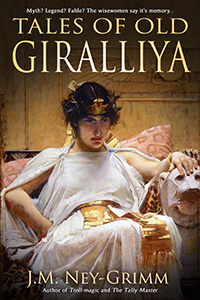
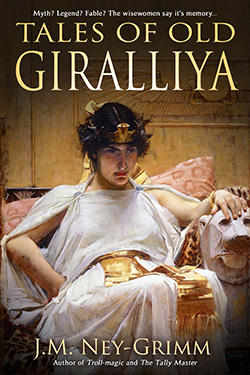
Might Have Been also includes my own story collection, Tales of Old Giralliya.

A troll-mage rains death upon the land from his citadel in the sky. Who—if anyone—can defeat him? Despite the oracle’s prophecy, few believe the beggar’s son might be the people’s champion.

A magical plague infests the villages, the cities, and the lonely manors. Will the realm descend into ruin before a cure is found? Or could wizened, old Eliya convince the stricken that something improbable might save them all?

Three ducal brothers fight for the rule of their duchy, crushing fields and hamlets under their chariot wheels. Can young Andraia, kidnapped from her village, bring the destructive struggle to an end?

Instead of Hansel and Gretel, Little Red Riding Hood, or the Pied Piper of Hamelin, the Giralliyan Empire has Ravessa’s Ride, the Thricely Odd Troll, the Kite Climber, and more. Tales of Old Giralliya presents six of these fresh, new fairy tales for your enjoyment.

Adventure and magic in the tradition of The Red Fairy Book and the Tales of the Brothers Grimm.

*

From retellings of classic fairy tales to legends and lore shared around the hearth, this collection presents stories of wonder and fantasy—some straight up and others with a twist.

Children’s tales from Serbia and Russia feature water spirits and household sprites, knight princes and giants, whirlwinds and the Golden Horde.

An unusual visit to Wonderland follows Alice as she encounters the Mad Hatter, the Cheshire Cat, and Humpty Dumpty under horror’s shadow. The secrets of a most infamous castle, Burg Frankenstein, deliver up ghosts.

While a trio of sexy gender-swap tales yield Snow White, Red Riding Hood, Beauty and the Beast with spice.

Romeo and Juliet—and vampires, the Three Little Pigs as you’ve never seen them, Cinderella embracing witchcraft…these are the Might Have Been, folklore, granny tales, and fairy tales turned upside down or glimpsed darkly in the mirror.
 
*Not all stories suitable for kids.

The Might Have Been bundle includes:

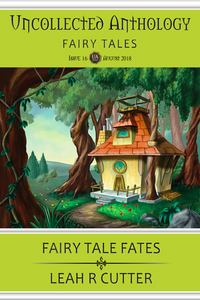
“Fairy Tale Fates” by Leah Cutter
The Charming Trilogy by Kristine Grayson
“The Legends of Castle Frankenstein” by DeAnna Knippling
Snow Truer Love by AJ Tipton
“Brick Houses” by Annie Reed
“The Return of Alice” by Robert Jeschonek
Into the Forest Shadows by J.A. Marlow
Handsome and the Beast by AJ Tipton
The Russian Story Book by Richard Wilson
Tales of Old Giralliya by J.M. Ney-Grimm
“R+J Sucks” (Vol 1.) by Ann Hunter
Hunting Red by AJ Tipton
Lost: Cinderella’s Secret Witch Diaries by Ron Vitale
Return to Wonderland by Tanya Lisle
Fairy Tales Revisited on Silvery Earth by Barbara G. Tarn
“Redd’s Hoodie” by Karen C. Klein
Hero Tales and Legends of the Serbians by Woislav M. Petrovitch

P
A Head’s Up: Most of the titles in the bundle are ‘sweet,’ not ‘spicy.’ But the few spicy ‘not for kids’ stories include explicit scenes. If fictional spice is not for you, be prepared. (Myself? I did some skipping.)

Of the non-spicy stories I’ve read so far…“Fairy Tale Fates” possesses a twist after my own heart; Completely Smitten from The Charming Trilogy has given me a new favorite character: Darius; and “Brick Houses” was just pure fun.

The Might Have Been bundle is available at Amazon, Barnes & Noble, Kobo, iTunes, or direct from the BundleRabbit site.

*     *     *

For more bundles with my stories in them, see:
Here Be Magic
Eclectica
Here Be Unicorns
Here Be Merfolk
Here Be Fairies
Here Be Dragons
Immortals


Share

The Tally Master, Chapter 3 (scene 11)

Gael paused in the passage at the bottom of the Regenen Stair.

Well, it wasn’t the uttermost bottom. The lowest levels of the kitchen annex, slabbed onto the southeast side of the tower, lay a few twists below the forges. But the smithies—his smithies—occupied the foundations of the tower proper.

So he stood a moment, listening to the roaring of the furnaces, the clang of hammers on metal, the shouts of the smiths, and the hissing of quenched bronze, all of it echoing off massive stone piers and heavy stone groins.

This was his realm as much as the tally room. His tally room governed these vast, dark, hot vaults, lit only by the white orange glow escaping the forges and the whiter orange incandescence of the molten bronze.

More often than not, the smiths blanketed the deep embrasures of the tower arrowslits with leather hides, not needing sunlight because of the brightness of the heated metals; not wanting sunlight, because the darkness allowed them to better judge the precise moment when the molten metal had reached the right color—and heat—for pouring; or when the annealed metal grew ripe for tempering.

The Regenen Stair debouched at the back of the blade smithy.

Gael could see the scullion at the twin bellows. The inflating and deflating leather sacks pulsed like beating hearts, pushing air over the forge coals at just the right rate to produce the right heat. The smith and his sergeants were checking the blade mold, assuring themselves that the straps holding it closed were tight and assessing its temperature. The mold required heating to ensure that the molten metal would flow into it properly and would come out of the mold—once solid—without damaging it.

The heat of the smithy had not yet penetrated Gael’s suede robes, but the dry air baked the skin of his face and hands.

Yet he was not here to question the bladesmith. Not this time.

To the left of the blade smithy lay the tin smeltery and the grinding smithy, the smeltery close to the center of the vault where the furnaces for refining the tin glowed, the grindery at the perimeter of the tower’s foundation.

The mighty piers holding up the ceiling arches and the waist-high walls separating the different smithies hid much of the tin smeltery from Gael’s gaze. The grinding smithy was entirely veiled by curtains of leather hide. Perhaps Keir stood within them now, talking with the notary there. Gael did not see the boy elsewhere.

The grinding smith needed all the sunlight pouring through the embrasures on his side of the tower, so that he could be sure each blade was polished to perfection, its edge sharp and perfect, without flaw. The leather curtains contained the sunlight which would otherwise overwhelm the white orange glow of the forges that every other smith depended upon.

To Gael’s right, the fully walled storage rooms blocked his view of the copper smeltery and the privy smithy where he was headed.

He took a moment more to savor the smoothly working operation that the smithies had become. The smiths, their sergeants, and their scullions moved with assurance. The ring of hammer on bronze formed a sort of music. And, most important, the metal ingots entered the smithies, moved through them, and exited in the controlled flow that Gael had introduced.

When Gael took over their management at Lord Carbraes’ behest, each smithy had used a different tallying system—not one of which matched the other. Each smith had requisitioned ingots haphazardly, and sometimes a smithy went dark for an entire waxing moon merely because the tin vault lay empty.

Gael knew that the sure supply of the metals they needed generated the calm demeanor of the smiths, which flowed in turn to their underlings. Despite the heat and the din—the roar of the fires, the ring of pounding hammers, the shouted orders—these smithies were as much a haven for the workers of metal as the tally room was a refuge for he who counted.

Gael edged along the side wall of the blade smithy—the wall dividing the smithy from the storage rooms—and then along the back wall of the copper smeltery. He reached the privy smithy as Martell flourished a bronze ewer overhead.

“Ah! Ha, ha! Look at it! Look! Is it not fine?” Martell turned, his beaky nose with its small ornamental ring gleaming, and caught sight of Gael. “Look at the scrollwork where the handle meets the vessel! And these—the flourishes at the top where the spout attaches!” The smith strode toward Gael to hold the ewer for his close inspection. “Say I do good work!” he demanded, grinning. Sweat stood out on his brow and dewed the frizzles of his hair, escaping from its braid.

Gael smothered the smile on his lips, but let it reach his eyes. “You do good work,” he agreed.

“This ewer! The serving platter I completed this morning! And this! This, too!” Martell rummaged in a heap of utensils—kitchen knives, roasting spit jacks, awls—seized on a graceful bowl, and drew it out. “Magnificent! All of it! And to you I owe it all!” he exclaimed. “Before, it was always Martell who went short when the tin lacked, when the bronze was insufficient. But now—now Martell makes beauty to soothe the soul, and all Belzetarn is better because of it!”

Gael laid a hand on the smith’s arm. “That is true, my friend. May I have a word?”

Martell looked surprised. He shrugged, handed the bowl and ewer to one scullion, and turned to issue instructions to another. The afternoon was getting late, but evidently the privy smithy would be pouring at least one more item before they put their forge to bed.

Martell drew Gael around the massive pier separating the privy smithy from the armor smithy to the deeper shadows. “You have trouble, my friend. I sense it, I, Martell. But tell me!”

This was awkward, but Gael had been dealing with Martell’s enthusiasm for years.

“The trouble, my friend, is you.”

Martell looked more surprised yet. “But, no! How could this be? Martell is your most ardent supporter.”

Gael let a dry chuckle escape him. “Well do I know it, my friend. But this is the old trouble. The trouble with the tallies from the privy smithy.”

“Ah! Yes! The ingots coming in to the privy smithy are not matched by the weight of the beauty leaving it! Ah! I know this trouble, I, Martell! But I have explained, my friend. Art is not precise! Art requires passion! The tallying—it is anathema to the creativity. You understand this, my friend! Yes?”

Gael suppressed another smile. The issue was serious—missing tin, so precious tin—but Martell always amused Gael, even gave Gael joy. For Martell was one of Gael’s successes. The privy smith had been morose when Gael first arrived. Now he was ebullient, even while he made absurd claims. Martell might say that art needed precision less than it needed inspiration, but his art—made in metal—required great precision and care in the percentages of tin versus copper and in the heat applied to both.

Martell might be sloppy with the tallies he permitted his notary, but he was not sloppy with his medium.

“I do understand, my friend, but your tallies have slipped further from true yet again. I can allow you a few ounces, even up to half an ingot. But a full ingot’s worth is too far.”

Martell’s mouth, mobile beneath his beaky nose, drooped. “But, no, my friend! Surely not!”

Gael nodded firmly. “It is so, my friend. And I will need your good will to set it straight.”

Martell’s eyes brightened. “Ah! Then, trouble there is none, for you have my best will and always will! Tell me, and we solve it all!”

“I hope so,” replied Gael. “Will your good will extend to my notarius? To Keir?”

“But of course! Keir, he is your right hand. Courtesy to Keir is naught but courtesy to you!”

“Good. Because Keir will come down to your smithy in the morning after all the smiths have received their metals, and you must not start until after Keir has counted and tallied your ingots after their arrival. Can you do that, my friend?”

Dismay crossed Martell’s face. “Keir shall count my ingots?”

There was no point in adjuring Martell’s notary to tally more carefully. Martell had him utterly subjugated and would snatch the metal away before the notary was half done. But Keir was more than a match for Martell.

“Will you let Keir be my hands? For me, my friend?”

“Ah! For you, yes! For you I will do any and all! Ah!”

Gael patted Martell’s shoulder. “Good. And then again in the evening, when the scullion is ready to carry the finished implements, the residual metals, and any unbroken ingots away, you must send another scullion to fetch Keir from the bronze vault. And Keir will weigh the exiting material.” Gael overrode the smith’s voluble response. “For me, my friend. Will you do it?”

“Ah, ha!” broke in Martell. “I see it now! You doubt my notary!”

Gael shook his head. “I doubt your notary not at all. It is your own enthusiasm and haste that is the culprit, my friend. And those will not be stemmed by your devoted notary. You know it is so.”

“Ah, ha, ha! It is so. You know me, my friend, you do!”

Gael took Martell’s hand and grasped it. “I do know you, Martell. Will you help me thusly? Will you hold to your promise tomorrow, even in the rush of your artistry?”

Martell’s hand returned the pressure of Gael’s. “I will do it, yes. I make you my promise!”

“Good!” Gael patted the smith’s shoulder once more, withdrew his clasped hand, and moved back around the sheltering pier toward the copper smeltery. Behind him, Martell burst into voluble instructions to his underlings.

* * *

Next scene:
The Tally Master, Chapter 3 (scene 12)

Previous scene:
The Tally Master, Chapter 3 (scene 10)

Need the beginning?
The Tally Master, Chapter 1 (scene 1)

 

Share

Am I Daring?

One lone idea sparked my short story, “To Haunt the Daring Place.” I wanted to tell about the founding of a monastery that will feature in the ninth book of my Gael & Keir series.

That was all I had.

There was a monastery. It had an unusual founding. Gael and Keir would visit the place a hundred years (or two) later.

My logical self informed me that this was a slim spot to start from.

My storyteller self felt serenely sanguine. There was a story already present, hiding in my subconscious and ready to be revealed. All I needed to do was trust in its existence and tell it.

I mused upon my protagonist. He was a scholar and a mage, possessed of great world-wonder. He felt curious about everything, but he’d taken a break from the scholarship he loved to rebuild his fortunes, which were decimated by the troll wars. Now he was reclaiming his curiosity.

His name was Coehlin, and he was an especial fan of ancient North-lands philosophers such as Kleomedes the Younger and Aglaia of Seleucis.

I envisioned the story appearing in my collection, Tales of Old Giralliya.

The time period seemed to fit, and I envisioned a sort of fairy tale style for its telling.

But after I wrote the first scene, it was clear that I wasn’t using a fairy tale style at all. It wasn’t right for the story I wanted to tell. Nor would the length be comparable to that of the other stories in Tales of Old Giralliya. They fell in a range between 700 and 4,500 words. “To Haunt the Daring Place” would be at least 6,000 words, maybe more.

My next plan was to submit the story to SFF magazines.

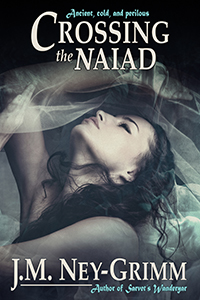
web imageI’d received a nice comment from a magazine editor when I submitted “Crossing the Naiad” to him. Recently I learned what a personal comment like that meant, aside from, ‘It’s good!’ It meant that he’d read the story all the way to its end. And editors don’t do that unless either: 1) they think they might buy the story for their magazine, or 2) they are enjoying the story so much that even though it is not right for their magazine, they can’t bear to stop.

That put my editor’s comment in a new perspective. Getting a story accepted seemed like it might truly be possible!

But as I wrote “To Haunt,” I began to worry that it would be too long for any magazine. Wasn’t 6,000 words the top limit for many? And it was becoming ever more certain that “To Haunt” was going to cross that 6K limit.

In fact, the first draft of “To Haunt” came in at 13,714 words. Yikes!

If 6,000 were the top edge, then my story was more than twice as long. Cutting it down a little to fit wouldn’t be feasible. But I could (and should) check that limit. Maybe my memory was wrong. Maybe, even if I remembered right, there might be a few magazines that would take a novelette. Or, if there weren’t any magazines that would, maybe there would be an anthology call permitting longer lengths.

What I really wanted was to get my story into a magazine with a circulation of thousands or an anthology with an editor possessing an established audience of thousands. The readers who read my work seem to love it. But their numbers are, as yet, few. I want readers who have never heard of me to have a chance at reading my stories.

So…is there a potential venue for “To Haunt the Daring Place”?

Yes!

I checked the word limits for the top magazines, and two of them accept submissions up to 20K. Two more specify 15K, and one 10K.

Obviously the 10K rag won’t work for “To Haunt,” but I have several options. Yay! I’m pretty thrilled about it.

So…did the monastery get founded?

W-e-l-l…not exactly.

The magical architectural element that leads to the founding of the monastery is indeed created in the events recounted in “To Haunt the Daring Place.” But the monastery itself? No. It’s never even mentioned.

But it will be a fun Easter egg for readers of both “To Haunt the Daring Place” and Book Nine of the Gael & Keir Adventures. I assure you that the architectural element is not something that can be missed!

Wish me luck in getting the story accepted. 😀

Edited to add: “Daring” received some words of praise from the magazine editors, but none of them chose to include the story in their magazine. Not to worry, though—I’ll publish it through Wild Unicorn Books, which means that you will be able to read it!

For more about Tales of Old Giralliya, see:
Rebirth of Four Fairy Tales
Two Giralliyan Folk Heroes
Caught Between Two Armies
Tales in a New Bundle


Share

The Tally Master, Chapter 3 (scene 10)

Chapter 3

In the upper reaches of the Regenen Stair, numerous arrowslits brought in light during the hours when the sun shone. But the tower’s foundations were broader than its heights, which meant the lowest twists of the stair were too far from the outer walls to make arrowslits practical. There, torches burned even by day, black soot stains on the stone vaulting above each.

As Keir and Gael passed the wide archway into the servery for the Regenen’s Kitchen, a shout hailed them.

Gael halted on the landing. “Go ahead of me, boy,” he told Keir. “Best we arrive in the smithies separately anyway, to avoid giving undue importance to your inquiries.”

Keir nodded, quickly disappearing around the newel post.

“Gael!” came the shout again from the Regenen’s Kitchen.

Gael entered the servery, a spacious chamber that grew crowded and chaotic only when the scullions clustered there, intent on grabbing the multitude of dishes they would deliver to the great halls for the morning meal or the evening feast. Between meals, the servery remained empty, its peace disturbed only by echoes from the adjacent kitchen.

A wide hatch with a broad stone sill that served as a counter occupied the wall to Gael’s left. The scullions loaded their trays at this hatch. Right now, a lean troll—with short, straight brown hair and brown eyes—perched on its sill, apparently unworried that his clogs sullied its cleanliness. His nose possessed the characteristic elongation and upward turn, but his ears—revealed by his cropped hair—remained small and well-formed. Like those of their overlord Carbraes.

Various food stains marked the apron that swathed him.

“Barris!” Gael greeted him.

Barris’ brown eyes lit, and he swung himself down from the hatch to stand leaning against its sill.

“Ha!” he exclaimed. “I hoped you’d climb out of your tally room before it buried you! Where’ve you been, you slacker?”

Gael suppressed his grin. “Slaving in my tally room, of course. Mule-horse! Missed me, did you?” It was true that Gael usually exchanged at least a few words with Barris after the metals check out. Like Arnoll, Barris was his good friend.

This morning, he’d been determined to track down the error in his tallies. The error which had proved to be no error.

“Have you heard that Carbraes has caved at last?” said Barris.

What?

“Dreben’s getting his gladiatorial ring as soon as he cares to organize it.” Disapproval laced Barris’ usually insouciant tone. “Probably yesterday, knowing Dreben.”

“From whom did you learn this?” asked Gael.

Dreben was brigenen—first in command—of the First Cohort of Belzetarn’s First Legion. He was a short, tough troll with a mean streak. Gael had disliked him ever since he’d found the brigenen’s bastan huddled outside the armory, bruised and sobbing. Evidently Dreben had needed a punching bag as an outlet for his temper and decided the bastan would do fine. Gael gathered that it wasn’t so much the bruises as Dreben’s caustic tongue that had upset the boy, who refused all aid, scuttling away from Gael’s offers.

“From the castellanum’s prime notary to the kitchens’ notary to me,” said Barris. “Doubt it’s merely rumor.”

“Hells.”

Carbraes believed that drill kept the warriors fit, spit-and-polish duty kept them busy, and sparring kept them ready to fight. Dreben, continuously agitating for sparring with live bronze in addition to inert wood, claimed that only the risk of serious injury during practice bouts would keep a troll sharp. Why had Carbraes given in to him?

Barris shook his head. “Notarius Prime says—”

A scullion appeared on the kitchen-side of the serving hatch. “Sir? Opteon?” Unlike Keir, he was servile in getting his superior’s attention.

“What is it, lad?” Despite the interruption, Barris answered the boy kindly.

The scullion bobbed an anxious bow. “Sir, I’m to start the butter sauce, but I can’t remember if I add the dried sage with the flour, or if it goes in later. And I don’t hardly like to ask Fayn, sir.”

“No, no. I understand.” Barris smiled. “You’ll be using dried sage? Not fresh?”

“Yes, sir. The dried powder from the larder, not fresh leaves from the garden. Fayn said that especial.”

“No doubt he prefers the stronger flavor,” Barris explained. “Very well. Mix it in well with the flour, and be careful not to overcook the roux after you’ve added the flour mixture to the butter. Pour the milk the instant you smell that toasting scent coming off it.”

“Yes, sir. Thank you, sir.”

The scullion scurried away. Just before he left earshot, Barris called, “Be sure to swing the pot well to the side of the hearth once the sauce is done! It needs to stay warm, but shouldn’t be cooked past the finish!”

The boy nodded anxiously as he passed around the corner.

“I should be on my way,” said Gael.

“Stay a minute.” Barris’ geniality with his underling shifted to uneasiness. He lowered his voice. “Do you think Carbraes could be slipping?”

“Do you?”

“No. But—no.” Barris studied his clogs, then looked up again. “If Carbraes ever goes down, Belzetarn won’t be a reasonable refuge anymore. You know this.”

Gael didn’t nod, studying his own foot gear: soft leather, knotted thongs, the shoes of a troll who needn’t worry about cooking knives dropped or swords slashing in battle.

Barris touched Gael’s arm. “As secretarius, you see Belzetarn from the top. I don’t. Do you think Carbraes is weakening?”

Gael thought of Carbraes as he’d just seen him at noon: relaxed, powerful, and fully in control.

“No. Not at all.”

Barris’ breath whooshed out in a loud sigh. “That’s a relief.”

Gael’s mouth twisted up. “You know I’d warn you, if ever real risk approached.”

Barris stared at Gael. “Huh. You would, wouldn’t you?”

“Bet on it.” He clapped Barris on the shoulder.

“Oh, I do!” Barris was grinning again.

Time to change the subject. “Listen, I’m trying to track down an anomaly.” This was the real reason he’d stopped at Barris’ hail. “Maybe nothing serious; maybe serious, but only in my purview. If it’s what I suspect, there should be a string or two that leads under other doors.

“You’re an observant fellow, Barris. The other opteons in the regenen’s kitchens and the castellanum’s kitchens and all the other kitchens can’t see beyond their cook pots and menus. But you recognize that changes in orders to the kitchens reflect the concerns of the castellanum and of the regenen himself. All Belzetarn is reflected in the kitchen annex.”

Barris nodded, looking pleased.

“Have you observed anything unusual lately? Maybe something small or innocuous, but something different.”

Barris’ brows tensed. “There is one thing . . .”

“Yes?” said Gael.

“You know how we ‘peons’ are given various dainties as reward and incentive?” Barris’ sarcastic tone on the word ‘peon’ reflected his opinion of the practice. He was no peon, being one in the trio of chief cooks in the Regenen’s Kitchen.

But patronage was how the entire troll society within Belzetarn operated.

Gael had heard tales about the previous regenen, who preferred thrashings to motivate his followers. Carbraes granted extra sauna privileges or a cup of mead or an afternoon of rest when he was pleased, and his officers followed his lead. Much more effective, surely, and certainly more civilized.

Barris might not like being condescended to, but most trolls were happy to receive a treat. Gael lifted an eyebrow. “Was Theron especially gracious to you?”

The castellanum had learned that Barris gave only dignified thanks for presents and snarky backchat in response to a superior’s haughty disdain. Barris would never have kept his position, if he’d cooked in the Castellanum’s Kitchen instead of the Regenen’s.

Barris snorted. “Oh, it’s nothing to do with me.” His amusement faded. “But the castellanum is scattering his dainties with greater abandon than usual. He’s granted several trolls from the Hunters’ Lodge dining privileges in the lower great hall.” The hunters ate their meals in the Hunters’ Lodge not in the tower proper, just as the physicians ate in the dining hall of the hospital and the leatherworkers in the Artisans’ Lodge. Barris shifted impatiently. “Hells! He even invited Martell to join him at the high table.”

“The privy smith?” That startled Gael. A smith was no peon either. Indeed, a smith received honor equal to that of a brigenen of the legions. Or an opteon in the kitchens. But neither of those were candidates for dining at the regenen’s table with the castellanum, the march, the magus, and the regenen himself. Gael dined there. But he was the regenen’s secretarius, one of the four officers through whom Carbraes governed his troll horde.

Barris bit his lip. “Theron’s up to something.”

And that was the tip Gael was looking for.

* * *

Next scene:
The Tally Master, Chapter 3 (scene 11)

Previous scene:
The Tally Master, Chapter 2 (scene 9)

Need the beginning?
The Tally Master, Chapter 1 (scene 1)
 

Share

Upcoming Release! Tales in a New Bundle

Tales of Old Giralliya is an experiment for me.

I conceived of the stories as the fairy tales that mothers and fathers of my North-lands tell their young children at bedtime, and I recounted the stories in the spare style typical of fairy tales.

Characters are sketched in with just a few details, leaning heavily on archetypes. We have the young, inexperienced king, who tries something that an older man would not. Or the young girl, kidnapped from home, held captive by her enemies, and faced with a chance to save her village, but lacking any obvious means to do so.

Each story is comprised of just one scene, or two, embedded within a scant narrative frame that is the equivalent of ‘once upon a time.’

I loved telling the stories, writing in hope that some of my readers would enjoy reading them.

But would they? Would they really?

And who might like to be my first reader, the one to give me necessary feedback—feedback that would allow me to revise the stories to be their best?

I needed someone who not only had loved fairy tales as a child, but who still loved them. Someone who might pull out her battered copy of East of the Sun and West of the Moon and read it for pleasure (not mere nostalgia) now.

Really, my choice of a first reader was simple. I asked the curator of the bundle for which Tales of Old Giralliya was created.

She graciously consented to help me, and I sent her the file.

Then I waited. Nervously.

I thought she would like the stories, but . . . would she really?

Well, good news: she did! 😀

And she provided me with excellent feedback.

My collection has now been revised, edited, and proofread, and will release sometime this month in the bundle entitled Might Have Been.

Here’s a little bit about Tales of Old Giralliya.

*     *     *

A troll-mage rains death upon the land from his citadel in the sky. Who—if anyone—can defeat him? Despite the oracle’s prophecy, few believe the beggar’s son might be the people’s champion.

A magical plague infests the villages, the cities, and the lonely manors. Will the realm descend into ruin before a cure is found? Or could wizened, old Eliya convince the stricken that something improbable might save them all?

Three ducal brothers fight for the rule of their duchy, crushing fields and hamlets under their chariot wheels. Can young Andraia, kidnapped from her village, bring the destructive struggle to an end?

Instead of Hansel and Gretel, Little Red Riding Hood, or the Pied Piper of Hamelin, the Giralliyan Empire has Ravessa’s Ride, the Thricely Odd Troll, the Kite Climber, and more. Tales of Old Giralliya presents six of these fresh, new fairy tales for your enjoyment.

Adventure and magic in the tradition of The Red Fairy Book and the Tales of the Brothers Grimm.

*     *     *

For more about Tales of Old Giralliya, see:
Rebirth of Four Fairy Tales
Two Giralliyan Folk Heroes
Caught Between Two Armies


Share

The Tally Master, Chapter 2 (scene 9)

Gael had returned to the tally chamber after talking with the quartermaster, and was preparing to descend to the smithies, when Keir came in. The boy was his usual collected self—unlike his previous entrance—but there seemed a hidden tautness in him.

Gael finished swinging the inner shutters of the casements open, and the golden afternoon light shone in, illuminating the dust in the air and casting circle-patterned rectangles of brightness on the pigeonhole cabinets. He leaned a hip against the stone of the casement sill and gestured for Keir to speak.

“Eighty-two ingots of tin,” Keir said. A hint of trouble shadowed his eyes.

“And . . . ?” said Gael.

“I re-tallied the copper vault and the bronze vault as well.”

Ah. That explained what had taken the boy so long.

Gael lifted an eyebrow.

“Four-hundred-twelve ingots of copper. Ninety-four ingots of bronze.”

Gael noticed his hand clenching into a fist and unclenched it. Ninety-four. Where there should be ninety-five. The bronze vault was not due for tallying until the waxing moon. That was clever of Keir to realize that if the tin count was off, so might the count be off in the other vaults. But not the copper vault. Just precious tin. And precious bronze.

“It is a thief,” Keir said. “Isn’t it?”

Gael nodded, reluctantly. He knew very well that trolls—like men—were not saints, but he’d wanted to believe that their worst lay outside Belzetarn on the battlefields, not within it.

“Should I re-tally the oxhide vault and the pebble vault?” Keir asked. He meant the stores of partially refined metals that came directly from the mines.

“That will need doing, yes,” answered Gael. “But first I want you to talk with the notaries of all the smithies. Take their signed reports from yesterday and the day before, and go over them with each. Ask them about how the smithing went, and determine if something unusual could have caused an error in their tallies.”

Keir moved to the cabinet on the right side of Gael’s desk and started taking the relevant parchments from a pigeonhole.

“Be indirect,” said Gael. “Keep the thief, if there is one”—he knew his hope that there might not be to be a forlorn one—“from hearing we’re onto his theft.”

Keir looked up from his parchments with an expression of slight disdain on his face. “I won’t even let on there’s a problem with the tally,” he said coolly. “As far as they are concerned, we’re looking at efficiency and ways to improve it.”

Gael felt his lip curl. He suspected Keir was better at concealing tally room business than was Gael himself.

“I’m headed for the smithies also, but before we go . . .”

Keir had been stuffing the parchments into his portfolio. His hands stilled.

Gael wasn’t quite sure where to begin.

“My lord Carbraes bade me examine the prize brought in by the Third Cohort.”

Keir’s face grew as still as his hands. Typical of him. Thusly was the boy’s most acute interest marked: by withdrawal rather than drawing nearer.

Gael continued, “I have performed that examination, and it is an evil thing, fashioned such that its resonance drains the energea of all within hearing. I am certain that the regenen will wish me to pursue the matter to some safer outcome, and I . . . wish it, too.” He felt surprise at his stated conclusion. His hatred for that gong, locked in his quarters, had only grown in the brief time since he’d left it. Why would he wish to tinker with it further? “Some method of rendering the thing harmless”—or of destroying it, he would dearly love to destroy it—“must be devised. And I . . . am likely the best choice to do so.”

“The magus?” asked Keir.

“Is not,” answered Gael.

“Because . . . ?”

“Because the magus would prefer that Belzetarn’s smithies forge magical blades to match those wielded by the mountain folk, the Ghriana. He forgets—or chooses to ignore—that the trolls who practice magery sink to madness and death that much faster.”

Keir swallowed, his cool demeanor troubled. Gael realized he’d never admitted his own negative opinions of his colleague so frankly before.

Then the boy bore up, lifting his chin. “You’ll require that I carry the tasks of the tally room forward, while you pursue the destruction of the gong.”

That was it in a nutshell.

“Yes.”

Keir flushed, most uncharacteristically. “Will you instruct me now?” he asked. “Or later, after check in?”

“You need no instruction.” That was blunt, but accurate. “You could run the tally chamber entirely without me at need.” Gael nodded. “On the morrow, in the morning, you’ll check the metals out to the smithy scullions and lodge scullions without me.”

“Yes, sir.”

Gael admired Keir’s ability to be respectful without a trace of servility. Not all the trolls possessed it.

“But we’ll do the evening checking in together. I want to know if any more ingots go missing.” He couldn’t keep the grim tone out of his voice. It infuriated him that someone had breached his control over the metals flowing through the tower. The thief—if thief it was—would be sorry when Gael found him.

* * *

Next scene:
The Tally Master, Chapter 3 (scene 10)

Previous scene:
The Tally Master, Chapter 2 (scene 8)

Need the beginning?
The Tally Master, Chapter 1 (scene 1)

*     *     *

Buy the book:
The Tally Master


Share

Caught Between Two Armies

Before I embarked on writing “The Kite Climber,” I possessed only the haziest of ideas for the story I wanted to tell.

It involved kites and civil war.

That was all I had.

I knew very little about man-lifting kites. I knew they existed historically. I knew they’d been used in times of war for signaling and observation. I had this vision in my head of a gigantic diamond-shaped kite with a man lashed to its cross bracing. That’s actually not what man-lifting kites look like, but I didn’t know that then.

Nor did I go seeking such information.

I felt like I needed the emotional heart of my story more than I needed technical details.

I trawled through my memories of my backlist books in hope of finding inspiration, and find it I did in a passage from Troll-magic.

Lorelin . . . embarked on the story of Emoirie’s great grandmere, the remarkable lady who’d saved her village when it was caught between opposing battalions in the Wars of the Tree Wands; and then for an encore went on to boss around the most influential Giralliyan Paucitor of her times. All before the age of twenty years, when she returned by choice to her humble origins and lived happily to become matriarch over innumerable grandchildren.

I loved the possibility of telling the story of Emoirie’s great grandmother.

There was only one problem with that, but it was a serious one. Emoirie lives in the Steam Age of my North-lands. Her great grandmother would have lived in the Age of Sail.

The story I wanted to tell took place long before then, at the end of classical antiquity when much of Giralliya was war-torn and falling into the barbarism of the Dark Ages.

I teetered on the edge of dismissing my feeling of inspiration, and then decided I’d be bold and uphold my inner artist. Surely Emoirie’s great grandmother wasn’t the only woman who’d been faced with saving her home when it stood between opposing armies.

I would tell the story of a girl confronted with exactly that circumstance, but living in the violent period of history that I wished to chronicle.

I was so excited by my decision, that I dove right in!

No research, no hesitation, just a quick sweep for names (people and places), and then I began.

I’d imagined starting with the girl who’d been stolen to climb the kite tethers, carrying reports from the man aloft in the kite to the forces on the ground. Instead, I delved into the source of the armed conflict. Only after I’d recounted the story of the three hostile ducal brothers did I turn to Andraia, my heroine.

But it was going well, and I was loving it.

I never did check into the man-lifting kites—not until after I finished the story.

The fighting brothers were all mages—powerful troll-mages. They were more than capable of using magery to give their colossal diamond-shaped kites a boost, if the technical aspects really required more lift than a diamond-shaped kite could provide.

“The Kite Climber” is one story of six in Tales of Old Giralliya.

For more about the collection, see:
Rebirth of Four Fairy Tales
Two Giralliyan Folk Heroes
Tales in a New Bundle


Share