Now Solo! The Hunt of the Unicorn

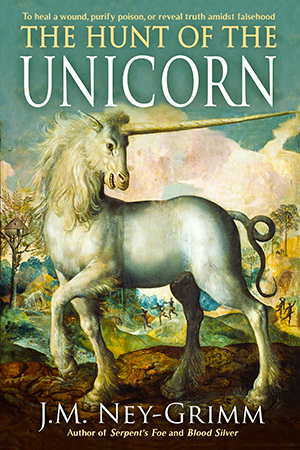
Nearly a year ago, my short story “The Hunt of the Unicorn” released in the bundle called Here Be Unicorns.

I promised that I’d also release it solo in a few months—maybe three or four. Then life intervened.

I had oral surgery, part 1 and part 2. My husband’s position at his workplace was eliminated. My children started the college application process, which proved to be much more demanding of the parents than I’d ever imagined. And, and, and. 😉

But now, at last, “The Hunt of the Unicorn” is available within its own cover—with amazing art from the 1500s—in both ebook and paperback form. I’m thrilled.

Go check the Look Inside! I think I’ve developed an unusual twist on the medieval fable of the unicorn. I’m curious what you’ll think.

Heal a wound. Purify poison. Reveal truth amidst falsehood.

He would be king one day, and called as king to be wise for his people. But wisdom—and kindness—no longer come to him.

Brychan, princess in a corner of a Wales that never was, requires a unicorn’s horn to mend what is broken within him.

The ancient fables speak of unicorn miracles, but if she finds the magical beast of fable, will the powers of his horn prove to be living truth? Or lying legend?


Share

The Tally Master, Chapter 5 (scene 25)

Gael’s eyes felt hot and dry, his chest tight.

He’d known he must set her free. He’d not dreamed that she would set him free. That she could be brought to do so without his urging. That she would want to do so.

Losing her love was worse than losing her. Was worse than losing his life. Worse than losing his humanity.

The ache in his chest strengthened, knife-like, and blackness washed over him once again. Suffocating, hot, and clamorous this time, rather than airy and cool as before. He drowned in it, desperate for a rescue that would never come, he knew.

The click of a door latch fetched him out of the stifling darkness.

Gael’s king strode deliberately across Damalis’ boudoir—his long velvet robes, aqua threaded with gold silk tracery, swinging—and sat in the chair vacated earlier by the lady. No longer dressed for battle, he wore the royal circlet on his brow, narrow gold set with topaz, and his dual rings of office. His face was grave.

Gael struggled to rise—this was his sovereign lord!—but got only his elbow under him before Heiroc shook his head. “Stay, Magus. You are but new recovered from your injury.”

His injury? Heiroc could call it that? The truldemagar?

Gael sank back upon the slanted end of his divan. “My king,” he murmured.

“You are yourself?” questioned Heiroc. “You have your memory?”

“I do.” Bitter memory. Bitter knowledge.

Heiroc’s face grew yet more grave. “You know you suffer the truldemagar?”

Yes.”

“You know that some of my neighboring kings execute their trolls.”

Yes, Gael knew that also.

“I shall not follow their example.” Heiroc frowned. “But neither will I forego tradition’s answer to my dilemma.”

Emotion—resentment? anger? hope?—surged in Gael’s breast. He fought it down, unidentified, but said, “Erastys forbore tradition’s answer.”

Heiroc nodded, unoffended. “And you see what came of it. Would you walk in Nathiar’s footsteps?”

The question possessed only one answer. Could only possess one answer. “No.”

“I thought not.” Heiroc sighed. “Although Erastys’ magus has now gone into exile, as he should have done some moons before. He departed via ship, to be set ashore in the Hamish wilds across the sea.”

“Shall I go thusly?” asked Gael. What exactly did Heiroc plan for him? How would his banishment be accomplished?

“No,” said Heiroc. “You will need help, my friend. Help which I cannot provide you, though your weakness calls for it.”

Gaelan’s tears. Would Heiroc banish him here and now? When his legs would surely fail to bear him?

“I cannot afford you the recovery time which my physician tells me you require.”

Seya’s son! He was being banished here and now.

“I have already pushed the decencies beyond what is reasonable.”

‘Decency,’ he called it? What could be decent about turning an invalid into the street?

Heiroc continued: “I shall push those conventions further yet by some deichtains, but it will not be enough for you, my friend.”

“Then how shall I go?” asked Gael.

“To my borders, you shall have companions. That much I may command.” Heiroc swallowed. “Beyond them . . . you shall have one, the only one within my power to procure for you.”

Gael could not envision how that might be brought to pass. What man unafflicted would willingly embrace exile at Gael’s side? The idea was ludicrous. And Heiroc would never deliberately afflict one of his servants with troll-disease, condemning him unjustly for Gael’s sake.

The tightness in Gael’s throat loosened. A warmth crept into his breast.

Heiroc’s evident struggle to provide for his magus came as balm after . . . the lack of struggle shown by . . . Gael could not complete his thought. It was too painful. But Heiroc’s loyalty to his old friend was welcome, even if it must prove futile.

“You do not understand me, do you?” said Heiroc. Was that a slight smile in his eyes?

Gael shook his head.

Heiroc stood, strode back across the boudoir and around the corner towards its door. Gael heard the sound of the latch, the sharp snap of Heiroc’s fingers, followed by a low whistle. The pattering click of nails on marble started up, then hushed abruptly on carpeting.

An instant later, a massive dog—noble-headed with gentle eyes, and long-haired, white with large black patches, and a sweeping feathered tail: a landseer—trotted into Gael’s view.

He knew her, of course. Morza was Heiroc’s favorite water retriever, so much so that she was not restricted to the mews with the other hunting dogs, but walked ever at her master’s heel.

Gael stretched a hand out to her as she wove her way carefully through the delicate furnishings.

Standing beside the divan, she snuffled his knuckles, then his wrist and forearm. Uttering a contented sigh, she sat close and laid her head on his chest.

Gael scratched the base of her loosely flopped ears, both black against the black patches on either side of her head. She sighed a second time.

Heiroc returned to his seat. “Well, my friend? What think you of my provision for your companionship?”

The warmth spreading in Gael’s chest swelled to a flood. “You cannot, my lord,” he protested. “You must not.”

The smile in Heiroc’s eyes traveled to his lips. “Morza loves you nearly as much as she loves me,” he said.

*     *     *

Next scene:
The Tally Master, Chapter 6 (scene 26)

Previous scene:
The Tally Master, Chapter 5 (scene 24)

Need the beginning?
The Tally Master, Chapter 1 (scene 1)

*     *     *

Buy the book:
The Tally Master


Share

Cleansing Honey

Six years ago, I found a soap that was gentle enough for my skin. It didn’t dry my skin. It didn’t irritate my skin. Nor was it formulated with questionable ingredients.

That soap was Nourish Organics Hand Wash.

I used it happily for five years. Sometimes it was hard to find. My local health food store stopped carrying it after a few months. Whole Foods stocked it for a while, but then stopped. Luckily Amazon carried the product, so I shopped for it there.

Then, in 2018, the price jumped. It had cost roughly $7 per 10-oz bottle. Now the price was $30. Yikes! That was certainly more than I could afford. Then it disappeared altogether. You couldn’t buy it for any amount of money.

I did some searching online. Was the company going out of business? No. Apparently Nourish Organic was changing its entire product line, aiming for “haut beauty” clientele. That’s not me. I just want a gentle cleanser that doesn’t dry or irritate my skin. And now the one I’d found (in my earlier search, laborious and protracted) was going away.

I was sad. And I dreaded the new search. But there wasn’t much else I could do. I needed a new cleanser, and when the extra bottle I had stashed ran out…

The new search was every bit as bad as I’d feared. All of the best products listed on the site maintained by the Environmental Working Group seemed to be those that were no longer made. The newer products had poor scores, even the so-called “environmentally friendly” ones.

Finally, I settled on a foaming hand soap (vanilla flavor) from Bubble & Bee. At least it didn’t irritate my skin or cause an allergic reaction. And I felt confident that its ingredients were benign. But it did dry my skin, which I didn’t like at all.

When my bottle of foaming hand soap began to near the bottom, I decided to look more closely at the new “haut beauty” array of products from Nourish Organic. Surely they would have a simple cleanser. Even the folks who went for anti-aging and extra-spcial “glow” and so on also needed to simply wash their bodies!

There must have been 30 or more products on the page I browsed. There were lotions, there were before-washing treatments, there were after-washing treatments, there were once-a-week treatments, there were eyelid ointments and lip ointments. I can’t even remember what else was featured—lots of specialty items that I didn’t want.

But, eventually, I did locate two cleansers. One was specifically for aging skin. I checked its ingredients, and they included one that I knew was not good for me. The other option was the Moisterzing Face Cleanser with Watercress & Cucumber.

I checked the ingredients.

Aloe vera juice, coconut oil, purified water, potassium hydroxide, sunflower seed oil, sesame seed oil, neem leaf oil, guar gum, cucumber extract, watercress extract, citric acid.

Wait a minute! That looked awfully familiar. Weren’t those the same ingredients that had been in the old hand wash?

I dug up an old bottle.

Aloe vera juice, coconut oil, purified water, sunflower seed oil, potassium hydroxide, sesame seed oil, guar gum, organic fragrance, shea butter, coconut milk, vitamin E, quinoa extract.

Okay. Not identical, but the first six ingredients were the same. No organic fragrance—probably a good thing. No shea butter, coconut milk, vitamin E, or quinoa extract, but those were at the end of the list, where the quantities are minute. Added were: cucumber extract, watercress extract, citric acid.

Still it seemed worth trying. It was more expensive than the old stuff, $8 for 6 oz instead of $7 for 10 oz, but if it worked! I ordered some.

And it did not work for me.

As before, it does not dry my skin, which is great. But, alas, it does irritate my skin. I would have to keep searching.

I tried using rhassoul clay, which works so wonderfully in my hair. It seems to work wonderfully on my skin also, but there is one problem. I always end up getting a tiny bit in one of my eyes. And, since I am not able to get the consistency perfectly smooth, the amount in my eye always includes some grit. I have not once managed to wash my face with rhassoul clay without getting grit in one eye. And the grit in my eye really hurts.

Additionally, because the clay is mixed with water, it does not keep. I don’t want to have to mix up fresh every time I want to wash my face.

One day, while loading dishes into the dishwasher, I had an idea. What about honey? It has wound healing properties, doesn’t it? What about it?

I did some digging around online, where I discovered there were a lot of people out there using honey to wash both their skin and their hair. They had a lot of good things to say about honey as a gentle cleanser.

Kale and Caramel told me that its acidic pH (between 3 and 4.5) make it very friendly to skin, which is acidic itself. Honey is a humectant, meaning that it draws moisture to your skin. Its wound healing properties cause it to be soothing to your skin. And it does not disrupt the acid mantle, which is the skin’s natural protective barrier.

Wellness Mama concurred on these benefits. Both sources agreed on the method: dampen your face with warm water, squeeze a half teaspoon of honey onto your fingertips, and rub the honey all over your face like you would soap.

Both sources also insist that raw honey must be used. If it has been heated, some (or all?) of its beneficial properties are absent.

I got some raw, organic honey and tried it. It worked beautifully!

My face felt clean and soft, but not dry, and not irritated. Other body parts also responded well.

Moistening the skin first is key. If you apply the honey to dry skin, it will both feel sticky and be sticky. But if you apply it to moist skin, it feels like any gentle cleaner, smooth and creamy with a few specs of honey crystals mixed in. And it rinses off easily.

Another advantage of honey? It’s shelf stable, which means I can keep it on the counter next to the bathroom sink.

One thing to be aware of is that raw honey does crystallize. It’s part of how you can be sure you are really getting raw honey. (Standard honey production heats the honey to high temperatures, because it will go through the filters much more easily. All honey needs to be filtered to remove pieces of comb and other debris.)

The jar I purchased was crystallized at the opening, so I sat the unopened jar in warm water to dissolve the crystals and allow the honey to flow out through the squeeze top. Some crystals are still present as I wash, but they dissolve rapidly as I massage the honey in.

I haven’t yet tried honey as a shampoo, but when I do, I’ll tell you all about my experience. 😀

For more about safe and effective toiletries, see:
Hair Wash with Rhassoul Clay
Why Add a Lemon Rinse
Great Soap & Etcetera Quest


Share

The Tally Master, Chapter 5 (scene 24)

He’d floated on a sea of blackness in the aftermath of the Battle of Two Rivers, the rushing sound of moving water in his ears, a pulsing sensation in his body—too large, too small, too large—and no sight in his eyes.

Were they closed all that time—seven years ago?

Someone had washed him with cloths dipped in warm liquid. Someone wrapped warm silk around him. Someone spooned bone broth into his mouth and coaxed him to swallow.

He listened to a lullaby plucked on a lute. A woman’s voice, low and sweet, sang wordlessly. The faint scent of rose petals perfumed the air.

Gael felt the touch on his skin, tasted the mellow broth, and smelled the floral aroma, but he was not there. Not really. Were they dreams? Fevered hallucinations? Visions gifted by a saint?

He drifted, aware of sensation, yet unaware of self. He was the laving cloth, the liquid sustenance, the song. He had no existence apart from touch and taste and melody. He was the darkness, the rushing waves, the pulsing in and out.

How long he strayed from himself, he did not know. Days? Deichtains? Moons?

And when he returned, it was hazily.

The blackness ebbed so slowly he noticed it not, a dim pattern of green coalescing before his unfocused gaze, increasing in clarity.

He stared at it, wondering. A forest, deep shaded? A hart, half hidden behind a smooth-barked bole? White flowers pillowed on soft mosses?

It was a tapestry, he realized. He lay on his left side, on a divan, gazing at a tapestry that cloaked the wall.

I’m alive, he thought. I survived. But not unafflicted.

Why was he here, sheltered in a lady’s boudoir? Trolls were exiled. And . . . he was a troll now. That much he remembered. The truldemagar had fallen upon him, scourging his nodes and arcs. He should not be here, amidst civilization.

He turned over.

Transparent silk curtains, pale rose in hue, screened two windows. Tapestries—smaller than the forested one behind his divan—and miniature oil paintings adorned the dark-paneled walls. A freestanding mirror occupied one corner. Delicate chairs carved of dark wood and upholstered in brocades of blue and green clustered around a low table. A lady sat in one chair, gazing at the lute on her lap.

Still returning, Gael studied her.

She was beautiful, with dark eyes and translucent skin, her lips exquisitely molded. She looked sad. Folds of pale green silk formed her gown, close-fitting, outlining her full bosom and curving hips. One lovely ankle peeped from the lower hem. A loose-fitting robe of pale blue silk covered her arms and flowed down her back. One dark blond curl of her carefully coiffured hair fell over her shoulder.

She looked up, as though she felt his observation, and then he knew her, knew more of himself.

“Damalis,” he breathed. His beloved. His wife to be.

The shadow in her face lightened. “You know me?” Her voice was low and sweet. She had sung to him in his long eclipse, while her maid fed him, and her footman bathed him.

“I know you,” he answered. “I will always know you.”

Her smile was sad.

“How is it that I am here?” he asked. “With you.”

“Our sovereign would not cast off his loyal friend and servant so readily.”

His heart rose within him. As Gael had ever been staunch for Heiroc, so Heiroc would now be steadfast to Gael. Was it possible . . . that Gael might retain his place by the king’s side, within his court, amongst the nobility of Hadorgol? Surely not. He was truldemagar. And if Heiroc would sponsor him . . . Gael would not let him. He would guard his king even now.

Ever so slightly, Damalis shook her head. “He would not have you perish on the battlefield, in a welter of blood and mud, when you might live. And I . . . would not have it thusly either. He brought you to me.”

She seemed to be trying to tell him something other than what her words conveyed.

His heart ached for her beauty, for her sadness, for her.

A tear slid down the perfection of her cheek. “Oh, my love,” she whispered.

“I will not let him make such a sacrifice,” he said, referring to Heiroc. Or her either, though it hurt him to think it. He could not say it. He longed to draw her closer. He must set her farther away.

And, yet, she had suffered him brought here to her. Did she plan their wedding even now? Contemplate their marriage through the years? Envision children? Could she not see his affliction? Was it not visible to the outer sight? Yet?

He glanced at the mirror standing in the corner of the room, reflecting light in its perfectly polished bronze. He wasn’t sure he could rise from his divan and walk to survey himself in its surface, but a smaller mirror, made to hold in the hand, rested on a nearby shelf.

Gael gestured. “Will you bring it to me?”

Damalis’ face grew very still. What was she thinking? He’d always been able to read her thoughts on her face, but he could not read this thought. Was it a thought she’d never entertained before?

Her softly closed lips straightened, and she set aside her lute. How was it that she moved so gracefully? He loved to watch her step across a room, bend to take an item in hand, and straighten again. Her silks hushed as she knelt beside him.

“Lift it before my gaze,” he instructed her gently.

He examined his countenance in the hand mirror. The signs were slight, but present: his aquiline nose longer by a hair, his jaw longer also, and a faint tracery of new lines bracketing his eyes and mouth. The truldemagar had claimed him violently. No surprise, given the potent magery he’d worked at its onset. No surprise, given his long sojourn in darkness. He would not be one of those trolls who looked human for years, his disease visible only to the inner sight.

He girded himself to say the words that would unmake their betrothal and turned the mirror to reflect Damalis’ face, yet very still. Did he perceive resolution in her eyes? Distance?

His brows tensed.

Damalis drew in a shallow breath. “I am sorry,” she said. “I do not love you enough for this.”

Gael’s heart contracted painfully.

Damalis continued: “I rescind my promise to bind and oblige myself to you in marriage, Gael. Our betrothal is ended.”

He’d imagined her grieving her prospective loss. He’d imagined her resisting it, as did he resist it. He’d imagined her hoping for a way forward against all odds. But she didn’t; she wasn’t.

He searched her eyes.

She did grieve. But she grieved the telling of her choice more than she grieved the choice itself. And she grieved her future life at his side more than she grieved his loss of his humanity.

He’d thought she loved him. He’d thought she loved him . . . the way that he loved her, beyond all sense. The way he still loved her.

He hoped his tenderness showed in his eyes. His truldemagar-afflicted eyes. He would free her, since he could do naught else, formally—as had she—in the words he’d spoken to her in front of the priest and the altar.

“I renounce my faith and loyalty to you. I retract my aid and comfort to you in your necessities. I revoke my promise to do unto you all that a man”—he was not a man now; he was a troll—“ought do unto his betrothed.” He could not swallow down the choking ache in his throat. “Be free of me, love,” he whispered.

A shiver of heartbreak showed in her eyes. Had he misjudged her? Was there hope for him still?

Her gaze steadied. “Our king would speak with you.”

Damalis rose to her feet. “Goodbye, Gael.”

And she left the room.

*     *     *

Next scene:
The Tally Master, Chapter 5 (scene 25)

Previous scene:
The Tally Master, Chapter 5 (scene 23)

Need the beginning?
The Tally Master, Chapter 1 (scene 1)


Share

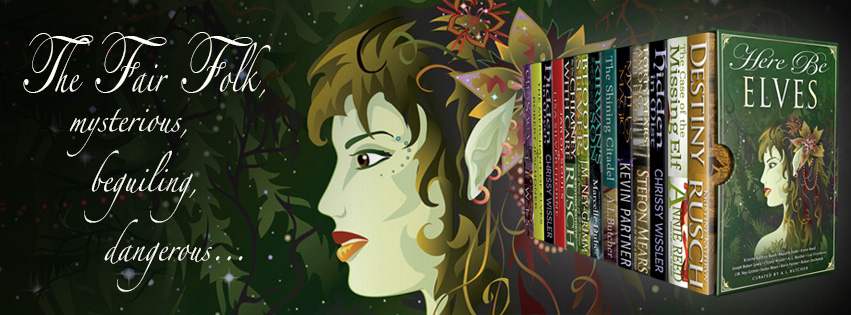
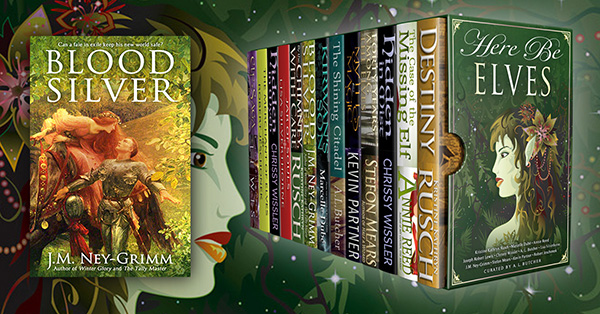
New Bundle! Here Be Elves

I’ve been longing for this one for ages. It stayed stuck in the planning stages for nearly a year. But here it is at last!

I’ve already devoured and enjoyed both of the Rusch stories. I plan to dive into Kirwan’s Son by Marcelle Dubé next.

A shapeshifter who spies for the fey conquerors of the mortal world fights her urge to help an oppressed human child. Her duty points one way. Her inclination, another. How will she choose?

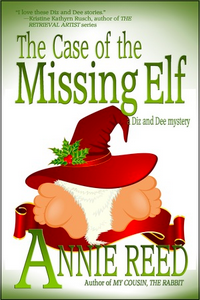
The only elf able to stand in for the big guy—Santa himself, away on sabbatical—can’t be found. His cohorts hire an elf PI plus partner—Diz and Dee—to track down the necessary missing fellow.

A faie knight, banished from the realm under the knowe, loves the bright world and the mortals who dwell there. But the faie king wants his knight back, and he prefers tricks and cheats for tactics.

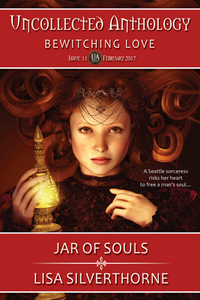
A healer mage discovers a young man dying of fey magic on the steps of her perfume shop. Battling the fairy queen to save him puts her heart at risk.

Celtic elves, dangerous and beautiful. Scandinavian elves, mischievous pranksters. Norse elves, warriors and consorts to the gods. Santa’s elves, practical and plucky. The Fair Folk beguile imagination with their mystery, allure, and hints of madness.

*

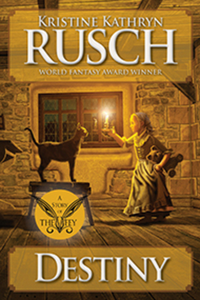
Written as a prequel to Kristine Kathryn Rusch’s popular Fey saga, “Destiny” follows the Shapeshifter Solanda on Nye.

The Black King wants her to use her special abilities on a job that will change the Fey forever.

But Solanda wants to change the life of one child. Can she do both? Or should she do nothing at all?


*

Christmas comes early for private investigator Dee and her partner, the grumpy but drop-dead gorgeous elf Diz, when Santa’s elves hire Diz and Dee to find Santa’s missing stand in.

Santa’s taken a sabbatical, and only one elf at the North Pole can fill the big man’s shoes.

An elf who’d rather make his mark in the real world than spend one more holiday in Santa’s sleigh.


*

A roadside rest stop—crossroads of the modern world. Where the barriers between worlds run thin. Where travelers may wander into Faerie.

Lex Frisk, fleeing from heartbreak. On the road for thirty hours. Lex needs to stretch his legs. Find some coffee. Instead he finds a beautiful stranger…

…and an unbelievable party.


*

Where two worlds meet, the jealous eyes of a Faerie King peer from the darkness as he gathers a slave army of subjugation. Set against him and his dark horde is:

• Bill Strike, a naive, girl-shy youth with exploding hands
• the girl he’s shy of
• three witches
• and a pioneer of chicken-powered aviation.

For fans of Terry Pratchett’s Discworld or The Hitchhiker’s Guide to the Galaxy by Douglas Adams.

*

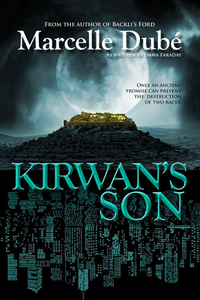
In a world of tortured tree nymphs and madness, the Fey king needs only one Kirwan, the eldest son, to save the trapped Fey, but all four Kirwans become pawns in the struggle for power between Seelie and Unseelie.

The Kirwans will risk everything—love, honor, and life—in the name of an oath taken centuries earlier.

But will it be at the cost of spreading the Fey war to their own world?


*

Punishments for elven crimes vary. So, when Rolf finds himself serving time as a toy on a mantel during the Christmas season, Rolf figures he got off easy.

But when a lonely child asks him to deliver a message to Santa, he realizes his rehabilitation comes with a price—one he might not be prepared to pay.


*

Finding an unconscious man on the steps of her magical perfume shop is just the beginning of Seattle sorceress Avery Starling’s troubles.

She’s drawn to Braxtan Rhodes, a handsome and intriguing young man who reeks of a strange dark magic that is slowly killing him.

Pushing her healing air magic to its limits, Avery puts her heart on the line to battle a powerful Fey queen for Braxtan’s soul.


*

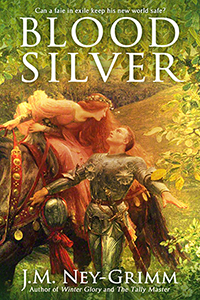
Here Be Elves also includes my own Blood Silver.

In a mythical Ireland that never was, mortal villages perch all unknowing beside enchanted knolls. Beneath them dwell the cruel and capricious faie folk.

Tahaern, a faie warrior by birth but not in spirit, eschews his vicious origins. Loving the bright world, he serves a mortal village as healer.

But when the faie declare war upon their neighbors, Tahaern must again take up his sword…


Consort with the fey in the 13 tales of Here Be Elves—magic, myth, and mayhem await you.

“Destiny” by Kristine Kathryn Rusch
“The Case of the Missing Elf” by Annie Reed
“Hidden in Mist” by Chrissy Wissler
“Forty Years Among the Elves” by Stefon Mears
Myths and Magic by Kevin Partner
The Shining Citadel by A. L. Butcher
Kirwan’s Son by Marcelle Dube
Blood Silver by J.M. Ney-Grimm
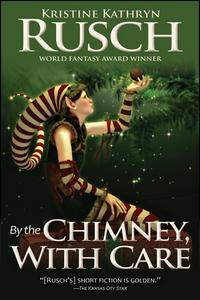
“By the Chimney With Care” by Kristine Kathryn Rusch
“Jar of Souls” by Lisa Silverthorne
Hidden in Myth by Chrissy Wissler
“The Merchant of Elves” by Robert Jeschonek
Elf Saga: Doomsday by Joseph Robert Lewis

The Here Be Elves bundle is available at Amazon, Barnes & Noble, Kobo, iTunes, or direct from the BundleRabbit site.


Share

The Tally Master, Chapter 5 (scene 23)

Gael thought of the uppermost great hall as Carbraes’ hall, but it wasn’t. Or rather, it both wasn’t and was.

Only the elite of Belzetarn were invited to dine with Carbraes in his high hall, located just below the regenen’s chambers at the top of the tower. But Carbraes himself was as likely to dine in the main great hall or even the lower one. He believed in mingling with the trolls he led and protected.

This evening Carbraes had chosen the main hall, so Gael sat at the high table there on a dais below the vast bank of windows in a northern bay carved from the tower’s thick wall. Bright banners hung long on the bay’s sidewalls, which opened into the central space, an immense circular vault with curving balconies rising three high to each side. An ornate stairway curled around a massive central pillar.

Gael regarded that pillar with proprietary pride.

The pillar rose from the tower’s foundations through every level, eventually taking the form of a tall, flaring column at the center of the regenen’s terrace.

High into the air above Belzetarn, the pillar vented the fumes and smokes from Gael’s smithies.

A carved balustrade guarded the stairs circling around the outside of the pillar, and oil lanterns hung at intervals cast illumination. The stairs did not reach all of the tower’s levels. Only the venting pillar did that!

Beyond the stairway, a southern bay with another vast bank of windows flooded the hall with golden evening sunlight.

Altogether, Carbraes’ main hall was thrice the size of Heiroc’s banquet hall in Hadorgol.

The hubbub of five-hundred trolls feasting rose through the air—voices murmuring or exclaiming, the chink of two-tined fork against copper platter, the scrape of a serving tripod against the stone floor, the footfalls of the scullions carrying food from the kitchens and refilling mead bowls.

The sharp scent of a mustard sauce and the sweetness of a raspberry compote threaded the aromas of roasted meats and braised fish.

“Should you care to watch the first gladiatorial contest presented by my brother-in-arms Dreben?” asked Gael’s lefthand neighbor at table, the brigenen of the Ninth Cohort, one of three currently on rotation at the citadel. “I can procure you an invitation.”

“Bloodshed does not entertain me,” answered Gael, striving for an urbane tone. This was not the place for serious dissent. “Reserve your invitation—” He pressed his lips closed, before his voice could sharpen.

“Some will attend for their amusement, no doubt,” said the brigenen, “but Dreben possesses reasons besides entertainment for his enterprise.”

Gael lifted an eyebrow, skeptical.

“Our Ghriana foe wield magical weapons,” stated the brigenen.

“I’ve heard that rumor before,” said Gael.

“Ah, but it is no rumor. Ghrianan weapons are better than ours: sharper, faster, less prone to breakage, and dealing more damage. While our lord, in his prudence, shields us from the dangers of magery and the making of weapons with that magery, he exposes his warriors to greater danger on the battlefield.” The brigenen’s face held a knowing look.

“I wholly agree with the regenen and support him in his decree,” said Gael flatly. How dared the brigenen skate so close to criticism of Carbraes, while sitting at Carbraes’ own table, a mere two places down from him?

“As do I support him,” agreed the brigenen. “But if we are to be deprived of enchanted weapons of our own, we ourselves must be better, stronger, faster, and more ferocious. The gladiatorial ring will push our warriors toward supreme fitness.”

“I cannot approve something that pits troll against troll,” grated Gael. “We have enemies enough without bringing enmity into Belzetarn itself.” His urbanity was decidedly failing. He’d best change the subject.

“I am sorry you disapprove Dreben’s innovation.” The brigenen managed the necessary urbanity with no difficulty, but turned away to address his lefthand neighbor, one of the castellanum’s stewards.

Gael raised a spoonful of raspberry compote to his lips. The burst of strong flavor—sweet and floral with a hint of tartness—soothed his distaste. He was here to take the pulse of Belzetarn’s denizens, and news of Dreben’s gladiatorial ring had clearly spread.

To Gael’s immediate right sat the march, Dreas, commander of every warrior in Carbraes’ legions. Beyond the march sat Carbraes himself. The contrast between the march and the regenen was sharp, even while their similarities were strong.

Carbraes had changed his garb for the feast, donning gray suede sewn with sea pearls, but he projected his usual aura of calm power and confidence. His icy blue eyes were direct in their gaze. His ears lay neatly below the short, silver-threaded curls of his hair. Carbraes’ troll-disease rested lightly upon him.

March Dreas wore beige suede ornamented with bronze rivets and brown embroidery—simple garb in natural colors, like that of the regenen. His thinning white hair was clubbed back in a shoulder-length braid. His gray eyes looked straightly, and power flowed easily from him—also like the regenen.

But troll-disease bore hardly upon Dreas. A deathly pallor underlay the chapped redness on the surface of his skin. Deep furrows bracketed his eyes and his mouth. The flesh of his neck lay slack and folded. His ears were very large and deeply cupped.

The personality of the march must be immense to convey mastery—as it did—in the face of such physical infirmity.

Carbraes leaned forward slightly to address Gael across the march. “May I hope you will resume the use of your rightful quarters?” he asked. “Surely their greater comfort would be a solace in the present time.”

He was referring—if obliquely—to Gael’s new responsibility for the accursed gong, which not all here would know about, and to the fact that Gael’s chambers above the tally room were not his proper quarters. Carbraes’ four principal deputies—the castellanum, the march, the magus, and the secretarius—received luxurious apartments near the regenen’s own. But Gael had declined his, preferring the modest chambers convenient to his tally room and much nearer the smithies than the lofty tower top.

Carbraes had respected his wishes. And everyone did know that.

“Theron here”—Carbraes nodded at the castellanum seated beyond the magus on his farther side—“could order your suite freshened and furnished in a trice. By tonight, I dare say.”

Theron, garbed in brilliant robes of sky blue suede embroidered with shining copper thread, and engaged in close converse with the magus, caught both his name and the gist of Carbraes’ remark. He looked up, turning his disdainful face with its thin lips and elongated, but narrow nose toward Gael. His silver hair—straight and falling below his shoulders—added to his patrician mien. “The rooms should not go empty,” he said courteously. “Such a shame to waste their merits. Perhaps, if the Secretarius continues to scorn them, another might enjoy their benefits.”

The magus, attending to the castellanum, slewed around to face Carbraes.

Nathiar’s olive complexion was the same as when he, Erastys, Heiroc, and Gael had been friends in their youth. But his hair, now plaited in a myriad of thin braids, shone silver, his always-broad nose had grown broader still under the onslaught of his troll-disease, his green eyes were muddied, and his fleshy lips drooped unpleasantly.

“Knock a doorway through the wall of my receiving room,” he said flippantly. “I could use the additional space.” Despite the flippancy, his voice was deep and melodious.

The castellanum sniffed. “I had my principal steward in mind. He’s excellent and deserves to have his efficiency and his loyalty rewarded.” Theron’s voice chilled. “If you need a workroom, Nathiar, surely a less sumptuous chamber would be more suitable.”

The real issue—Gael knew—was that if Nathiar were granted the apartment of the secretarius in addition to his own, then the magus would possess quarters more grand than those of the castellanum. Theron could never abide it.

“No stairs to climb,” quipped Nathiar. “No need to dress, no need to shave. I like it!”

Carbraes raised a hand, stemming Nathiar’s gibes. “The chambers belong to Gael, whether he chooses to inhabit them or not.” His voice hardened. “I shall not bestow them elsewhere.”

Nathiar hid his smirk behind the sleeve of his robe, a garish scarlet ornamented with orange embroidery and copper rivets resembling rose blossoms.

Theron inclined his head graciously. “As you wish, Regenen. Naturally.”

Carbraes turned his back on them.

On an ornate saucer beside the regenen’s drinking horn, nested within green leaves of ground-elder, were two spoonfuls of rare fish roe—globules of glistening orange reserved for Carbraes alone.

The regenen scooped up half the minuscule heap on one of the leaves and offered it to the march. “Take this, my friend, it will do you good.”

Dreas demurred. “No more than it will nourish you. I cannot deprive you.” His voice was gravelly.

Carbraes said nothing, but his eyes smiled and his offering remained before the march. The pair locked gazes. Then Dreas gave way, accepting his regenen’s gift, conveying it immediately to his mouth. Gael noticed that the tremor in the march’s hand was larger than heretofore.

Carbraes ate the remaining roe simultaneously with Dreas. “Delicious, no?” he said.

“Surely it feeds something essential within the body,” answered Dreas. “How else could it satiate so uniquely?”

“You must share it with me every time my cook serves it,” declared Carbraes.

The corners of Dreas’ lips curled slightly, but he shook his head. “Did you know,” he asked, “that the poorest of the poor in the great city of Imster—those who survived on the leavings in the midden—sometimes ate earth? Especially the children.”

“No,” said Carbraes.

“I have seen it,” said Dreas. “It seemed that the food remnants could not nourish them sufficiently, and that the earth slacked some craving within.”

“We are not poor here in Belzetarn,” said Carbraes.

“No, but the affliction brings its own poverty, does it not? And its own cravings,” answered Dreas. “The roe heals, methinks.”

“Perhaps so. Perhaps so,” murmured Carbraes. Was that sorrow in his eyes? Or pity? Gael could not decide if it was either or neither.

Carbraes and Dreas had come to Belzetarn as young trolls, serving under a series of regenens in succession, always guarding one another’s backs, until they attained such rank as to make them unassailable. And even then they persisted in their mutual allegiance. Or so the rumors claimed.

Gael saw no reason to doubt it. It seemed likely that troll-disease would finish the march first. But not yet. And, meanwhile, Carbraes sought ways to delay the affliction’s hold on his friend.

This conversation between the two, conducted in lowered voices, had diverted its participants from the other conversation adjacent to them. Gael, however, heard both.

The castellanum had chosen to vent his further grievances against the secretarius into Nathiar’s ear.

“Always, he favors him!” Theron whispered. “He grants him two residences. He trusts his word in every particular. Even against my own testimony. Even in the face of contradictory evidence.”

Yes, well, there was reason for that. Carbraes knew perfectly well that Gael wanted nothing beyond what he already possessed: security in his office, control over his tally room, oversight of the smithies and weapons lodges, and the assurance of the regenen’s continuing regard.

Theron wanted much more. Control over the provisioning and maintenance of Belzetarn did not content him. He wanted leverage in the supply of Carbraes’ legions. He wanted a voice in the decisions that directed Carbraes’ military endeavors: which Ghriana strongholds to attack, which battlefields to hold, which camps to abandon. Theron wanted Gael’s own smithies under his purview.

Theron was willing to be unscrupulous in his means.

And Carbraes knew it.

“When Keir arrived in custody of the Fourth Cohort’s scouts,” continued Theron, “he should have been mine!”

Nathiar gave an encouraging grunt.

“I needed a new notary. Mine had succumbed to his affliction, and his successor had such a clumsy hand. Keir’s hand is so neat,” Theron mourned. “He would have added elegance to my office. He could have served me tea and berated the impudent scullions. But Carbraes refused to transfer him from the tally chamber. He should have been mine, and I still mean to have him.” Theron positively hissed.

Nathiar chuckled. “Surely not. The boy’s too pretty to be a notary at all. Make him magus penultimate, and I’ll find him uses in keeping with his comely face and neat ankles.”

Theron gasped. “The regenen would never let you!”

“The regenen would never know.”

Gael bit down hard on the spear of radish he’d raised to his lips.

The regenen might never know—although Gael would not bet on that—but the secretarius was damn mad. Nathiar, with his innuendo and carnal pranks and sensual preoccupations, disgusted him.

Well.

He’d dined in the great hall for a reason: to acquire news, maybe even learn secrets from the subtleties of expression and gesture. Now he had them with a vengeance. Most unpleasantly so, and with no subtlety at all.

Tangling with the lowliest in Belzetarn today—a lunch boy, a simple sweep—he’d suspected that it was the great ones who required his scrutiny.

Here were the great ones before him now.

The castellanum and the magus certainly possessed motive enough to make mischief in Gael’s tally room. Mischief, such as a theft would produce.

Nathiar hated Gael from their enmity of old. But Nathiar was too clever to leave evidence. If it were Nathiar stealing tin and bronze, the vaults would appear to be missing no ingots at all.

Theron, on his campaign to have all Belzetarn’s strings pass through his hands to the regenen’s, dearly wanted Gael’s tally room under his aegis and Gael’s smithies under himself as well. He envisioned Gael reporting to him, not directly to Carbraes. And, if he ever gained that, Gael would then be replaced with a troll Theron found more congenial.

But possessing motives for theft didn’t make a troll a thief. And how would Theron pull off such a theft? He was not clever.

Gael’s thoughts passed on to the other great ones present.

Would Carbraes have reason to steal from himself? It seemed unlikely.

Perhaps if the regenen pursued a secret project—something that contravened one of the rules he enforced rigorously amongst his trolls, such as forbidding the manipulation of energea. Could Carbraes be experimenting with weapons forged with the dangerous energea, the energea that glowed acrid orange instead of soothing blue?

Gael shook his head. That made no sense. If Carbraes were to pursue such a course, Gael would be the first one he’d involve. No, it couldn’t be Carbraes.

What of the march?

Even more ridiculous. Dreas would never betray Carbraes, not if he died for it. Although . . . how well did one troll ever know another?

Gael would rule none of them out at this time. But the magus and the castellanum would receive the brunt of his suspicion and scrutiny. They were more likely candidates for thievery, and—besides—they’d done the most to make tonight’s feast unpleasant.

Gael suppressed a quirk of his lips at this concluding irrationalism. He would find the true thief. He scorned to make either Theron or Nathiar a scapegoat, no matter the strength of his dislike for them.

The pair certainly fed his preference for dining alone in his chambers. But he’d learned back in Hadorgol that absence from the seat of power could be deadly.

The banquet hall of Hadorgol and the great hall of Belzetarn might appear very different. Belzetarn was colossal, fashioned on bold lines. Its banners featured simplicity: a black raven on a white field for the opteogint of the Ravens in the First Cohort; three yellow swords on a red field for the opteogint of the Triple Swords of the Eighteenth Cohort; a pair of red lynxes on a black field for the Twin Lynxes of the Seventh Cohort.

Hadorgol was elegant and intimate. Its banquet hall accommodated merely one hundred—not five—and featured delicate ivory embellishments, pastel murals, and exquisite intaglios. Even the heraldry tended toward complexity: a diagonal with a rose and green trellis pattern above, a blue and silver stripe below, and a white castle tower superimposed over both; a quartered field—with violet bells on a yellow ground in two quarters and red and blue diamonds in the other two—behind a white unicorn rearing.

But in the necessity of attendance, Hadorgol and Belzetarn were alike.

A Count Irvel had been a dearest friend of Heiroc’s father. The old count grew to prefer his home to court after his king died and the king’s son assumed his crown. No harm came of it for many years, but eventually another peer brought evidence of Irvel’s treason. After his execution, proof of Irvel’s loyalty surfaced, and then there was another execution: that of the lying peer.

None of it would have happened, if Heiroc had known Irvel well. Or if Irvel had gotten wind of the treachery soon enough. If Irvel had visited court more often.

Not that Gael had ever worried for himself in Heiroc’s court. His presence there was mandated by his position as the king’s magus, but motivated because he loved Heiroc, not because of the advantages that such a friendship might bring.

Belzetarn was less gentle than Hadorgol.

But it hadn’t been absence from his king that had finished Gael seven years ago. He remembered the last time he spoke with Heiroc all too well.

*     *     *

Next scene:
The Tally Master, Chapter 5 (scene 24)

Previous scene:
The Tally Master, Chapter 5 (scene 22)

Need the beginning?
The Tally Master, Chapter 1 (scene 1)

 

Share

Tally’s Last Day

Let me give you a head’s up. Tomorrow, the ebook edition of The Tally Master will go back to its regular price of $4.99.

If you want to snap up your copy for just 99 cents, today’s the day for it.

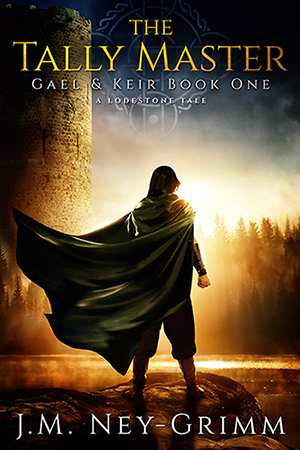
Seven years ago, reeling from a curse in the wake of battle, Gael sought sanctuary and found it in a most perilous place. But the citadel of a troll warlord—haunt of the desperate and violent—proves a harsh refuge for a civilized mage.

Set in the Bronze Age of the North-lands, The Tally Master brings mystery and secrets to epic fantasy in a suspenseful tale of betrayal and redemption.


Share

Dragon-gods of Hantida

Last week, I emailed my newsletter subscribers a note about the Hantidan dragon-gods. Since I was about to announce the release of Sovereign Night, I thought a bit of intriguing trivia might be something fun for my subscribers’ in-boxes.

The thing is…you, my blog readers, might enjoy it also. So here it is for your perusal.

(To those of you who are both blog readers and newsletter subscribers, my apologies for the duplication.) 😉

The Hantidan gods are more truly shapeshifters than dragons. They can take any living shape—man, woman, child, or beast. But in Hantidan belief, the native essence of dragon is shapeshifter. Hantidans describe the dragon form as one in which the god assumes the physical nature of nine beasts all at once.

The dragon’s head resembles that of a stallion, the eyes those of a hawk, the ears a cow’s, the antlers a stag’s, the neck a snake’s, the belly that of a tortoise, the scales those of a carp, the claws an eagle’s, and the soles those of a tiger.

The Hantidan pantheon consists of nineteen dragon-gods, seven of them “greater” and twelve of them “subtle.” Each one possesses a characteristic color when in dragon form, and preferred forms when walking as a human or prowling as a beast.

For example, Enyakatho—the god of intelligence and the spirit of inquiry—bears green scales in dragon form, but might stalk the jungle as a lynx or visit an outlying village as a skinny and wizened old man.

Gael and Keir first attempt to scope out the Glorious Citadel by attending an offering ceremony held for Enyakatho in the public Court of Earthly Order.

Enyakatho is considered the patron god of Hantida’s royal family, as well as of scribes, poets, and philosophers.

Here’s a list of the “greater” dragons and their attributes:

Name—Attribute—Symbolic Hue—Preferred Beast—Human Appearance
Orunal—will and power—gold—lion—queenly old woman
Enyakatho—intelligence and inquiry—green—lynx—wizened old man
Okegiga—commitment—red—dog—young man
Eningizimu—inspiration—blue—eagle—woman of middle years
Imfanelo—life or vitality—bronze—bull—18-year-old youth
Bochabela—luck—silver—cat—5-year-old girl
Bophirimela—beauty—white—horse—2-year-old child

The Hantidan dragon-gods play no active role in Sovereign Night, but rather form a pervasive part of the physical and cultural landscape.

The ruler of the city is called the “Dragon Blessed.” And much of the art—paintings, sculptures, vases, scrolls, and architectural ornament—depicts dragons.

When one such artwork is damaged during events in Sovereign Night, the nobles of the royal court speculate that whoever did the deed should have targeted the bronze Imfanelo—patron of peasants—rather than the gold Orunal—patron of the Dragon Blessed himself.

For more about Sovereign Night, see:
Timekeeping in Hantida
The Baths of the Glorious Citadel
A Townhouse in Hantida
Hantidan Garb
Quarters in the Glorious Citadel
A Library in the Glorious Citadel
Following Gael & Keir: a Photo Tour


Share

The Tally Master, Chapter 5 (scene 22)

Dimness cloaked the tally chamber in the early eventide, its cabinets looming like forest menhirs in a shadowed dell, the gloom emphasized by the brightness of the air outside the glass casements.

Gael tucked the tally parchments in their proper niche and then hooked the inner shutters open, allowing a little more light to enter. Turning, he noted that Keir lingered at his own desk rather than sequestering the coffer keys in the box beside Gael’s desk where they belonged.

“Gael?” The boy stared at his feet, sounding uncharacteristically uncertain.

Gael leaned against the casement sill, studying his notary. What ailed the lad?

Keir straightened abruptly, his face troubled. “Do you ever wonder what you’re doing here? What we’re doing here? In Belzetarn?”

Gael’s brows tightened. “What do you mean?” He kept his tone noncommittal. Perhaps Keir would elaborate.

Keir swallowed. “It’s just that . . . all my life I was taught to hate and fear trolls. And I still hate them. Sometimes. A lot of times. My stomach feels sick with it. Especially when a bunch are gathered together in a mob. Even though I am a troll, I feel it. And I feel . . . divided. Like I’m betraying my people, the people of Fiors, just by being here. By helping Carbraes.”

Gael sighed. He knew that feeling all too well. His real purpose within Belzetarn was something he avoided thinking about whenever possible. He wasn’t sure he had any reassurance to offer.

“Some compromises are more difficult than others.” Gael’s words emerged slowly. “Dealing with the truldemagar is one of the most difficult.”

A strange hurt glimmered at the back of Keir’s eyes. “I’m not sure I should have compromised,” he said. “I thought about dying, when it first happened. And maybe I should have. But I didn’t. I chose something else.”

“You came here, to Belzetarn,” said Gael.

Keir said nothing at all in response, just standing there with that peculiar expression on his face.

A shiver of real worry quivered in Gael’s belly. It was dangerous to think too deeply, to probe too honestly, to plumb one’s conscience . . . here in Belzetarn.

“Keir”—he had to draw the boy back from this brink—“I cannot think it wrong to choose to live. And if a troll chooses to live, he must come eventually to some place of safehold—to Belzetarn or some other troll-citadel. To live is to compromise. It is only when we are very young that absolutes seem real.”

Keir’s mouth firmed. “Do you really believe that?” he asked.

Gael allowed his lips to curl slightly. “On most days,” he answered easily. “If you permit deep moral questions to preoccupy you . . . your daily responsibilities suffer and you forget that the larger picture is mostly made up of small choices. Do the next right thing, whatever it is, and you’ll do right in the end.”

A glint of amusement flashed in Keir’s eyes. “Is that another version of ‘make each tally mark strongly and the final count will be accurate’?” he asked.

Gael nodded. “Indeed.”

Keir’s eyes narrowed. “But surely the direction and results of one’s small choices must sometimes be assessed,” he insisted.

Gael repressed a sigh. The boy echoed his own concerns uncomfortably, which made it doubly hard to counter him. “As a troll, you do not possess that luxury,” he said.

“Luxury!” Keir’s voice rose slightly. “Morality is a luxury?”

“No.” Gael quelled his exasperation. “Taking too broad a view is a luxury, and you do not possess it.”

“What of the sick hatred in my stomach?” Keir’s tone grew pointed. “Did you ever feel it?”

Gael nodded. “I did. And, Keir—” he made his stare hard; sympathy would be fatal “—it will pass.” He hesitated, then added, “You’ve only been a troll for, what, two years? Give yourself time.”

Keir sniffed. “Time to become thoroughly hardened?” he jibed. A gleam of humor in the boy’s face softened his accusation.

“No,” answered Gael. “To find your balance. As Arnoll did.”

Keir’s face lightened all the way. “If we could all be Arnoll . . . Belzetarn would be an entirely different place,” he said.

Gael chuckled, and Keir looked his question.

“I was just imagining a horde of Arnolls thronging the stairwell,” Gael explained.

Keir’s laugh rang out. Had the dangerous moment passed? Gael was ready to be done with this conversation.

“Speaking of our smiths,” said Keir, “do you think Martell could have just lost an ingot? Knocked it off a counter, kicked it under an anvil?”

Gael allowed himself a silent sigh of relief. They’d moved on. And Keir’s suggestion about Martell’s missing ingot was a possibility. “We’ll have to check,” he said.

“After the meal?” suggested Keir.

Gael didn’t relish poking around all the odd corners of the privy smithy by the light of a carried candlestick. “Hells!” he growled, mimicking more anger than he actually felt in the wake of Keir’s atypical perplexity.

“I’ll do it,” Keir volunteered.

“No. Arnoll wanted to consult me about something. In his smithy. I’ll get him to help me.”

Keir looked surprised, in his familiar understated way. Thank Tiamar, the boy was back to normal. “In the smithy?” queried Keir. “Did he say about what?”

“We were interrupted. Never mind. Do you dine in the upper hall tonight?” As notary to the secretarius, Keir did possess that right, but he rarely exercised it, preferring to join one of his friends in a more informal setting.

“I’m headed for the hospital mess,” he answered. “Kayd invited me.”

Gael wished someone would invite him elsewhere. Or, better still, that he could simply dine alone in his chambers. He did so occasionally, but now—when he was scrounging for clues as to the whereabouts of his stolen tin—was not a good time to absent himself from the larger gathering.

“Do something outdoors after you eat,” he instructed Keir.

Keir lifted an eyebrow.

“You’ve had a long day, and the morrow may be longer. Extra sunshine will guard your health,” Gael explained.

“I thought I might do a preliminary reconciling of the tallies,” Keir said.

“I know you did,” said Gael. “So did I, but we’ll both be sharper when we’re fresh.”

Keir nodded, then glanced sharply at Gael. “I should have told you right away. Lord Carbraes does not wish an interim report on the gong. He said to see him when you have anything he needs to know, but not before.”

Gael had expected that, but it was well to hear it explicitly. The regenen dealt easily with his secretarius, and frequent communication would keep it so.

Keir returned the coffer keys to their box, and they parted: Keir descending to the yard, Gael ascending to his quarters to change his garb.

*     *     *

Next scene:
The Tally Master, Chapter 5 (scene 23)

Previous scene:
The Tally Master, Chapter 5 (scene 21)

Need the beginning?
The Tally Master, Chapter 1 (scene 1)
 

Share