A Beautiful Morning

So many of the early mornings this summer were beautiful. That of September 5th charmed me so utterly that I wrote about it in my journal. Since I am head down in the exciting final scenes of my current novel – and prefer not to take sufficient time away from it to write a blog post – I’m going to share that morning with you. 😀

September 5, 2016

Clear sky this morning, deep blue to the south, paler hue overhead, shading down to a soft warm white above the mountains to the west.

Crickets sing in the grass, their droning music punctuated by small tuneful chirps, crows in the distance, melodic twitters from songbirds nearer by. Sun brightens the trees of the slope across the way. Magical.

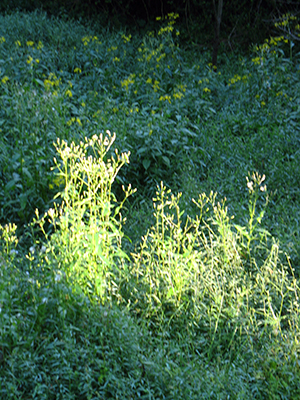
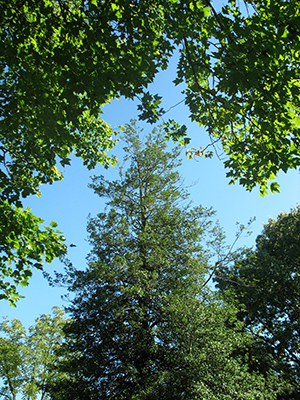
Sunlit weedsThe back yard is still in shadow, muted greens; golden light hits the upper branches of the holly, so tall it rises above the ridge.

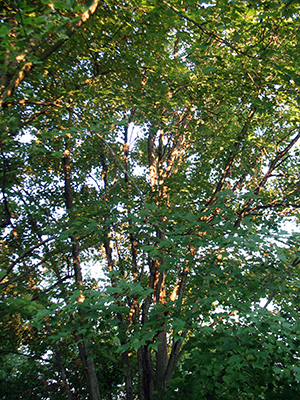
The inner reaches of the maples are quite lovely, a mosaic of shadowed leaves and sunlit ones with pieces of sky showing through.

. . . “the same summer will never be coming twice.” Never quite the same.

quote from
Anne of Ingleside,
L.M. Montgomery


Share

Copyright Statement for My Website

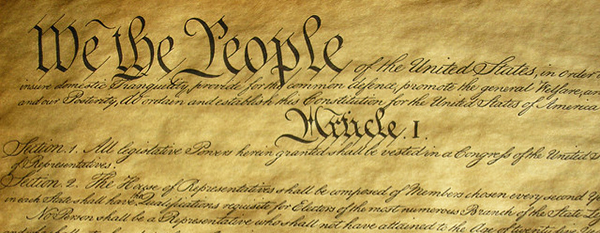
United States ConstitutionFrom the moment I click the “publish” button, the posts and pages on this website are protected by copyright law. Which means that limited excerpts of the contents may be quoted by others under the fair use doctrine. But any more extensive reproduction of my words, and any use at all of my photos or drawings, may only occur when my permission is sought and granted.

However, many blog owners put a copyright statement on their websites. It serves as a reminder that the content of the site does belong to the site owner, a fact that is sometimes forgotten online.

The crafting of a copyright statement has been on my to-do list for quite some time. Today, I finally tackled the task.

Many sites have only the most basic of statements.

Copyright © Siteowner.

There were two reasons that would not not work for me.

The most obvious one is that my site contains some content that does not belong to me. I love old paintings and old book illustrations, and many of them are in the public domain. Which means I am permitted to place images of these old works on my website.

I also include images that their creators allow to be used under Creative Commons licenses.

So a blanket statement of copyright would be grossly inaccurate. Most of the contents of my website belong to me, but not all of it.

The other reason I prefer not to use a blanket statement, is that I want to encourage people who like my books to tell others. While one friend talking to another has no need any special permissions, a blogger – writing a blog post about one of my books – who wants to use my cover images or marketing copy, does need permission. A very limited copyright statement might discourage these folks!

With all these parameters to keep in mind, developing my copyright statement took some thought.

Article 1, Section 8, Clause 8 of the United States Constitution

This is what I came up with:

You have my permission and encouragement
to reproduce my book covers and cover copy
for the purpose of telling others about my books.
Please do!

(That purpose only, of course.)
 
Public domain images that appear on this website,
images used under a Creative Commons license,
and excerpts from book reviews
possess links to their sources and credit to their creators.
 
All other content,
images, and text
copyright © 2011-2016
J.M. Ney-Grimm.

The first paragraph lets bloggers, reviewers, and others who want to talk up my books know that it’s fine for them to copy my book cover images and my cover copy on their own websites. I retain my copyright to those things, but I grant permission for them to be used.

The parenthetical remark that follows is probably not necessary, but I wanted to be clear, lest an ill-informed or muddled hobbyist think it would be okay to simply “borrow” one of my book covers to slap onto one of their own books. It wouldn’t! 😀

Next comes the statement about the elements appearing on my site that do not belong to me.

If you hover your cursor over the image of a public domain painting or a photo used under a Creative Commons license, you’ll see a little text box that displays the title its creator gave it (if it has one; not all do), the creator’s name, whether the image is in the public domain or is being used under a Creative Commons license, and the website where I found the image – usually Wikipedia, Wikimedia, or Flickr.

If you click on the image, a new tab will open on the page of the website where the original image rests.

When I quote from a review of one of my books, I include the name of the reviewer, and I link to the website where the review originally appeared.

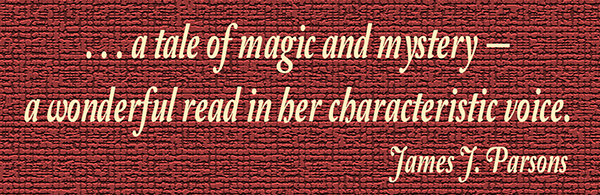
Excerpt of a review by James J. Parsons of Perilous Chance

The final paragraph of my copyright statement is where I state my ownership. I created this website in early 2012, so you would think that the years specified would include 2012 – 2016. But I published The Troll’s Belt and Troll-magic in December 2011.

The marketing copy for those two books has changed many times, and the covers have been revised, too. However, the old covers and the old copy appear in some of my posts about cover design and copy writing. Therefore, I use the time span of 2011 – 2016. Of course, I’ll have to update that interval every year on January 1.

I placed my statement in both the sidebar and the footer of my site, because I want it easily found. If I put it in the footer only – well, I allow seven posts to appear on my blog page. It’s a l-o-o-o-n-g way down to that footer. Might as well be hidden behind blackout curtains! The statement in the sidebar is much more accessible.

But if you click on an individual post, the sidebar disappears. And the footer at the bottom of that one post (or the bottom of a page lacking a sidebar) is not far away at all.

So I’ve got both bases covered.

I am not a lawyer, so none of the above is legal advice. But I thought my thinking and my process might be of interest to some of you! 😀

For more about blogging:
Why Create a Site Map?
Slow Blogging and Other Variations
SPAM Deluge
New Home Page


Share

A Story for My Coloring Book

Three weeks ago, when I asked folks to print out a sample page from my upcoming coloring book and give it a try, one commenter made a remark that really interested me.

I like pure abstract, but fairly soon after I settled in with pencils and coloured sharpies I found myself wanting the image to tell a story. Widdershins

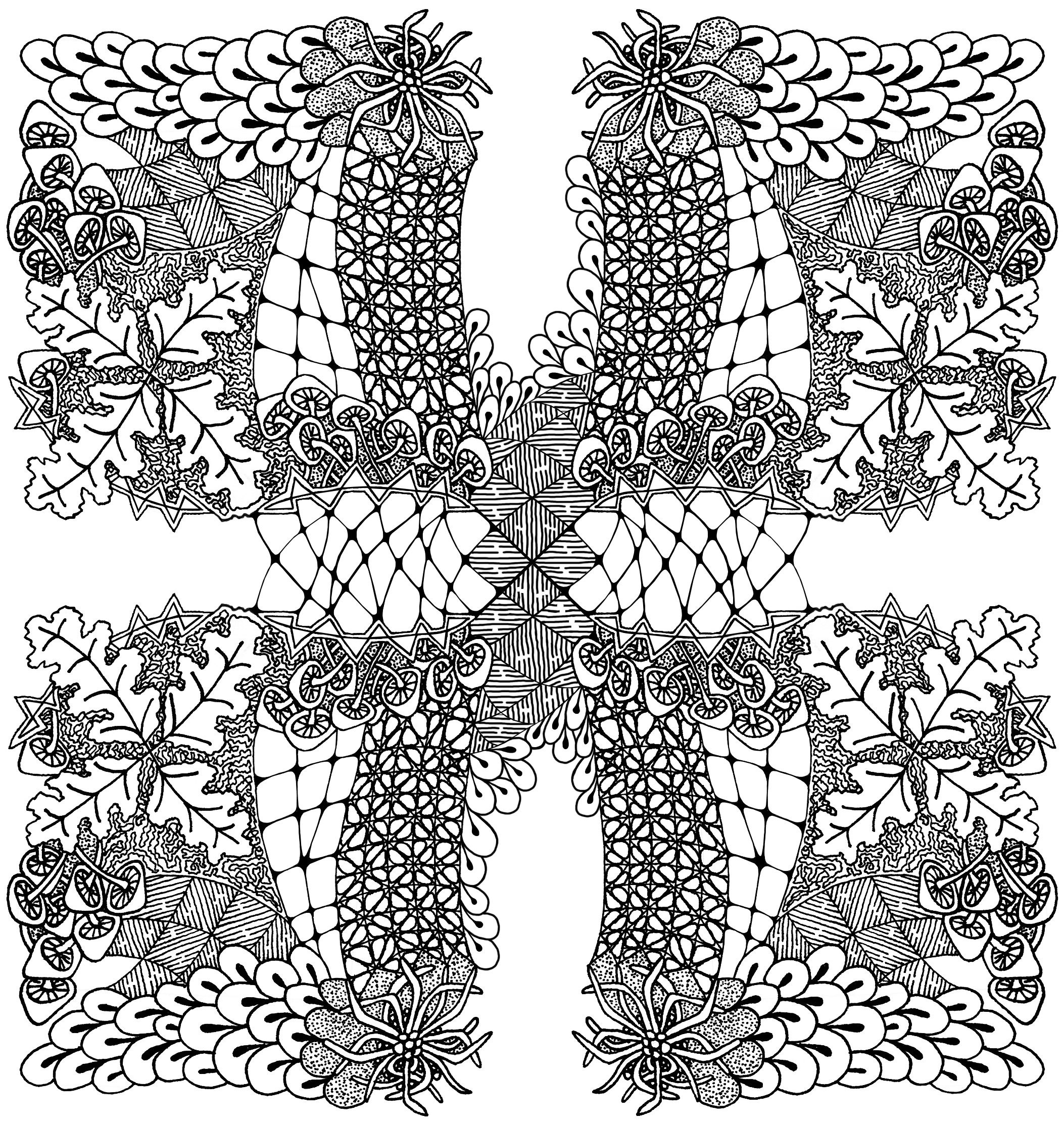
Being a teller of tales, I liked the idea of finding a way to blend story with my drawings. But how could I manage it? The drawings I intend to collect in the coloring book are very much abstracts. I think of them as “modern mandalas.” The pairing I wanted between story and image did not immediately present itself to me.

But there was something tickling at my back brain. If I just let it percolate for an unspecified time…maybe I would get an idea.

Well! That idea arrived yesterday, and I’m really excited about it.

If I weren’t in the middle of writing the intense conclusion to my current novel, I’d be writing the start to a new short story. I love my idea, though, and once I send my novel off to my first reader, I know what I’ll be working on while I await her feedback.

I’ll probably publish the envisioned short as a standalone ebook, as well as in the pages of my coloring book. I took a bunch of notes. It’s hard to wait to start! But I’m not a writer who can concentrate on two stories at the same time. And my novel will be complete soon.

Edited (9 Feb, 2019) to add: Short stories so easily turn into novels for me, and this one did. As I type this note, the novel is nearly ready for its release in March. It’s title? A Talisman Arcane.

In the meantime, I’ll share another design intended for my coloring book—Nest of the Phoenix. 😀

coloring book, sample page 2

For more design patterns:
Page for a Coloring Book (Flight of the Phoenix)
Wing-clap of the Phoenix

For more about my proposed coloring book:
Drawing for Fun and Relaxation


Share

WIP, Utterly Engrossing

Maple TreeI remember so clearly setting up the progress bar for Tally the Betrayals. I’d already written 4,000 words, and I’d been reporting my word-count-per-day all through those 4,000 words to a writer friend.

Me: “I think I’ve done most of the research and world building I need in order to start writing. I think I’ll start next week!”

Friend: “Start tomorrow!”

Me: “Huh. I suppose I could.”

That was a Wednesday. I did, indeed, start Thursday, and it felt great. I’d been focused on publishing tasks (covers, blurbs, etc.) for many months. Then I went through the medical emergency of a retinal tear. And then I had a troll citadel to design. 😀

It had been 5 months since I’d done any writing. I missed it. But I felt wobbly. What if I’d forgotten how?

I hadn’t forgotten how, of course. I think writing is a bit like bicycle riding. Once you know how, you don’t forget.

But I felt like I needed training wheels! So I reported to my writer friend that first week.

“Only 300 words today, but I started.”

“Better today: 800 words.”

“Now I’m getting into the rhythm: 1,200 words.”

When I reached 4,000 words, I realized that I shouldn’t lean on my friend through the entire 120,000 to 160,000 words that my novel would require. (Tally felt like a longish book to me.)

And, really, I didn’t need that much propping up. But I’d really liked reporting my word count to someone. I found it motivating and encouraging.

Just saying, “I wrote 1,600 words today,” to someone other than myself felt like getting a treat.

So I decided to set up a public progress bar on my website.

I worried that I wouldn’t be able to figure out how to do so. (Google is your friend.)

I worried that I wouldn’t like it once I’d set it up. (“You can always take it down again, J.M.”)

I worried I would disappoint those of my blog readers who watched that progress bar, when there were days that I didn’t make much progress.
Holly TreeBut I wanted to do it. So I did!

And you know what? It worked beautifully for me.

I did figure out how to create a progress bar. I plan to blog about that process soon.

And I love updating my progress bar each day. “See, I did write 1,200 words today! Really!”

I’ve also enjoyed seeing the darker blue color that indicates words written slide farther and farther to the right. It was a very tangible marker, more so – for me – than seeing the page count grow in my manuscript file.

Now, as I look at the 113,000+ word count and the 94% slider bar visual, I feel amazed that I am almost finished.

“How can this be? It feels like just yesterday that I was putting up that progress bar with 4,000 words!”

But I am close to the finish. And, as is usual for me, I’m finding my story to be intense, engrossing, and hard-to-put-down. If only my brain didn’t become soggy with fatigue, I’d write far into the night, saying, “Just one more page,” the way a reader does when reading a good book.

But my brain ceases to hold the necessary edge around 5 PM or so. Sometimes I’m so beguiled by the events in my story that I push until 7 PM, but that’s rare. Better to get a good evening’s rest and a good night’s sleep, and start fresh in the morning.
Deck View

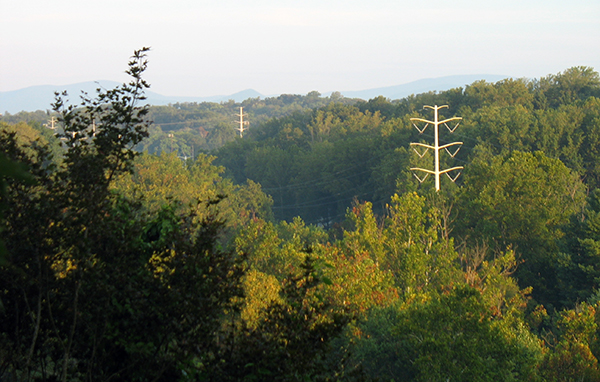
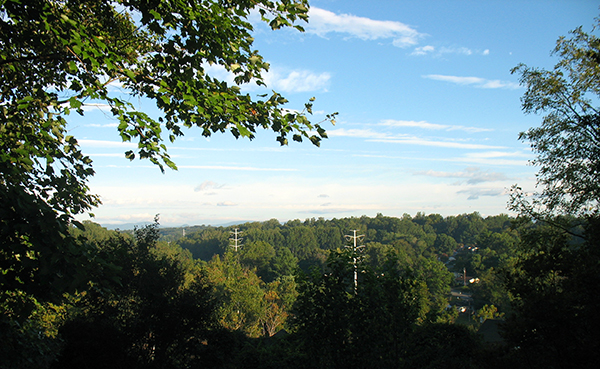
As I write this blog post, it is 7:15 AM, and I am sitting out on my back deck – as I do each morning to keep my circadian rhythm in sync with the sun. But now it’s been half an hour.

I’m going to go in, eat breakfast, and get started writing Tally for the day!

I can’t wait! Gael – accountant to the “dark lord” in my “dark tower” – is going to make a crushing discovery in this scene! 😀

(No, Tally does not really have a “dark lord.” It has someone much more interesting!)

The links from this post:
5 New Books!
My Torn Retina
Gael’s Tally Chamber in Belzetarn
How I Rehabilitated My Sleep

 

Share

Why Create a Site Map?

Just 5 years ago, I’d occasionally stumble upon websites possessing a page called “site map” or “sitemap.” That page presented a long list of the entire contents of the site. I found such lists very useful. I could skim them quickly to locate exactly what I hoped to find. Or to determine that the information I wanted was not present. Often I’d discover hidden gems I hadn’t been seeking, but that I was glad to acquire.

I liked site maps. I wished that every website possessed one.

angled metal tracks on an electronic circuit board

Unfortunately the trend was moving away from my preference. Somehow it was decided that the sole purpose of a site map was to ensure that Google’s crawlers – and those of other search engines – could locate each web page efficiently, so that the page could be listed by the search company in their search results.

Now, I like relevant search. Very much. When I google something, I want the best result to appear on the first page. And perhaps site maps were always geared to ensure that this happens. Perhaps they were never intended to help human visitors. But these days, the site maps are all actively hidden from human browsers, tucked away where only crawler bots can see them. I think that’s a shame.

I’ve tried using the search boxes available on most websites. I’ve tried clicking on the by-the-month archive links. And the category links. But not only do these methods often fail to deliver what I seek, but they have little chance of turning up the hidden gems that I don’t know are present.

It’s a shame. Totally a shame.

However, there’s no reason my own site must participate in this great omission. I’ve had creating a site map on my to-do list for a long time.

It didn’t seem urgent at first, because my site didn’t have much content. In the summer of 2012, I had only 3 books published – each of which possessed its own web page – and I’d written a mere dozen or so blog posts. No doubt most visitors absorbed it all in under 10 minutes and then moved on, unimpressed. “Huh. There wasn’t much to that.”

Today it’s a very different site! This is my 238th post. I have 19 books published – each with its own web page. I’ve created 15 “lore” pages for readers who want to know more about the North-lands and the other worlds in which my stories take place. Plus there are the miscellaneous pages such as my bio, a sign-up for my newsletter, a landing page, and so on.

There’s a lot of content present. And since I don’t tend to write many ephemeral newsy posts, the material retains its interest for quite a long time.

But if no one can find my post on the limits of obtaining vitamin D from sunlight or my explanation of how magic works in my North-lands, then the posts may as well not exist.

I decided this week that it was time to tackle my site map. One intended for humans!

Multitasking, photo by Jenn Vargas

The task took longer than I thought it would. I suspect that is often the case with such projects. There is software to automate the process. But it seemed likely that it would take me just as long to learn the software as it would to create my site map by hand. And I believe the software tends to generate the proverbial wall of text.

Admittedly, all the site maps I’ve ever seen were walls of text. They were useful in that format, and I could have settled for such a basic list.

But I knew that if I grouped the list into related categories, it would be a lot more accessible and thus a lot more useful.

So I’ve done just that. Check it out! 😀

Site Map

I’ll lay you a wager that you’ll find something I wrote back in 2012 or 2013 or 2014 that tickles your fancy. Am I right? Tell me what post or page it was in the comments! 😀

For more about blogging:
Copyright Statement for My Website
Slow Blogging and Other Variations
SPAM Deluge
New Home Page


Share