What Is Curtain Fic?

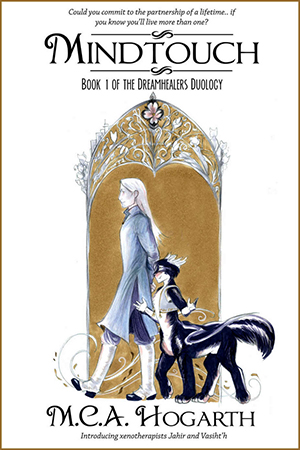
I’d never heard of the term “curtain fic” until this Monday, when I encountered it in a tweet from M.C.A. Hogarth.

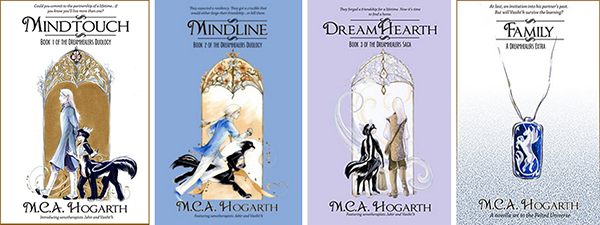
She was giving her fans a head’s up about the first book in her Dreamhealers series. Mindtouch was on sale for 99 cents for the rest of the week, and then it was going back up to its regular price.

In her tweet, she said: “People call it curtainfic with space elves and centaurs.”

I was intrigued. What in heaven was “curtainfic”?

I googled, wondering if I would discover anything at all. Maybe it was so obscure that if you didn’t already know, you wouldn’t be able to find out.

But I was in luck. Google delivered many pages of results, and the first link on the list told me what I wanted to know. Fanlore.org defined the word as describing “fan fiction that focuses on ordinary domestic situations (such as the characters in a romantic pairing shopping for curtains).”

Since fan fiction involves fan writers playing in someone else’s world, strict curtain fic would be something like the story of how Edmund Bertram and Fanny Price, of Jane Austen’s Mansfield Park, made renovations and improvements to their first home at Thornton Lacey.

Or how Allan a Dale and his Fair Ellen – from The Merry Adventures of Robin Hood – visited the shops of Nottingham to procure the needle and thread that would allow Fair Ellen to keep her husband’s minstrel’s garb in good repair.

But clearly one need not borrow another writer’s world and characters in order to “focus on ordinary domestic situations.” In fact, the instant I read the definition of curtain fic, I realized that all my favorite authors include at least some elements of curtain fic in their stories.

When Bren Cameron settles in with Jago at his country estate of Najida (C.J. Cherryh’s Foreigner series), we hear about the beautiful stained glass window that graces the new wing.

At the end of the fourth Sharing Knife book by Lois McMaster Bujold, we get an entire long epilogue in which a few loose ends are tied off and during which we come to understand the domestic arrangements of Fawn and Dag quite thoroughly. (I love this epilogue!)

In Dorothy Sayers’ Busman’s Honeymoon, we learn every last detail of the wedding preparations, as well as of the ceremony itself.

One of my favorite chapters in Bujold’s The Curse of Chalion is the end-of-summer interlude in which Cazaril teaches Iselle and Betriz how to swim.

It’s always a little startling when I discover something about myself – in this case, my reading tastes – that is fundamental and yet has gone unsuspected by me for years. But the illumination shed by learning the term curtain fic shone further than the books I read.

Because my first thought upon perusing the definition was: “Ah, ha! So this is a thing! People like stories with this quiet, mundane focus. Which means that my longing to write a story with a quiet, non-epic scale is not just a strange oddity possessed only by me. I could gratify my wish to write in this way. And there might even be a few people who would read it and enjoy it. Wow!”

Now, don’t get me wrong. I like stories about life-and-death situations. I love stories in which everything of importance lies at risk of being lost, where all is on the line. Both as a reader and as a writer. But my tastes are quite broad. And I’d believed (falsely) that I was only allowed to write about big and sweeping events. Sometimes those momentous happenings are tightly focused on my protagonist. Sometimes they intertwine with the fate of a nation or a people. But the big-and-sweeping-and-momentous must be present.

No doubt I’ll continue to write stories of that character. But I’m also going to allow myself to explore this concept of curtain fic.

Which is fortunate, since I’m realizing that my current work-in-progress has a decidedly domestic slant. Of course, for the protagonist, it’s all pretty momentous. But it’s an interesting mix of the quiet, the internal, and the domestic blended with a change that will turn my protagonist’s life upside down.

In any case…thank you, M.C.A. Hogarth for opening my eyes to a whole new genre. My writing life just got more spacious, and I am grateful.

Speaking of Hogarth…what about her books?

I’d read her Spots the Space Marine and really loved it. Then I read her Blood Ladders trilogy, and enjoyed that as well. Although, the latter starts off with a group of college friends meeting in a coffee shop, and I realized as I read that I’d really wanted the story to be a college story – and it totally wasn’t. It was good, just not what I was in the mood for at the time.

So, when I understood that Mindtouch was about grad students (alien grad students) in grad school, I was ready to click the buy button for that alone.

As it chances, I did click the buy button, and I’ve been happily reading Mindtouch for the last two evenings. It really is curtain fic. But I can also see the story building, slowly showing me exactly how these two unlikely friends came to be friends, and setting the foundation for how they came to accomplish something amazing within the healing disciplines of their civilization. (At least, I’m guessing that’s where it’s going.)

I’m not sure how much longer Mindtouch is on sale, but if you think you might like curtain fic, I urge you to pick up a copy and give it a try. 😀
 

Share

Courage, Kindness, Youthful Awkwardness & Compassion

It’s been a long time since I’ve done a book recommendation. Four years! (I just checked.)

My previous recs were all old favorites, books that I’ve read and re-read, books that I know I’ll re-read yet again in the future.

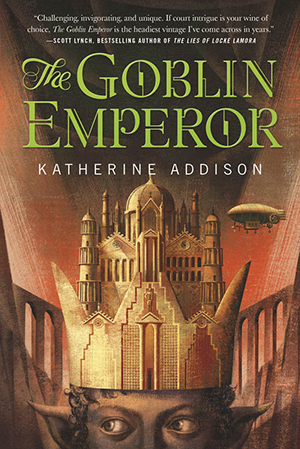
Today’s rec is a new favorite: The Goblin Emperor by Katherine Addison.

I read it first in December 2015, but I’ve already re-read it at least three times in the eighteen months that have passed since. It’s truly wonderful.

Here’s a little bit about it:

Maia awakens in the middle of the night to learn that his father, the emperor of the Elf-lands, is dead in an airship accident, along with all three of Maia’s half-brothers. Now Maia – a half-goblin who grew up in exile, poverty, and neglect – must grapple with governing the vastly complex elvish Ethuveraz.

His father’s chancellor hates him almost as much as his father did. His father’s dowager empress hates him more. And all too many of his father’s courtiers hate him, too. Maia toys with the idea of running away to obscurity, somewhere, somehow.

The Elf-lands have not been kind to the boy-emperors of the past, claiming their lives more often than not. Maia is not a child – he’s eighteen – but he’s nearly as inexperienced as those numerous dead boys whose tombs line the sacred hall in the imperial palace. Failure to grapple with the Ethuveraz – whether through ineptitude or through flight – leads only to another tomb like theirs.

* * *

The world building, characterization, and storytelling in The Goblin Emperor are all superb. And its protagonist, Maia Drazhar, beguiles me afresh each time I re-read the book with his unique blend of courage and kindness, and his struggles to overcome both youthful awkwardness and his (understandable) resentment toward his former guardian.

Here’s a brief excerpt – the very beginning of the story – to introduce you to Maia and The Goblin Emperor.


Maia woke with his cousin’s cold fingers digging into his shoulder.

“Cousin? What…” He sat up, rubbing his eyes with one hand. “What time is it?”

“Get up!” Setheris snarled. “Hurry!”

Obediently, Maia crawled out of bed, clumsy and sleep-sodden. “What’s toward? Is there a fire?”

“Get they clothes on.” Setheris shoved yesterday’s clothes at him. Maia dropped them, fumbling with the strings of his nightshirt, and Setheris hissed with exasperation as he bent to pick them up. “A messenger from the court. That’s what’s toward.”

“A message from my father?”

“Is’t not what I said? Merciful goddesses, boy, canst do nothing for thyself? Here!” He jerked the nightshirt off, caring neither for the knotted strings nor for Maia’s ears, and shoved his clothes at him again. Maia struggled into drawers, trousers, shirt, and jacket, aware that they were wrinkled and sweat-stained, but unwilling to try Setheris’s ill temper by saying so. Setheris watched grimly by the single candle’s light, his ears flat against his head. Maia could not find his stockings, nor would Setheris give him time to search. “Come along!” he said as soon as Maia had his jacket fastened, and Maia followed him barefoot out of the room, noticing in the stronger light that while Setheris was still properly and fully attired, his face was flushed. So he had not been wakened from sleep by the emperor’s messenger, but only because he had not yet been to bed. Maia hoped uneasily that Setheris had not drunk enough metheglin to mar the glossy perfection of his formal court manners.

Maia ran his hands through his hair, his fingers catching on knots in his heavy curls. It would not be the first time one of his father’s messengers had witnessed him as unkempt as a half-witted ragpickers child, but that did not help with the miserable midnight imaginings: So tell us, how looked our son? He reminded himself it was unlikely his father ever asked after him in the first place and tried to keep his chin and ears up as he followed Setheris into the lodge’s small and shabby receiving room.

* * *

The Goblin Emperor is available in many bookstores. A few links:
Amazon I Apple I B&N I Book Depository I Google Play I Kobo

For more of my book recommendations, see:
The Bastard, Belinda, Blood, & Bewitchery
Gods & Guilt, Scandals & Skeptics
Courtship and Conspiracy, Mayhem and Magic
Mistakes, Missteps, Shady Dealing, & Synchronicity
Duplicity, Diplomacy, Secrets & Ciphers
Beauty, Charm, Cyril & Montmorency


Share

Why Calcium Isn’t Enough to Build Strong Bones (and What You Can Do About It)

Several months ago, when I wrote about my experience of gaining weight while drinking milk, and losing weight while eschewing milk, I promised I’d blog about how to keep your bones strong without the dairy products.

This is that post. 😀

Conventional wisdom – and lots of advertising – tells us that milk is the foundation of healthy bones. But like so many other bits of conventional advice about nutrition, it turns out to be wrong.

Here’s why.

1 • Calcium alone cannot give you strong bones.

Sure, calcium is an important building block for strong bones. You do need it. But you also need all the other building blocks: vitamin C, vitamin D, vitamin K, phosphorus, magnesium, and trace amounts of chromium, silica, zinc, manganese, copper, boron, and potassium.

Taking a calcium pill – or drinking extra milk – won’t ensure that you’re getting all the substances that go into strong bones. It might even harm you, since too much calcium can lead to impaired kidney function, kidney stones, high blood pressure, and possibly even an increased risk of heart attack.

Additionally, if you ingest too much calcium, then your body must adjust its stores of other vitamins and minerals in order to process the excess calcium.

2 • Calcium intake is irrelevant, IF your body is not absorbing it and building with it.

People living in the United States ingest far more calcium than those living elsewhere, and yet US residents also suffer more osteoporosis.

What gives?

In addition to having all the building blocks on hand, the environment must also be right for actual building to occur.

Imagine trying to build a house in the midst of a snow storm. You might have all the materials on hand – bricks, mortar, wood framing, nails, etc. – but I doubt you’d get much building done.

Your hormones and your inflammatory status play large roles in determining whether conditions in your body favor the building of strong bones. Or not. High blood sugar and chronic inflammation both speed up the breakdown of bone and slow down the creation of new bone cells.

The foods you eat also influence the building conditions in your body.

Grains possess a lot of phytates (to protect the seed), and legumes possess both phytates and oxalates. Phytates and oxalates chemically bind to the calcium present, both in the grains and legumes themselves, and in other foods present in the digestive tract, carrying the calcium out of the body entirely.

Soaking and sprouting grains and legumes helps to reduce the volume of phytates, but cannot reduce it sufficiently to where its presence ceases to leech calcium (and other minerals) from your body. Additionally, from my previous post on insulin, we know that grains yield high blood sugar for a significant interval after you eat them.

If you don’t eat enough protein, you’ll get the same accelerated bone loss that high blood sugar and inflammation produce.

And if you don’t eat enough healthy fats, you won’t be able to assimilate vitamins D and K, because they are both fat soluble.

Bottom line: in addition to having all the building blocks on hand, conditions within your body must also favor the building and maintenance of strong bones.

3 • There are better sources of calcium than milk.

I remember seeing lists of calcium rich foods several years ago and being skeptical that anything could be better than milk. I was a big milk proponent. Sure, 8 ounces of kale might have 180 milligrams of calcium, but 8 ounces of milk has 300. And I can easily drink 3 glasses of milk every day, but I sure won’t be eating 3 cups of kale every day!

Ah, but!

The key is not how much calcium is present. The key is how much your body assimilates. The reason our RDA for calcium is so inflated is that most of the calcium from milk and pills goes right through. But the calcium from vegetables like kale and mustard greens and others gets absorbed and used. It is more bioavailable.

I went looking for some of the recent studies on calcium from plants versus calcium from milk and landed on the Harvard School of Public Health site with an interesting paragraph that I will quote below, since it occurs in the middle of a hugely long web page.

In particular, these studies suggest that high calcium intake doesn’t actually appear to lower a person’s risk for osteoporosis. For example, in the large Harvard studies of male health professionals and female nurses, individuals who drank one glass of milk (or less) per week were at no greater risk of breaking a hip or forearm than were those who drank two or more glasses per week. When researchers combined the data from the Harvard studies with other large prospective studies, they still found no association between calcium intake and fracture risk. Also, the combined results of randomized trials that compared calcium supplements with a placebo showed that calcium supplements did not protect against fractures of the hip or other bones. Moreover, there was some suggestion that calcium supplements taken without vitamin D might even increase the risk of hip fractures. A 2014 study also showed that higher milk consumption during teenage years was not associated with a lower risk of hip fracture in older adults.

So…if slugging down gallons of milk or dozens of calcium pills is not the answer – and it isn’t – how do we build and maintain strong bones?

I want action points! 😉

First of all, don’t look to bone density drugs such as Fosamax® and Boniva®. These deposit long-lasting compounds (alendronate and ibandronic acid, respectively) within the bone matrix, which give the illusion of greater bone density. But they do not form the normal matrix that actually makes bone strong. In fact, taking biophosphonates leads to bones that are more brittle and more likely to fracture! Talk about irony!

Okay, what does work?

1 • Avoid the foods that result in chronic inflammation, elevated blood sugar, and that remove nutrients from your body.

Highly processed foods and sugar-laden foods are especially bad. Grains and legumes become more and more problematic as we get older.

I hate to start with a “don’t,” but it’s a pretty important don’t. If your bones are currently strong, if your weight is normal, and your health is good, then you might be able to get away with skipping this #1 and leaning hard on #2, #3, and #4.

But I’ve got osteoporosis, I’m still carrying some extra pounds (even after the 23+ that I’ve lost), and I don’t have quite as much pep in my stride as I want. Action point #1 is critically important for me!

2 • Eat meat, seafood, and eggs, cooked with clarified butter, coconut oil, lard, or tallow to get adequate protein and adequate fats.

These are nutrient-dense foods containing many vitamins and minerals, in addition to the protein and fat. They help keep your blood sugar levels within the optimum range. They do not promote inflammation.

3 • Eat kale, mustard greens, turnip greens, collard greens, broccoli rabe, cooked spinach (many of the nutrients are not bioavailable in raw spinach), sea vegetables, bone broth, sardines, anchovies, shrimp, oysters, and canned salmon.

More nutrient dense foods that are high in calcium and the other building blocks for strong bones. You’ll get what you need without having to worry about balancing calcium with magnesium and potassium and all the others, the way you would if you were trying to get it right using pills. Plus the phytonutrients that may be a part of why calcium in plants is more bioavailable than from other sources are present.

4 • Lift weights.

Or do heavy yard work regularly. Or do yoga poses, many of which build strength as much as they increase flexibility. Engage in physical activity that is weight-bearing.

The compression of working against gravity stresses our bones in a healthy way, triggering them to build more of the structural matrix that can support the load.

I’m a swimmer, which is not weight-bearing. It has all kinds of other benefits, but strengthening my bones is not one of them, alas. So I lift weights in additional to swimming.

And there you have it.

Eat meat, seafood, and eggs.
Eat green, leafy vegetables.
Do weight-bearing physical activity.
And avoid foods that produce high blood sugar and inflammation.

I’ve been trying a lot of new-to-me recipes over the last few months, and I plan on sharing them with you as I continue to blog. I’ve also got a few more health hacks to write about. Stay tuned! 😀

For more about health and nutrition, see:
Test first, then conclude!
Let’s Talk Insulin
Milk Is Highly Insulinogenic
Thinner and Healthier
Butter and Cream and Coconut, Oh My!
Why Seed Oils Are Dangerous


Share