Creating Livli’s Cover

I want to take you with me as I build a book cover. It’ll be fun and interesting, so let’s go! My second novel, Livli’s Gift, will be released soon; watch as I put together its cover.

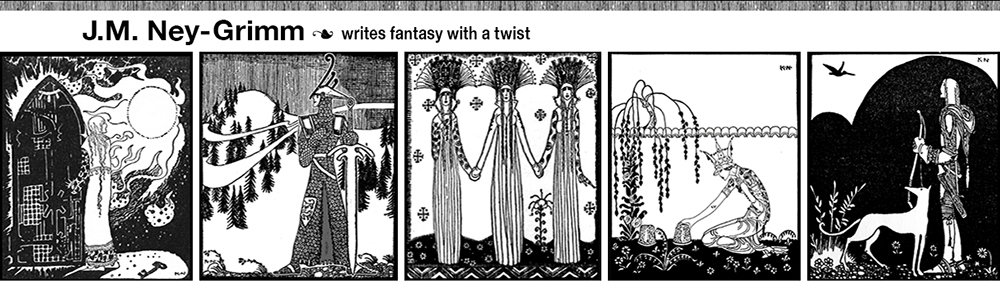
from art to complete coverThe first step is selecting art. I could commission an artist to create something new. But my North-lands were inspired by the folk tales in the collection East of the Sun and West of the Moon, and I adore the work of Kay Nielsen (who illustrated the stories). So I choose one of his pieces. It was published in 1914 and is in the public domain. It depicts a queen tending two magical plants under cloches in her garden and fits well with the events in Livli’s Gift, as you’ll see when you read it.

I’m not expert at working the scanner, so the color balance of the scanned art is wrong. Luckily I know my way around Photoshop well enough to fix the problem. I bring the art back to black and white, then drop the image into my cover file.


I leave room under the art for my name and an author tagline, but the area needs to be something other than a rectangle of paleness. This piece of art calls for a dark foundation, so I fill it with black. I also remove the black frame line at the top of the art, creating a smooth expanse for the title.


I know I want the color of the title to match the color of the author name: a bright blue. I’ll need a dark ground for the title to show well, so I create a translucent shadow at the top of the cover.


I type in the the title and the author. The J.M. Ney-Grimm looks great (grin!), but the title is not “popping” enough.


I add a drop shadow behind the letters of the title. That’s better! All that remains to be done is type in the title tagline and the author tagline.


:: Typing, typing, typing ::


And there we have it: Livli’s Gift.

 
Note: The design shown here was created for the first edition of Livli’s Gift. The second edition possesses a different cover.

More posts about book covers:
Eyes Glaze Over? Never!
Building Star-drake’s Cover
Choosing a Tagline Font


Share

Grass Green

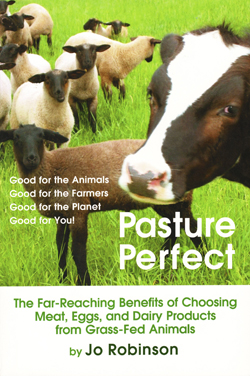
cover of the book Pasture PerfectJo Robinson’s Pasture Perfect is an accessible, entertaining introduction to the concepts underpinning “grassfarming.” She starts with an amusing anecdote from her first talk given in front of 500 ranchers. At the close of her presentation, before the questions, she announced that she’d put together a little book titled Why Grassfed Is Best! (the precursor to Pasture Perfect). The auditorium emptied rapidly. She carried on, answering questions gamely, and wondering. Did her audience want to be first in line at the buffet dinner? Nope.

There’d been a stampede on the table where her little book was stacked for sale. Literally. Impatient with a line of 50-plus, ranchers began grabbing books, tossing their money down, making their own change. They were that eager for her information. And she’d not brought enough books!

Ms. Robinson takes us on a tour of a pasture-based farm. The air smells of grass and green. A ring of habitat for wildlife encircles the fields. The grass is lush and mixed with clover, alfalfa, and wild plants. The cattle are peaceful, moving slowly within their generous enclosure. Chickens share the paddock. It’s a pleasant spot, nourishing to the animals, welcoming to humans.

Then the author gets down to the nitty gritty: the health benefits of grass-fed meats.

Less fat. Animals eating grain get fat. Grass-fed meat has the same amount of fat as wild game or chicken breast without skin.

Fewer calories. If you eat a 6-ounce beef loin from a grass-fed cow, you’ll consume 92 fewer calories than if you eat one from a feedlot cow. That adds up over time.

More omega-3’s. People low on omega-3’s are more vulnerable to cancer, depression, obesity, diabetes, arthritis, asthma, and dementia. Grass-fed meats have 2 to 10 times more omega-3’s than feedlot meats.

Omega-3’s and omega-6’s in balance. Both these fatty acids are essential, but we need the right blend. Omega-6’s encourage blood to clot. Omega-3’s cause it to flow easily and smoothly. What’s the right ratio of 6’s to 3’s? There’s some debate about it. Probably no more than 4:1, possibly as low as 1:1. Grass-fed beef has ratios between 1:1 and 3:1. Feedlot beef ranges from 5:1 to 14:1. ‘Nuff said!

Conjugated linoleic acid (CLA). The research is preliminary, but CLA may help us resist cancer and heart disease. Grass-fed ruminants have 2 to 5 times as much CLA in their meat as feedlot ruminants.

Vitamin E. It’s an important anti-oxidant, protecting us from free radicals, boosting immunity, preventing heart disease. Grass-fed beef has 3 to 6 times more than feedlot beef.

Carotenoids. Fresh pasture provides hundreds of times more of these anti-oxidants than does feedlot mush, with the result that beta carotene and other carotenoids show up in quantity in grass-fed meat. The benefits of eating carotenoids include lower risk of cataracts and macular degeneration (a leading cause of blindness).

Ms. Robinson also gives us the scoop on milk and eggs.

The milk from grazing cows has 5 times the CLA of conventionally fed dairy cows. The ratio of omega-6’s to omega-3’s is 1:1. The levels of beta carotene, vitamin A, and vitamin E are all much higher.

The eggs from pasture-raised chickens (who eat grass, wild greens, and insects) show similar benefits. A ratio of 6’s to 3’s of 1:1, instead of 20:1. More vitamin A. But you don’t need a chemistry set to analyze the health of an egg. Conventional eggs have lemony pale yolks, while those from pastured hens show a deep, orangey yellow.

Best of all: pastured meat, milk, and eggs just taste better. The New York Times food editors reported free-range poultry as “flavorful and juicy” and that it “had a tender but meaty texture.”

Corby Krummer in The Atlantic Monthly said, “Grass-fed beef tastes better than corn-fed beef; meatier, purer, far less fatty.”

And Sam Guigino in Wine Spectator declares a grass-based strip steak “delicious, rich and full-flavored.”

The last chapter in Pasture Perfect tells us how and where to acquire these healthy and delicious pasture-raised foods. And 60 pages of recipes cap things off.

This was a life-changer for me. The nutritional differences between feedlot meat and grass-fed meat are not trivial. Good health versus poor may well lie in the balance. I had already connected with a local dairy farmer. I wanted nourishing milk for my 2-year-old twins! Now it was time to locate healthy meat and healthy eggs.

I’m lucky, because Virginia has a long tradition of family farms. My region is a focal point for the growing movement toward local food. Once I opened my eyes, there were dozens of neighboring farms that could supply my table. Like some of the people quoted in Pasture Perfect, I’m a bit spoiled now. Conventionally raised just doesn’t taste right!

Pasture Perfect at Amazon

Pasture Perfect at B&N

For more about nutrition, see:
Test first, then conclude!
Yogurt & Kefir & Koumiss, Oh My!

For more on green living, see:
Permaculture Gardening
Running Mushrooms
Going Up in Smoke?


Share

Great Soap & Etcetera Quest

hieroglyph of amcient EgyptQueens of ancient Egypt outlined their eyes with kohl made from sulfide of antimony. Roman matrons rouged their cheeks with cinnabar, red mercury. Elizabethan nobles painted their faces with white lead. Victorian women swallowed arsenic to improve their complexions and drops of belladonna to dilate their eyes.

Learning these facts as a child, I developed considerable scorn for cultures of the past and their use of poisonous substances in the quest for personal beauty and hygiene. “Of course, they didn’t know any better,” I reminded myself.

Who would have dreamed that my attitude would reverse itself? At least the kohl worn by all the Egyptians who were not queens – made with lead sulfide, instead of antimony – actually protected them from eye infections. While modern concoctions . . . are not nearly so safe as we imagine. And we do know better!

Where did my change of attitude start? Strangely, with the flap about bisphenol A. My children were very young at the time, and we had plastics galore in our household. Little ones drop so many things. Surely plastic was safer than risking tender feet cut by broken glass. Well, it wasn’t; not if the plastic contained BPA, or maybe even if it didn’t. I read up on plastic and discovered that the reason it flexes the way it does is because each molecule of plastic physically slides past the others. And in the sliding process, some of the molecules are shed like skin flakes. When we eat foods stored in plastic, we eat a little of the plastic along with the food. Hmm.

I replaced all the plastic juice glasses with glass mugs. (The handles would help small fingers keep a grip.) Our tupperware and rubbermaid received the ax likewise. Canning jars and a few Pyrex containers worked just fine for storing cheese, homemade yogurt, and leftovers. Bed, Bath & Beyond even carried some inexpensive glass pitchers (with covers) for tea and milk. Good. We were set.

Except then I got to wondering . . . what else do I take for granted as safe when it isn’t? What about soap and shampoo and chapstick?

My first forays into research turned up cause for concern, but not much solid information. I decided to try the “organic” products carried by the local health food store. That was a disaster. The soap dried my skin and irritated it. The lotions were no better at moisturizing those dry hands than were conventional ones – that is, no good. And the shampoos resulted in a scalp that actually bled. Hmm again.

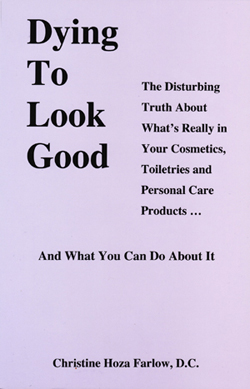
cover image of book about the dangers of conventional toiletriesI returned to conventional products, while I did more thinking. Not much in the way of solutions came to me . . . but, eventually, I stumbled upon a little lilac-colored book: Dying to Look Good by Christine Hoza Farlow. It was still thinner on specific solutions than I wanted, but it sure gave me motivation to try again. My conventional soaps, shampoos, and lip balm were chemical cocktails of carcinogens. And the health food store versions were often little better. They just used a different chemical cocktail!

Besides providing motivation, the book also led me to the Environmental Working Group and their Skin Deep cosmetics database. I was skeptical at first. I’d already been burned by the health food stores. Would this be any better?

It was.

The database lists every single ingredient in each product it includes, and it includes a lot of products, some with ingredient lists so simple that the words are all in English, utterly bare of incomprehensible chemical terms. Those were the products I decided to try.

And I got lucky.

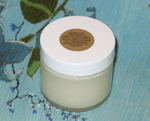
photo of Terressentials hair washTerressentials’ hair wash, made with bentonite clay, was a beautiful thing for my hair and scalp. I’ve always had a twitchy scalp, prone to take offense at the slightest slight and throw out a patch of eczema. Apparently, the vast majority of shampoos – conventional and alternative – have ingredients that were causing my eczema. My longtime favorite also had ingredients that relieved it. But that’s crazy! To have irritant and remedy bundled together. My scalp has been calm over the last two years, ever since I slathered it in coconut oil (to soothe the damage done by the earlier experiments) and adopted the clay hair wash. (It’s not soap, and it doesn’t foam, but it does clean.)

photo of Bubble & Bee lip balmsTerressentials’ lip balm was another success, although it gets a little melty in the summer. But Bubble & Bee’s lip balm tends to be too stiffly solid in the winter. So I use both, the stiff one in hot weather, the melty one in cold.

photo of Bubble & Bee's body butterBubble & Bee’s body butter became the first lotion to ever have a lasting effect on dry scaliness of my feet (sorry for the TMI), and it’s pretty nice on hands, elbows, and knees too. Soft, properly moist skin is the result.

photo of African alata soap by SheAyurvedicsPure castile soap from the Blue Ridge Soap Shed doesn’t undo all the good work of that body butter. And, hey, it’s local too! It’s become my husband’s favorite soap, but I prefer something even more moisturizing: African Alata soap by SheAyurvedics. They’re both good. (ETA 2015: SheAyurvedics appears to have gone out of business, alas.)

photo of Bubble & Bee deodorantI’d had adventures with deodorants and anti-perspirants several decades ago and was leery of re-opening that can of worms. But my success with all the other toiletries, and especially with shampoo (the most unpleasant of all my cosmetic adventures) gave me courage to try again. I ordered up Bubble & Bee’s lemongrass deodorant. That proved a little too lemony for my taste, but it certainly did a fine job without irritating my skin. My husband had decided on their super pit putty, and we ended by swapping. He liked mine better, I liked his. Just recently I decided to branch out a little and purchased some lime geranium. Now my only difficulty is that I can’t decide which I like best. Both smell so nice! It’s a good problem to have.

Two toiletries still remain begging solutions.

I hadn’t used soap on my face for years, but the gentle cleanser resting beside the bathroom sink contained questionable ingredients. My problem: nearly all the alternatives have actual soap in them. And even a mild soap is too strong for my face. The one soap-free alternative I could find also has a questionable ingredient in it: grapefruit seed extract. The extract itself is harmless, but unless it is supplied by Nutribiotics, it may be contaminated by triclosan and methyl paraben or benzethonium chloride (all big baddies).

Since the main ingredient of my one alternative was vegetable glycerin, I decided to buy that one ingredient straight up and try it. I’m finding it acceptable, but still not quite right. I’ll probably start the quest again at some point. Just not yet!

Toothpaste is my other wild child. I’m currently using one of the SLS-free Tom’s of Maine formulations, but I’m not keen on its plastic container! I’ve tried homemade: arrowroot powder mixed with a few drops of food grade mint extract. That actually was very satisfactory, but messy. I may go back to it, now that my children are older. They can handle messy these days!

So why am I telling you all these rather personal details? (Too much information, with a vengeance!) Mainly because I really wanted to find a blog post just like this 3 years ago when I embarked on my great toiletries quest. I would have been spared a bleeding scalp and a lot of aggravation. Since I didn’t find this blog post (paradoxical time travel, anyone?), I’m creating it in the hope of sparing you irritation and aggravation! Luck!

UPDATE April 2015: I discovered a mild facial cleanser that works for me – Nourish Organic Moisturizing Cream Hand Wash – and blogged about it here. I’m currently using JASON toothpaste. The tube is made of plastic (alas), but I feel confidant of the ingredients in the paste.

Dying to Look Good at Amazon

Dying to Look Good at B&N

Hair Wash at Terressentials

Lip Balm at Terressentials

Lip Balm at Bubble&Bee

Body Butter at Bubble&Bee

Deodorant at Bubble&Bee

Castile Soap at the Blue Ridge Soap Shed

For more about safe and effective toiletries, see:
Hair Wash with Rhassoul Clay
Why Add a Lemon Rinse
Facial Soap Eureka

For more on green living, see:
Bandanna Gift Wrap
Waste-Free Lunch
Green Housekeeping


Share

Golden Green

I encountered the basic principle young. Clean up after yourself. No fair making your neighbor put your fingerpaints away. Don’t waste things, time, effort. Not right losing Dad’s favorite flashlight after he lent it to keep the bogeyman away. It was the golden rule: do as you would be done by. Connecting this elementary idea to a larger world view took . . . years, took growing up; but there were mile posts along the way.

A photo from an educational magazine – distributed to the entire fifth grade of Montgomery County – remains vivid in my memory. It depicted a family picnicking on a slope. But the hillside of scruffy grass overlooked a six-lane highway, and the sky was brown with smog. Turn the page and the family had been transplanted to a parkland paradise: lush green hills, a clear stream, shy wildlife, and blue sky. Which would you prefer?

Yes, this was 1970, when environmental concern grew apace. I was an impressionable ten-year-old and wanted to do my part, but it wasn’t clear what part was mine. “Don’t litter” was a big campaign at the time. It seemed overly basic.

My next milestone came in college. The desire to recycle gripped me. Newsprint and glass jars were the only candidates, and there was no curbside recycling. Oh, did I ever want to participate! But how? I didn’t own a car, and the recycling center was decidedly beyond walking distance. I never did figure out a way, but I made a vow: once I had wheels, I’d be driving to that center as often as I had a bin full.

I kept that vow, but feel some irony looking back: the exhaust coming out my car’s tailpipe probably did far more harm than would a small collection of glass and newsprint in a landfill. And humans have since devised more dangerous substances with which to strew our earth home. What happens to the nano particles created in the manufacture of computer hard drives? What about the discontinued GMO corn that made volunteer eaters so sick? It’s easy to become discouraged. It’s easy to focus on smaller areas where we have some power – I can recycle, after all – and lose sight of larger problems in need of complex, cooperative solutions.

And, yet, I always come back to: it’s important to me that I do what I can do, mistakes and all. Perhaps I should have stuck with bicycling (and not worried about recycling) after I graduated with my architecture degree. But the recycling was still worthwhile, and I still do it. And don’t litter – be it apple cores and household cleaners or nanoparticles and modified genes – still seems a motto to live by.

Since then I’ve made other changes. I eat local veggies and grass-fed meat. I clean with vinegar, peroxide, castile soap, and micro-fiber rags. I use soap nuts for my laundry and a drying rack. I’ve switched out my incandescent lightbulbs for CFL’s. I group errands so I can take the car out less. My kitchen is stocked with reusable containers, so that bag lunches and food storage need not involve disposables. Our mower is muscle-powered. Is all this trivial? Misguided? Perhaps. But surely profligate driving, reckless chemical use, and relentless disposing of disposables would be worse.

I’ve even set my sights on further changes. No surprise there, given my proclivity for shaking my life up from time to time! I hope my next car will be a hybrid. (And that one in the further future will be wholly electric! How to place a charging station when we have no garage?) My push toward more bicycle riding resulted in a broken foot, but I haven’t renounced that dream wholly. (The peddling and gliding are too much fun!) I want to weatherproof my home, so I can be one of those folk whose winter needs are solved with the equivalent of a space heater. Perhaps I might even manage solar panels on the roof!

I talk about the solutions I’m trying. I ask what others are doing. I read to learn more. Am I naïve? Almost certainly, yes. But cynicism and pessimism seem a waste of the life and breath I’ve been given. I’ve chosen effort and hope. What about you?

Share

The Thricely Odd Troll

Alcea was the Exemplar elected from the canton of Ennecy, and she was a troll. But she was an odd troll. She did not contract her disease reaching greedily for power – the conventional route of an incantatrice. Nor did she sicken in heroic sacrifice to save an endangered child or a dying lover – the well-worn trope for many a ballad. No, nothing so dramatic or poetic as that. Alcea became a troll, because her radices were more weakly anchored than those of most folk. During an ordinary lesson under the auspices of her antiphonic mentor, the energetic strands securing her root radix snapped.

Her teacher was horrified, but there was no mending what was broken. The only question was: with just one radix drifting and the remaining twenty still firm, would she actually contract troll-disease?

She did; the straying root radix, massive in its slow momentum, inexorably dragged first the belly radix off course, and then the plexial radix, until all were awry. Many experts made pilgrimage to Ennecy to study her case, so unusual was it. But the more unusual thing about Alcea, really odd from a historical point of view, was that she was not the only troll in the Chamber of Exemplars. In fact, nearly every Exemplar was a troll.

The minutes recorded from the Chamber sessions paint a very strange picture of that governing body. Yelled taunts and defiance, obscene gesticulation, actual gibbering, and impassioned ranting were commonplace. In a particularly heated debate, one Exemplar went so far as to strangle his opponent. The minutes depose that the mortuary binders were summoned to take charge of the corpse!

Today, in these times of capital punishment for any use of incantatio, we can hardly imagine how such a situation could be permitted, but in truth the Exemplars of the Scaffold Era went wrong in their interpretation of their own early history. The plague that afflicted the Emperadrina Ravessa’s people was conflated with troll-disease. The understanding that Godon’s dawn and dusk postures cured antiphoners of plague was held as evidence that such contortions, performed regularly, might also hold troll-disease at bay. (Of course, they did nothing of the sort.)

Since all Exemplars then were antiphoners, temptation was great. One pioneer used the taboo incantatio to purify an unclean well in one of her constituent villages. Another built a bridge to replace a perilous ford. Others resorted to beguiling incantatio on the populace merely to secure election. Once the rot set in, it set in thoroughly. By Alcea’s time, mere antiphoners were rare; troll-mages were the rule; and helpful law-making from the Chamber of Exemplars, scarce. Godon’s postures did not retard troll-disease as was claimed, nor prevent it as was initially announced.

Now, it might be thought that Alcea was in good company – one troll among many – but her correspondence (all preserved by an industrious niece, the renowned Letitia of the Opal Sceptre) shows that this was not so. Alcea spoke against Tiberio’s Heresy, as she called it, at every chance offered, both in the Chamber itself and outside of it. Unlike the rest of her cohort, she practiced no incantatio, her disease progressed slowly, and she retained her sanity. She did not blame her colleagues for their poor choices, attributing their unwisdom to ignorance and calling for a return to Godon’s orthodoxy.

“Let us, doizennes and damesses, begin again the practice taught by our founder in all its purity. Godon propagated the dawn and dusk sequences, not because they banished plague, but because they induced harmony in the soul.”

Over years, Alcea’s advice grew popular. No doubt her own participation in the disease of trollism, if not in its prologue of power, forestalled conclusion that she stood in judgment over the troll mob. Antiphoners and non-antiphoners alike came to regard her as a wise old grandmother and took heed of her words. Fewer practitioners chose to cross over the line between safe energea and dangerous incantatio, and fewer constituents chose to elect trolls to the Chamber. Before Alcea breathed her last, Tiberio’s Heresy was abandoned, and the Chamber filled entirely by Exemplars of Godon’s Orthodoxy.

Alcea’s political reign has an odd codicil. Dying at last of troll-disease, the old woman left this earth literally, as well as figuratively. She lay upon a bier in the open air, desiring to witness the setting of the sun one last time. As the flaming daystar touched the horizon, fierce winged horses flew out from the streaming light, took Alcea upon their backs, and bore her away into the sky.

The orthodox example of the governing Chamber of Exemplars spread throughout the land, and Giralliya became a realm largely free of trolls among her citizenry. The Chamber itself accepted fewer and fewer antiphoners until it became wholly the province of legislators without any energea or magic whatsoever at their behest.

* * *

More stories of old Giralliya:
Legend of the Beggar’s Son
Ravessa’s Ride
The Old Armory: Blood Falchion


Share

Permaculture Gardening

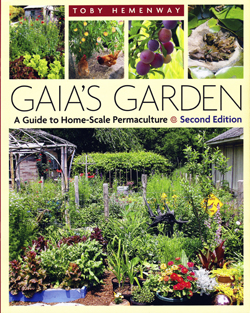
Photo of a lush garden.First, I have a confession to make. I read Gaia’s Garden and was so impressed I immediately started a to-do list of chores for my own garden. But that’s not the confession. It is this: just as I was gathering materials and gearing up to create my first sheet mulch, I took an unfortunate and ill-timed bicycle ride and broke my foot! Perhaps you see where this is going. The break was a bad one, but not bad enough for surgery and pins, so I was bed-ridden all last summer and on crutches all last fall and in physical therapy all last winter. In other words, I have not yet done a single one of those garden chores. But I’m going to tell you three cool things from the book anyway!

Before I go further, Gaia’s Garden is written by Toby Hemenway and introduces home gardeners to permaculture and how to use its principles on their land. Now for those three things.

plans for three gardens: vegetable plot, raised beds, keyhole gardenGarden Topology Matters

Consider the time-honored, conventional vegetable plot. The plants in it are useful, yes, and their color and the texture of their foliage, beautiful. But now look at those rows and the paths between them. Not only are they visually uninspiring, but they waste a lot of space! We can do better.

What about raised beds with paths threaded between wider blocks of plants? Definitely an improvement, but we can do better still.

Now evaluate the keyhole garden. The amount of ground devoted to paths shrinks further, and the space for plants burgeons. There are other shapes taken from nature that conserve fertile soil: the herb spiral, branching systems, and nets or mesh patterns. They’re all worth keeping in our palette when we design the layout of our gardens.


Sheet Mulch is Efficient

Nearly every gardener can wax lyrical on the value of compost. It replenishes the soil with mineral wealth. It improves the soil’s texture, building humus, the light and fluffy component that holds moisture and nutrients for the questing roots of plants.

But compost heaps are a lot of work: building them, turning them, watering them, and then carting the whole kit-and-kaboodle to the actual garden plot. And there’s another disadvantage. Soil organisms – bacteria, fungi, and amoebae – are just as important to plant well-being as the minerals and other nutrients in the soil. A thriving fungal mat might extend across an entire back yard or even further. But all that turning and forking and moving needed by a compost pile disrupts and destroys these microscopic helpers.

Just as with garden topology, there is a better way – an easier way! Mulch in place. It’s done in two steps. First lay down a thick layer of newspaper or cardboard to suppress weeds. Be sure to overlap the edges by at least 6 inches. (Weed shoots can really travel to reach a gap! Don’t leave any.) Then top that layer with a foot of bark or straw or grain hulls or sawdust or wood chips. Anything that used to be a plant, basically. And don’t be timid about the amount. This layer needs to be thick. Then wet the whole thing down and let it sit.

Fall is a great time to sheet mulch. The bed will be ready to plant in spring. What if it’s already spring and you want to try this now? All is not lost. Build your sheet mulch and then create small pockets in the sheet, about 3 inches deep. Fill the pockets with soil and compost, and plant your seeds. (Somewhat deeper pockets can be used for seedling plants.)

What will you have once your sheet mulch decomposes? Lovely, humusy soil packed with nutrients along with a tide of earthworms and millipedes and beneficial mites and fungi teeming both in the decomposed mulch and a good foot underneath. Your garden will thrive.

The Apple Guild

Among permaculture practitioners, a “plant guild” is a community of plants and animals living in a pattern of mutual support. It is often centered around one major species. And it benefits humans while also creating habitat. Plant guilds are more complex than companion planting (such as placing marigolds between broccoli rows to keep insect pests away). Plant guilds are more comprehensive than polycultures (such as growing rice and fish and ducks together).

Plant guilds attempt to borrow some of the resilience and robustness of plant communities found in Mother Nature herself. Most plant guilds are local, derived or deduced from the unique soil, climate, and species found in a specific region. But there are a few “universal guilds” that are likely to thrive in much of a continent. One of these is the apple guild.

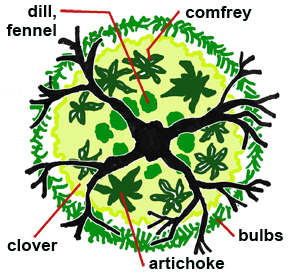
plan of garden centered on a fruit treeAt its center grows an apple tree, although any fruit tree (or even a small nut tree) could work. Any size fruit tree – standard, semi-standard, semi-dwarf, dwarf, or mini-dwarf – may be chosen, but a larger tree will support more associated plants than a small one.

A ring of thickly planted bulbs grows at the drip line of the tree. You might choose daffodils to discourage depredations by gophers and deer. Or you might choose something edible: camas or alliums such as garlic, garlic chives, or wild leeks. (Don’t mix daffs with edible bulbs, because daff bulbs are poisonous. You wouldn’t want to risk a mistake.) Either choice will keep grasses from invading your guild.

Within the ring of bulbs is an assortment of plants that attract bees and birds, make mulch, pull nutrients deep underground to the root zone, and fix nitrogen in the soil.

A dotted circle of comfrey is the most multi-functional among these. Its purple blossoms attract beneficial insects. Its deep roots pull potassium and other minerals upward into its leaves, which can be used to infuse a medicinal tea and to create a fertilizing mulch. (Slash the comfrey back 4 or 5 times during the summer and let it fall in place as mulch.)

A couple of robust artichoke plants are interspersed with the comfrey. Their spikey roots restore soil tilth and fluffiness. The plants yield food: the artichokes. And their leaves contribute to the natural mulch.

Dotted throughout the circle of the guild are bursts of yarrow, trailing nasturtiums, and the umbels of dill and fennel. Yarrow is a nutrient accumulator, making nitrogen, phosphorous, potassium, and copper available. It is also an insectory, attracting ladybugs, hoverflies, and parasitic wasps (that eat the larvae of pests such as borers and coddling moths). Dill and fennel attract these beneficial insects plus lacewings, and they are edible.

A dense carpet of white clover laps between all the plants along with a sprinkling of dandelion, chicory, and plantain, giving the guild plenty of nitrogen-fixing (the clover) plus more nutrient accumulators. (Chicory yields potassium and calcium; dandelion adds magnesium, iron, copper, and silicon to the mix; plantain, manganese and sulfur.)

The apple guild is a dynamic system with most of its members playing multiple roles and immensely lightening the work load on its human caretaker.

Two years before I read Gaia’s Garden, my husband and I planted an apricot and a pair of cherry trees in our backyard. One cherry succumbed to the nibbling of deer, and we replaced it. The other trees survived. This spring, the apricot showed the beginning of fruit on its branches! We hope to harvest a few for the first time this summer. But I still cherish that list inspired by this book. And I wonder: what might we see after we sheet mulch the ground surrounding the fruit trees? What eden spot might evolve when daffodils, comfrey, coriander, dandelions, and clover are growing in lush circles below the fruiting branches? I hope to find out.

Gaia’s Garden at Amazon

Gaia’s Garden at B&N

For more green living concepts, see:
Green Housekeeping
Running Mushrooms
Grass Green

For more cool science trivia, see:
Water


Share

The Writing of the Belt

The Troll's BeltI had no idea I’d be retelling a renowned folk tale. All I had was the really vivid mind-picture of a wide leather belt, dyed brilliant blue and studded with golden metallic stars, nestling in the reindeer moss of a pine forest. That and the knowledge that a boy would find it.

So, how did I build my story? I almost always start with questions. Who is this boy? Oh, he lives with his father, but there seems to be no mother on the scene, and I have the sense that she’s been absent since he was a baby. Okay. Then how did his father manage? Ah . . . his brother’s wife took care of the boy when he was really little. The two brothers, when they were very young men, purchased a timber claim from Silmaren’s Queen Anora.

My notes show that I digress into examining the nature of the timber claims and fishing claims offered by the crown at this point in the realm’s history. Then I pull myself back to the boy and sketch out a quick account of his childhood. Next my thoughts leap to the skeleton of my story’s plot: the boy finds the belt, he gets in trouble with it, and he only achieves some wisdom in the course of overcoming his trouble.

Hmm. This is the North-lands. If there’s trouble, then of course there’s a troll involved. Surely the belt belongs to this troll. And . . . suddenly, I just know that the troll lives in a rustic cot hollowed from a massive glacial rock.

Naturally, the boy encounters the troll, who wants his belt back. And, oh my, he wants the boy for dinner. Oh! I’m telling Hansel and Gretel. Cool! I think I like it.

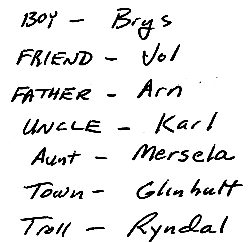
copy of actual manuscript notes for The Troll's BeltSo the boy is imprisoned and that mad old troll is going to devour him. Then the boy’s cousin arrives on the scene, and things get even more complicated. Now I need some names. I can’t just keep saying: “the boy” and “the boy’s father” and “the wood-town.” What all do I need? Boy, cousin, father, uncle, aunt, town, troll. This time, for this story, the names just fly into my head without much searching for inspiration.

Then I realize I need to know what the town of Glinhult looks like. At first I think everyone lives in tree houses, but that doesn’t feel quite right. Ah! The older houses are indeed tree houses, remnants from the time when the lumberjacks needed a cheap way to raise their homes off the ground for safety’s sake. Packs of wolves and other predators roam these parts, the wilds of west-lying Gosstrand. Once the work on the timber claim was more advanced and everyone had more money, they could afford to build the more convenient stilt-homes.

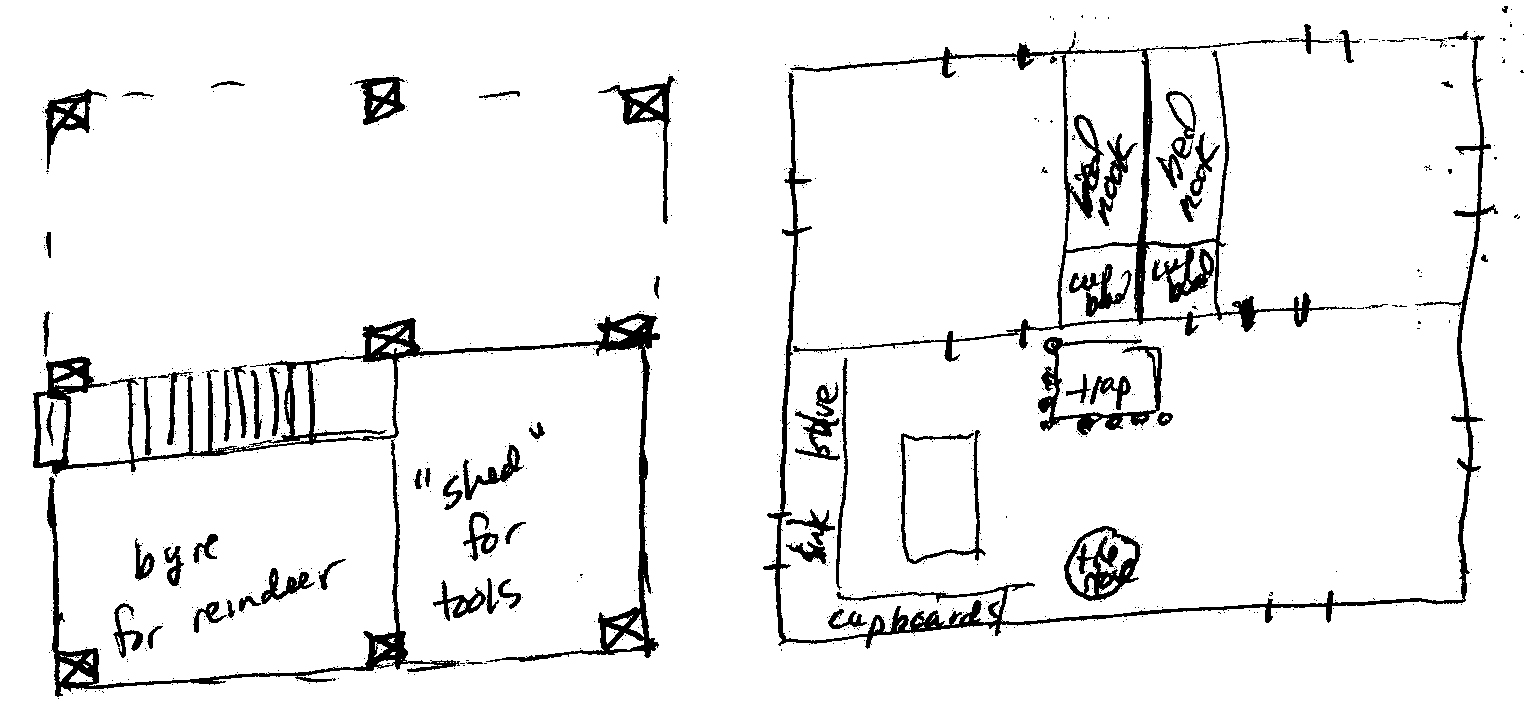
So what did Brys’ home look like? I draw a quick floor plan. And make some notes about its idiosyncrasies: the straight door at the bottom of the stairs and the trap at its top. Then I think about what Brys and Jol look like: Brys with shoulder-length red hair; gangly; shorter than his cousin; Jol a bit larger and with long, curly, dark hair pulled back in a horsetail. What chores do the boys do? Suddenly I know that Brys and his father Arn will have an argument about chores. And the specifics of the plot unfold in my mind. I’m there. Time to start writing. On October 20, I begin: “Brys slammed the door behind him and stomped across his room in fury.”

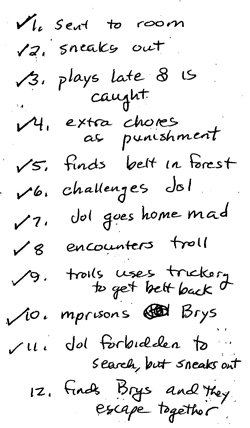
Copy of handwritten list of scenes for storyEach day thereafter I write another installment of the story. Sometimes the scene is so clear, it pours out of my pen (yes, I was writing longhand, ink onto paper) like an enchanted spring welling from sacred ground. Other times I make notes or mini outlines in my margins to get my inner storyteller going: “skip to meeting Jol who is impressed with his daring, but also pretends to object to the tunic borrowing;” or “clasp belt, sudden urgency as body joins mind, leap up, know just what to do.”

On November 4, I write the final words: “’Huh, yourself!’ And Brys aimed a friendly punch at his cousin’s ribs.”

I’d done it! Written the story I would use to test the intricacies of uploading computer files to electronic bookstores. Best to encounter all the error messages and to search for fixes on a short piece of fiction, not a novel!

Of course, I was not finished. I sent the story off to my first reader, who quite liked it. I would work on the cover while she was reading. Then I must make corrections and put the whole package together. Yes, there was work to do. But that moment of triumph at the close of the first draft was special.

Just in case The Troll’s Belt has suddenly catapulted itself onto your must-read list (grin!), here are the links:

Amazon.com I B&N I Diesel I iTunes I Kobo I Smashwords I Sony

For more about the stories behind my stories, see:
Writing Sarvet
Notes on Chance
Dreaming the Star-drake


Share

Thinner and Healthier

I’d been yoyo-ing down and up the same 10 pounds for several years. And they were the wrong 10 pounds – the ones between . . . a high number and a higher number.

The way it worked for me was this: I’d swim my way from 300 meters up to 800 meters and loose 10 pounds. Then I’d get sick. Sick enough that trips to the gym weren’t an option for 2 weeks (or more). Because I get injured easily, that meant my workout fell back to 500 meters. Or less. And my weight crept up.

I didn’t know what to do about it. All my reading indicated that diets don’t work. Were worse than not working: after you lose 15 pounds, you gain back 30.

So, what should I do? I was carrying an extra 35 pounds – ever since the “change of life” – and I did not like it.

My habit of browsing for new non-fiction was to come to my rescue. This time on Amazon, rather than at the library, I stumbled upon Philip Maffetone’s In Fitness and In Health. The reviews were impressive, but more importantly they contained nuggets of information that dovetailed with other myth-busting revelations about food.

I purchased the book.
photo ofred  appleWell . . . Dr. Maffetone seemed to be missing at least a few crucial bits of knowledge, but not the obvious ones. In fact, he toed the politically correct nutritional line repeated by the media a little too rigorously, in my view. But there was some good stuff in his book. One chapter in particular was a gem. That’s the one I want to tell you about: “The Two-Week Test.”

This is what it says: the high-carb foods that most modern, western people eat by default are making us sick, but you can test the idea yourself in just 2 weeks. Find out!

I liked that 2 weeks part of his message. I figured I could stand anything for a mere half month. Why not try it?

Now . . . should I tell you what I did first? Or should I tell you the results?

Results. Definitely, results.

One result was really odd. I discovered that bananas and me make a poor pairing! All my joints flared into arthritic inflammation when I ate a banana at the end of my 2 weeks. But you surely care little about me and bananas. Most likely you and bananas get along just fine. Dr. Maffetone emphasizes that everyone’s body is a little bit different (or a lot) from everyone else’s. That’s why you need to test what works for you.

So, what about the important results? There were three.

I simply felt better. That’s rather unquantifiable and general. But, believe me, it’s important. The difference between okay and really well, while subjective, is unmistakable.

I had more energy! This was dramatic. I had too many days when I was dragging, fighting lethargy, never peppy. After my 2 weeks (plus the addition of coconut oil to my diet), I had stamina. I was even peppy at times. Wow! I liked it!

And . . . drum roll . . . I lost 3 pounds. Without counting calories, measuring portions, or feeling hungry.

So, what did I do?

First, after the 2 weeks, I used what I had learned to adjust the types of food I ate. With the result that I lost 25 pounds over the next 6 months. Also without calorie-counting, portion-weighing, or feeling hungry. Sounds like an infomercial, but it’s just me and my experience.

What about those 2 weeks? What did I do during the interval of testing? Here are the rules I followed.

Do eat:
* eggs, cheese, heavy cream, sour cream
* meat, including beef, turkey, chicken, lamb, fish, shellfish
* vegetable juices such as tomato, V-8, or carrot
* water
* vegetables, cooked or raw – but no corn, no potatoes
* nuts, seeds, nut butters
* oil, vinegar, mayonnaise, salsa, mustard, herbs, spices
* sea salt (unless you’re sodium sensitive)
* coffee, tea (if you normally drink it)

Do not eat any:
* bread, pasta, pancakes, cereal, muffins, chips, crackers, rice cakes, grains
* sweets, including foods containing sugar such as ketchup, honey, packaged foods
(read labels!)
* fruits and fruit juice
* processed meats such as deli meats and hot dogs (many have sugar in them)
* potatoes, corn, rice, beans
* milk, yogurt, lighter creams
* energy bars, energy drinks, “healthy” snacks
* soda, even diet soda

Be certain you do not go hungry. Very important. Stock your fridge and pantry with lots of allowed foods.

Some meal suggestions:

Breakfast
* omelets, plain or filled with cheese, meat, and/or vegetables
* scrambled eggs with guacamole, sour cream, and salsa
* poached eggs with spinach or asparagus and hollandaise or cream sauce
* boiled eggs with bacon or other meats
* souffles

Salads
* leaf lettuce, meats, cheeses, eggs
* spinach, bacon, eggs, anchovies
* romaine, eggs, parmesan, anchovies or sardines
* chicken, celery, onion, mayonnaise
* tuna, apple, cilantro, onion, mayonnaise
* shrimp, cucumber, parsley, onion, mayonnaise
* salmon, celery, onion, dill, mayonnaise

Salad Dressings
* extra-virgin olive oil and vinegar, plain or with sea salt and herbs
* creamy made with heavy cream, mayonnaise, garlic, and herbs

Lunch and Dinner
* pot roast with onions, carrots, turnips, celery
* roast chicken stuffed with fennel bulb, carrots, celery
* chili made with ground meat and vegetables: eggplant, onions, celery, peppers, zucchini, tomatoes, herbs (no beans!)
* steak and eggs
* baked chicken breasts with sauce, salad on the side
* baked fish with sauce, salad on the side
* grilled tuna with lettuce, green peppers, black olives, dressing

Sauces
* melted butter
* cream sauce (simmer heavy cream with mustard, curry powder,
or cayenne pepper – serve over eggs, chicken, vegetables)
* tomato sauce (serve over fish, meat, or vegetables)

Snacks (important to avoid going hungry!)
* hard-boiled eggs
* slices of meat or cheese wrapped in lettuce to make a roll-up
* vegetable juice
* almonds, cashews, pecans
* celery filled with cream cheese or almond butter
* guacamole with vegetable sticks
* leftovers from a meal

At the end of the 2 weeks, evaluate how you feel. Then it’s time to start adding carbohydrates back into your meals. But don’t just lunge forward. There’s still more learning to be had. Add single servings of natural, unprocessed carbohydrates at every other meal. If you eat them back-to-back, you’ll blur any reactions you have enough to miss them. And the meal in between test meals must follow the guidelines you used to clear your system. Foods to try might be: apple, plain yogurt with a little honey, brown rice, sweet potatoes, lentils, sprouted-grain breads. Notice, notice, notice how you feel after each addition.

So what information was Dr. Maffetone missing? There were two critical pieces. One I’ll share in a future post when I present a book that covers the topic in clear and extensive depth. I hear you groaning. Yes, positively groaning. Sorry. Sorry. But it really isn’t a subject to treat at the tail end of a post. Promise!

The missing bit I will share is simple: the most commonly eaten polyunsaturated oils are extracted at high temperatures. The process turns them rancid, destroys their nutrients, and creates free radicals. Dangerous chemicals are used to scrub away the awful odor, and residues of the chemicals remain in the oil. Basically, they’re a nasty cocktail to pour into a finely tuned human body! Think twice about that corn oil or that safflower oil or that canola oil!

So where am I now, 14 months after I read In Fitness and In Health? I’ve repeated the 2-week test once, just to tune up. I’d like to lose another 10 pounds, but I’ve maintained that 25-pound loss, even after a seriously broken bone in my foot that kept me bed-ridden for 4 months! I’m pretty pleased. No more yoyo-ing.

What about you? Should you try the 2-week test? Probably not just on my say-so. I’m a writer, not a doctor or a nutritionist. But I do have recommendations. Learn more about food. Question the same-old, same-old we hear from the media and from the medical establishment. There are some dangerously wrong things repeated over and over again. Seek out some different answers! Better health is possible.

Those of you with food and health successes to report, consider sharing them here in the comments. Maybe we can all learn new questions to ask.

In Fitness and In Health is now out of print. Amazon sells it through third party vendors, if you’re angling to acquire a copy. Evidently much of the information has been incorporated into a new book by Dr. Maffetone: The Big Book of Health and Fitness. Some links:

In Fitness and In Health through Amazon

The Big Book of Health and Fitness at Amazon

The Big Book of Health and Fitness at B&N

Update: I’ve now written not just one post on the “book that covers the topic in clear and extensive depth” about the “information Dr. Maffetone was missing,” but three! Each on a different book. You can find them at Test first, then conclude!, Butter and Cream and Coconut, Oh My!, and Why Seed Oils Are Dangerous. And one more post on my continuing nutritional education appears at Yogurt & Kefir & Koumiss, Oh My!

 

Share

Life Change

It begins innocently enough. I’m there in the library, browsing, and I see a cover or a title that intrigues me. I take the book from the shelf and read the inside cover flap: hmm, interesting. I check the first few pages: oh, well-written and entertaining, too! Okay. I’ll check this one out.

Then I’m home and reading. Wow! Really? I never guessed. Wow! My world paradigm tips sideways or even turns upside down. I feel dizzy and disoriented, but exhilarated as well. I plead guilty to a taste for novelty. New ideas are mind candy for me. “Oh, shiny!” I exclaim.

But newness and sparkliness possess a more difficult facet. Now that I know this (whatever this may be), what do I do? Because action is clearly called for. I can’t sit here, knowing what I now know, and do nothing. Still I hesitate . . . change is rarely easy, and sometimes it’s downright repellant. Yikes!

One change I’ll tell you about next week had an obvious starting point: try Dr. Maffetone’s “Two-Week Test” and evaluate. How did I feel? Was it feasible? Or impossible? Comfortable? What did I learn?

But some changes require more societal support than is available. Others reach tentacles into every cranny of my life, demanding adjustment everywhere. Some just seem so flat-out daunting that I ponder them, actionless, for months (or years) before I know how to begin or where to gather the resources (or fortitude) to start.

But I’m the child of pioneers. My maternal grandmother’s forebears crossed the Atlantic Ocean before the American Revolution. My paternal grandfather left Sweden when he saw that ordinary folk were always discriminated against when up against the local nobility. (He was born in the late 1800’s.) My ancestors sought new ways and new opportunities. So do I.

Voluntary change can be hard, but I’ve found it rewarding and worthwhile. The challenge beckons me, and I respond with: Yes! Just start with one thing, with one day, with one part, and do it differently. The rest will fall into place. Or not. But there will be adventure along the way. Some of the best adventure around. I’m definitely a proponent of “be the change you want to see.”

I’ll be sharing some of my change adventures with you in future weeks. I hope you’ll share yours, too, here in the comments. We can all learn from one another. New ideas, new perspectives, and energizing engagement await us. Let’s start!

Share

Ravessa’s Ride

The Exemplars of the Orthodoxy came into being when a plague – the curse of the troll-king Beyhalt – swept the empire of Giralliya. The emperador, then each paucitor, and then each prince and king were stricken, along with many others. The disease was a lingering agony of wasting and fever and delirium. As the months went by and the representatives of government fell, one by one, Giralliya lay rudderless and vulnerable. The emperador’s daughter, on whom the sickness lay more lightly, rose from her bed in a valiant attempt to stand in her father’s stead. Flushed and chilled, Ravessa occupied the imperial pivot, issuing decrees and commanding the heros who arose – briefly, before disease felled them too – to save her people.

But the ninth such to come forward – Eliya – was not struck down. She was an old woman, wizened and wise, the member of an obscure order of antiphoners who practiced an equally obscure posture sequence to greet the sun at dawn and again to dismiss the light at sundown. All of her order remained untouched by Beyhalt’s curse.

Ravessa’s first thought was simply to co-opt these Exemplars of Gebed to hold the vacant posts of the royal and the pauce. Desperate times called for desperate measures. A second thought stayed her impulse.

“Dost thy exemplars dwell only within Bazinthiad?” she asked.

As it chanced, they did not. Many small hamlets in the countryside of Cambers sheltered chapters of the sect. The cathedral city in Solmondy, the origin of the order, housed its oldest chapter. And a sprinkling of these unusual antiphoners could be found in all of Giralliya’s other cantons.

Then it was that Ravessa began her great labor for her people and their land.

She went to the ruins of the temple on the sacred isle in Lake Argiyaen and prayed. Her pleas to heaven were answered by three winged horses – fierce and fey and glorious. They bore her on their backs throughout Flaumivar and Lillyoise and Brabante and Belline, and also into Cambers and Solmondy. In each canton, Ravessa addressed any citizenry able to rise from their beds: seek amongst yourselves for an Exemplar of Gebed to care for your interests and beg him or her to stand as prince or paucitor in Bazinthiad that you may not be forgotten.

Thusly was the Chamber of Princes and Kings filled once more; likewise, the Chamber of Paucitors. And when plague at last left the land, Giralliya was a different realm from before. No hamlet or village, no sea port or river port, no cathedral town or capital, no hill or valley where people dwelt was devoid of exemplars, were it only a lone proponent teaching and leading the locals in the postures for dawn and dusk. These sequences of bends and holds and breath control had proved an antidote to Beyhalt’s curse. Those yet well who performed the postures never fell sick with plague; those ailing under plague threw off the illness that gripped them. And without his army of disease – Beyhalt had no other – the troll-king proved easy to defeat.

When Beyhalt lay dead and all Giralliyans rejoiced in their newfound health, the emperador declared that each elected exemplar should keep his or her post, but not as royal or pauce. They would sit in a new chamber, one created especially for them. And they would be chosen, always, by the people of their lands.

“The pauce are appointed by lot and by imperial decree. The royal hold power through tradition and inheritance. Let now these exemplars serve at the commons’ choice.”

How they came to earn their later name – the Orthodoxy – is another story, but this tale is almost done. The three pegasi who appeared to fill Ravessa’s need were seen no more, but desperate folk dreamed of them. And the dreams inspired solutions of all magnitudes: healing between feuding parent and child, peace between nation and nation, beauty under an artist’s paint brush, safety from an inventor’s imagination, or tranquility within one conflicted soul. And the citizenry of Giralliya, discovering other posture sequences through the centuries to add to those for sunrise and sunset, became avid contortionists who visited their town retreat centers for daily practice in the conviction that there lay health and harmony and wholeness.

* * *

More stories of old Giralliya:
Legend of the Beggar’s Son
The Thricely Odd Troll
The Old Armory: Blood Falchion


Share